


The people who relapse after 90 days are usually the ones who were trying the hardest. They showed up. They did the work. They started to feel proud. And then one night — or one weekend — something cracked.
If that’s you, I want you to hear this clearly: you didn’t ruin everything. You ran into something deeper.
I’ve sat across from so many alumni who whisper, “I blew it.” What I tell them is simple — relapse at this stage is rarely about not caring. It’s about pain that hasn’t fully surfaced yet.
Early on, reconnecting with structured support like Alcohol addiction treatment in Indiana isn’t starting over. It’s continuing the work with more honesty than before.
The First 90 Days Are Stabilization — Not Resolution
Ninety days feels powerful. It’s long enough to build trust again. Long enough to feel momentum. Long enough to believe, “I’ve got this.”
But the first 90 days are often about stabilization. You’re focused on structure, routine, meetings, accountability. You’re surviving the early waves.
Around the three-month mark, something shifts. The adrenaline fades. The noise quiets. And what’s underneath starts to rise.
For many people, especially those carrying trauma, this is when PTSD symptoms become louder. Not dramatic. Not cinematic. Just persistent. Trouble sleeping. Sudden irritability. Hypervigilance that doesn’t shut off. Memories that creep in when the world gets quiet.
Sobriety removes the anesthesia. It doesn’t remove the wound.
PTSD Doesn’t Care About Your Sobriety Date
Alcohol probably served a purpose. It softened the edge of intrusive thoughts. It slowed anxiety. It helped you fall asleep when your body felt wired and unsafe.
When you take alcohol away without fully processing trauma, your nervous system doesn’t automatically calm down. In fact, it can feel more exposed.
I’ve had clients say, “I thought I was getting worse because I got sober.” What was actually happening was this: they were finally feeling what had been buried.
And without trauma-informed support, that level of emotional exposure can feel unbearable.
Relapse in this context isn’t weakness. It’s a nervous system reaching for what it knows works fast.
The Shame After Is Often Harder Than the Slip
The drink might last one night. The shame can last months.
“I should’ve known better.”
“They won’t want me back.”
“I don’t deserve help again.”
Shame isolates. And isolation is gasoline on both trauma and addiction.
The alumni who build the strongest long-term recovery aren’t always the ones who never relapse. They’re the ones who interrupt the shame quickly and step back into support before the spiral deepens.
Sometimes that means returning to structured daytime care. Sometimes it means re-entering multi-day weekly treatment. In some cases, especially if drinking escalated, it starts with medical stabilization again. If you’re in Indiana and need safe withdrawal support, there are compassionate treatment options in Indiana that can help you reset without judgment.
Walking back through the door is not failure. It’s maturity.
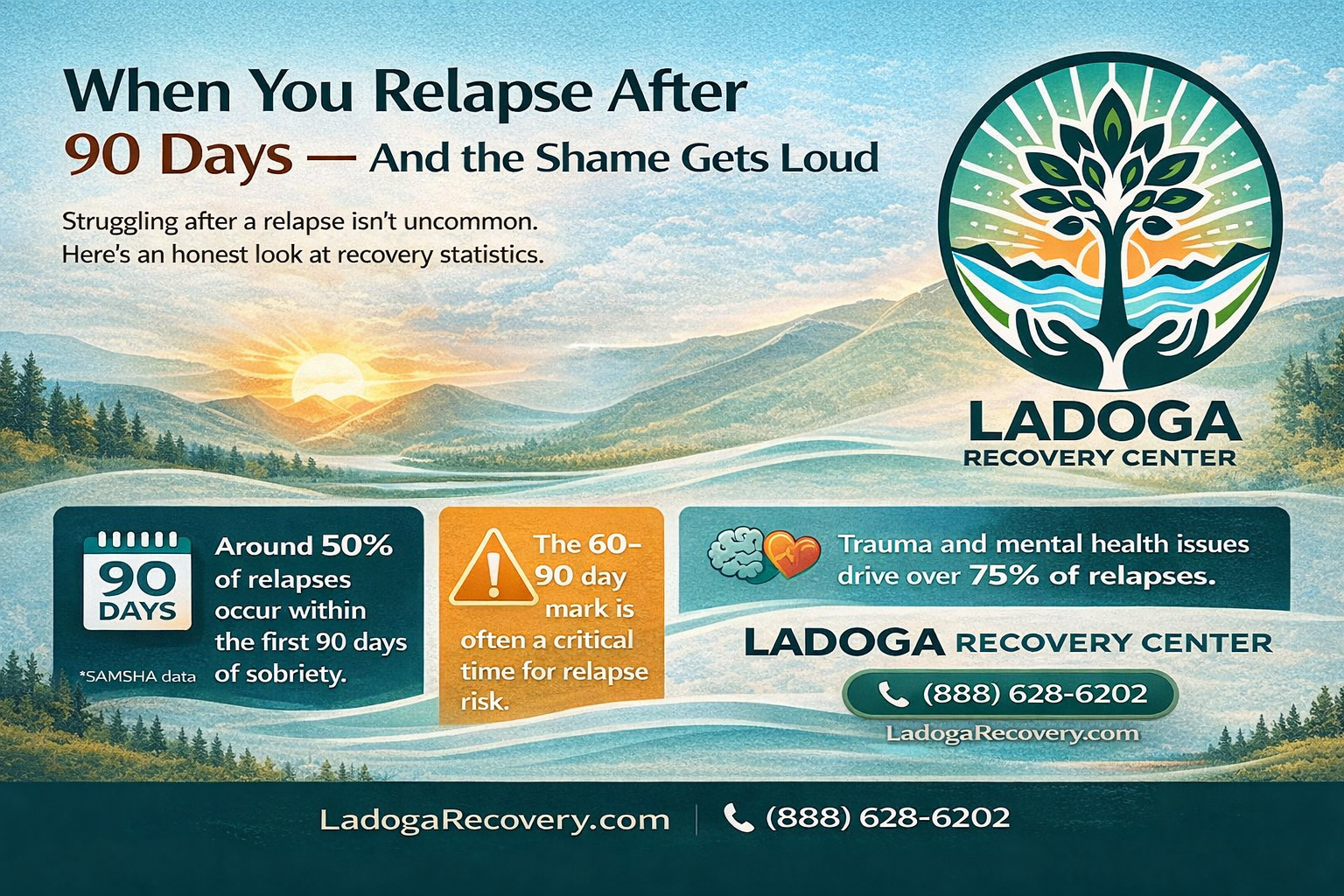
You’re Not Back at Day One — You’re at Day 91 With Insight
This part matters.
You are not back at the beginning.
You now know your triggers. You’ve seen what stress does to your sleep. You understand how isolation shifts your thinking. You’ve felt what happens when trauma symptoms start building quietly in the background.
That’s information you didn’t have before.
The first round of recovery teaches you how to stop. The second round often teaches you how to heal.
That’s a completely different depth of work.
White-Knuckling Isn’t the Same as Healing
In early recovery, there’s often a lot of focus on behavior. Don’t drink. Don’t isolate. Go to meetings. Call someone.
All of that matters.
But when PTSD is involved, healing has to go beyond behavior. It has to include nervous system regulation. Trauma processing. Learning how to sit with activation without panicking or numbing.
White-knuckling says, “Just don’t drink.”
Healing asks, “What happens in your body right before you want to?”
If alcohol has been your fastest relief from trauma symptoms, removing it without replacing it with real trauma work creates a gap. And gaps don’t stay empty for long.
This is where returning to structured support — like Alcohol addiction treatment — can look different the second time. Not as punishment. Not as proof you failed. But as a container strong enough to hold both sobriety and trauma recovery at the same time.
Recovery the Second Time Is Quieter — And Stronger
There’s less ego the second time. Less performance. Less obsession with counting days for applause.
It becomes more about stability than milestones.
You stay longer if needed. You open up sooner. You admit when something doesn’t feel manageable. You stop pretending you’re fine when you’re not.
And slowly, your nervous system learns that safety doesn’t have to come from alcohol.
It can come from connection. From therapy. From consistency. From honest support.
That kind of recovery has roots.
Frequently Asked Questions
Is relapse after 90 days common?
Yes. The 60–120 day window is a vulnerable time for many people. Early structure fades, and deeper emotional or trauma-related issues start surfacing. That doesn’t mean relapse is inevitable, but it does mean this stage requires more depth of support.
Does relapse mean treatment didn’t work?
Not necessarily. Treatment may have helped you stabilize, but deeper trauma work might still be needed. Recovery evolves. Sometimes the first round lays the foundation, and the second round builds the structure.
How do I know if PTSD is connected to my drinking?
If your urges spike after stress, conflict, sleep disruption, or reminders of past events, there may be a trauma connection. If alcohol consistently feels like fast relief from anxiety or intrusive thoughts, that pattern is important to explore with a trauma-informed professional.
Should I detox again if I relapsed?
If drinking resumed heavily or daily, medical detox may be recommended for safety. Alcohol withdrawal can be physically dangerous depending on your history. A professional assessment can determine the safest next step.
I’m embarrassed to go back. Will they judge me?
Quality programs understand relapse. Shame is common, but judgment is not the goal. The sooner you return to support, the less power shame has over your recovery.
What if I feel like I don’t have the energy to try again?
Then you don’t focus on forever. You focus on today. You focus on making one call. You focus on showing up once. You already proved you can do 90 days. Now the work is about building something that holds steady when trauma gets loud.
If you’re reading this after a relapse, hear this steady truth: you are not disqualified. You are not hopeless. You are not unwelcome.
Relapse after 90 days doesn’t erase your progress. It reveals where deeper healing is needed.
If you’re ready to take the next step, call (888) 628-6202 or visit our Alcohol addiction treatment services in Indianapolis to learn more.