


I wasn’t new to recovery. But I was starting to feel lost in it.
I had a few years clean. No drama. No relapse. My life was stable—on paper. But inside, things felt…off. I couldn’t name it, but the energy was gone. The spark I used to feel—the fire that pushed me to rebuild my life? It had faded.
I didn’t want to use. But I didn’t feel fully alive, either. I was going through the motions, numb in places I didn’t even know could go numb. And I remember thinking one night, after another bland day of “doing all the right things”: Is this really all recovery is?
That’s what brought me back to treatment. Not a crisis. Not a relapse. Just a quiet truth: I was stuck. And I didn’t want to stay that way. I reached out to Ladoga Recovery Center to see if an inpatient treatment program—even years into my recovery—could help. And it did.
You Don’t Have to Be in Freefall to Reenter Treatment
This idea that you only go back to treatment when everything falls apart? It’s a lie. Sometimes the most important turning points happen when no one else even sees a problem.
I wasn’t using. I hadn’t missed work. My relationships were intact. But inside, I felt flat. I was going through the motions—working, attending meetings, keeping structure—but none of it felt connected.
No one teaches you what to do when you’re stable on the outside but spiritually disconnected. It’s not as urgent as early recovery. But it’s just as real.
Medicaid Covered My Stay—Even Though I Was “Doing Okay”
When I first called, I hesitated. I thought they’d ask, “Why are you coming back if you haven’t relapsed?” But that’s not what happened.
The admissions team at Ladoga simply said, “You’re allowed to want more for yourself.”
They walked me through using my Indiana Medicaid to cover an inpatient treatment program—even though I wasn’t in crisis. And yes, it was fully covered. No surprise bills. No jumping through hoops.
Turns out, Medicaid isn’t just for emergencies. It’s also for healing. For deepening. For when you’re not sinking, but you know you’re not thriving either.
Inpatient Isn’t Just for First-Timers
This wasn’t my first time in treatment. I knew what to expect structurally. But what surprised me was how different the experience felt coming back as someone with years in recovery.
I wasn’t sitting in group trying to admit I had a problem. I was naming the ways I’d drifted from myself. The ways old patterns had crept in—quietly, subtly. I wasn’t craving substances. I was craving connection, purpose, and emotional freedom.
And that’s exactly what the program made space for.
What Changed During My Time Back
The program itself wasn’t wildly different. But I was. And because of that, the tools landed differently this time. Here’s what shifted:
- Therapy wasn’t about survival—it was about growth. I worked through old grief I’d never let surface in early recovery.
- My routine felt intentional again. Sleep, meals, movement—they weren’t just checkboxes. They became anchors.
- I remembered who I was without all the pressure. Just me. Not a sponsor. Not a success story. Not a helper. Just a human with space to breathe.
- I reconnected with my “why.” Why I got sober. Why I stayed. Why I still want more.
It wasn’t a reset. It was a reconnection.
It’s Okay to Outgrow Your Old Recovery Pattern
Here’s something we don’t talk about enough: the recovery life that saved you in year one may not be the recovery life that sustains you in year five. And that doesn’t mean you’re failing—it means you’re evolving.
What helped me stay sober early on was structure, rules, accountability. But now? I needed meaning. I needed renewal. I needed space to ask bigger questions without fear that someone would say, “Just be grateful.”
Gratitude is good. But curiosity is necessary, too.
This Wasn’t a Step Back. It Was a Step Deeper.
People get nervous about “going back” to treatment. Like it’s admitting defeat. But honestly? It felt like honoring where I really was.
Sometimes we need a new environment to see ourselves clearly. Sometimes we need to step away—not because we’re failing, but because we’re ready for more.
My inpatient stay didn’t erase my flatness overnight. But it gave me tools to explore it. Language to name it. And support to move through it. Quietly. Respectfully. Effectively.
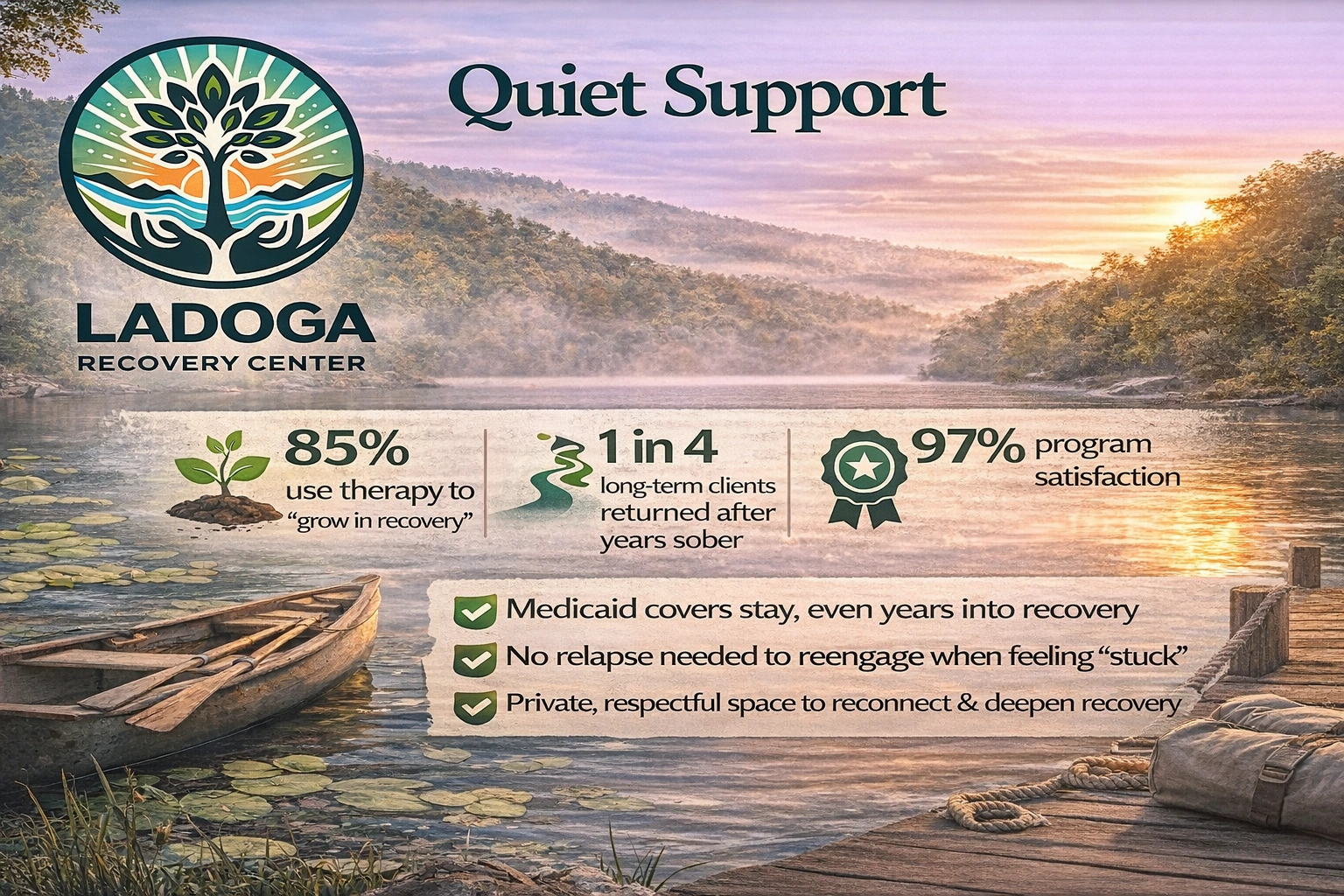
You Can Use Medicaid to Reengage, Not Just Recover
If you’ve been feeling disconnected in your recovery and you have Medicaid, this is your reminder: you can return. You can ask for help, even if you’re technically doing “fine.” You don’t need to justify your need with chaos.
At Ladoga Recovery Center, they don’t gatekeep treatment for just the most visible pain. They make space for the silent stuff too.
FAQs: Long-Term Alumni + Inpatient Treatment + Medicaid
Will they take me seriously if I haven’t relapsed?
Yes. Emotional flatness, spiritual disconnection, and recovery fatigue are valid reasons to return to care. You won’t be treated like you’re “starting over.”
Can Medicaid cover treatment if I’ve already used it before?
Most likely, yes. Coverage is based on medical necessity and eligibility. If you’re experiencing mental health symptoms or significant life stressors, you may qualify again. We’ll help you verify.
What’s the point of inpatient if I’m already sober?
Inpatient gives you immersive time to reconnect with yourself. You’re removed from daily stress, given therapeutic support, and offered space to reflect without pressure. It’s like a full-body reset for your recovery—without erasing your progress.
Will I be put in a group with people just starting recovery?
You may share space, yes—but groups are facilitated with respect for everyone’s stage of recovery. Many long-term alumni find value in supporting others and seeing their own growth reflected.
Can I talk to someone about whether this is a fit before committing?
Absolutely. No pressure, no sales pitch. Just a real conversation with someone who gets it. We’ll walk you through options and give you space to decide what’s right.
Final Thought: You’re Not “Broken” for Feeling This Way
If your sobriety is intact but your soul feels dusty, you are not alone. You’re not wrong. You’re not weak. You’re just ready for the next layer.
And if your system is tired of surviving but unsure how to start thriving, maybe this is your sign.
You’re Not New to Recovery—But You’re Not Done Growing
Call (888) 628-6202 to learn more about our inpatient treatment program services in Ladoga, Indiana.
Your story isn’t over. Your growth isn’t done. And your care doesn’t have to stop just because the crisis did.