


Waking up from a dream where you were drinking can feel unsettling.
Maybe in the dream you were at a party.
Maybe you ordered a drink without thinking.
Maybe you felt ashamed, scared, or out of control.
Then you wake up — and realize it wasn’t real.
If you’re recovering from alcohol addiction, this is more common than you think. Drinking dreams often happen as the brain adjusts after long-term alcohol use — especially in early sobriety.
In many cases, they’re a normal part of the brain healing after alcohol use.
What Are Drinking or Using Dreams?
Drinking dreams — sometimes called relapse dreams — are vivid dreams where you use alcohol again after becoming sober.
They often feel extremely real. You may:
-
Taste the alcohol
-
Feel the buzz
-
Experience guilt or panic
-
Wake up confused or anxious
For some people, the dream ends with relief. For others, it ends with fear.
But a dream is not a relapse.
It’s your brain processing change.
Drinking or using dreams are vivid and often emotionally charged dreams where individuals in recovery imagine themselves consuming substances they’ve worked hard to avoid. These dreams can occur at any stage of recovery, whether you’re newly sober or years into your sobriety journey.
Common Features of Drinking or Using Dreams
- The dream often involves scenarios where you are consuming alcohol or drugs, sometimes willingly, and other times reluctantly.
- Upon waking, you may feel confused, guilty, or relieved to realize it was only a dream.
- The dreams can trigger cravings or emotional distress, even if they have no real-world basis.
Why Do Drinking or Using Dreams Happen in Early Recovery?
Drinking or using dreams are a common phenomenon during recovery from addiction. They often feel vivid and real, leaving individuals with lingering emotions upon waking. While they can be unsettling, understanding why these dreams occur can help normalize the experience and reduce feelings of guilt or confusion.
1. Neurological Healing and Memory Reprocessing
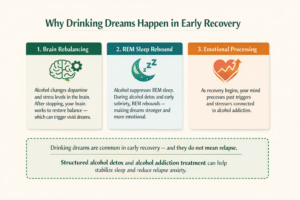
Addiction alters the brain’s reward system, creating strong associations between substances and pleasure. Even after someone stops using, these neural pathways can remain active. During recovery, the brain works to heal and reprocess these associations, which may manifest as substance-related dreams.
- Triggers from Memory: The brain consolidates memories during sleep. Past experiences with substances can resurface as part of this process, especially in the early stages of sobriety.
- Subconscious Activity: The subconscious mind may replay familiar scenarios involving substance use as a way of processing lingering cravings or fears.
2. Stress and Emotional Triggers
Stressful situations or unresolved emotions can significantly influence dream content. For individuals in recovery, daily challenges or reminders of past substance use can trigger these dreams.
- Emotional Stressors: Conflict, anxiety, or major life changes may provoke substance-related dreams as the mind attempts to cope with emotional upheaval.
- External Triggers: Seeing others use substances, hearing conversations about drinking, or even encountering certain smells can subtly influence the subconscious mind.
3. Early Recovery and Sobriety Milestones
Drinking or using dreams are especially common in the early stages of recovery when the brain is adjusting to life without substances. However, they can also occur during significant milestones in sobriety, such as anniversaries or celebrations.
- Fear of Relapse: Dreams may reflect subconscious fears of slipping back into old habits.
- Growth and Healing: These dreams can signify the brain working through the psychological aspects of recovery, signaling progress rather than failure.
Why Drinking Dreams Often Increase After Alcohol Detox
Many people notice drinking dreams shortly after completing alcohol detox.
During detox, your body clears alcohol from your system. Your nervous system begins to stabilize. Your sleep cycle starts to reset.
This period can include:
-
Insomnia
-
Night sweats
-
Anxiety
-
Restlessness
-
Intense or vivid dreams
As your brain recalibrates after alcohol addiction, it may replay old memories tied to drinking. That doesn’t mean you want alcohol. It means your brain is reorganizing itself without it.
If you’re still experiencing strong withdrawal symptoms or severe sleep disruption, medically supervised alcohol detox can provide structure and monitoring to help you stabilize safely.
Are Drinking Dreams a Warning Sign?
In most cases, no.
Drinking dreams are common in early recovery from alcohol addiction. For many people, they actually reflect how much they care about staying sober.
However, drinking dreams may signal that you need more support if they are paired with:
-
Strong daytime cravings
-
Increased stress
-
Isolation
-
Mood swings
-
Thoughts about returning to drinking
Recovery isn’t just about stopping alcohol. It’s about building the tools to live without it.
If drinking dreams are leaving you anxious or overwhelmed, structured alcohol addiction treatment can help strengthen coping skills and reduce relapse risk.
The Emotional Impact of Relapse Dreams
Even though they aren’t real, drinking dreams can bring up powerful emotions.
You might wake up feeling:
-
Ashamed
-
Disappointed
-
Afraid
-
Confused
-
Relieved
These feelings are normal. But they don’t define your progress.
Many people in long-term recovery report having drinking dreams months or even years after stopping alcohol. Over time, they usually become less frequent and less intense.
Instead of viewing the dream as failure, try to see it as information.
Ask yourself:
-
Was I stressed recently?
-
Am I overwhelmed?
-
Do I need more support right now?
Dreams often reveal emotional pressure — not weakness.
If You’re Trying to Quit Drinking on Your Own
Some people experiencing drinking dreams are not in treatment yet. You may be trying to stop drinking without support.
If you are noticing:
-
Shaking or tremors
-
Heavy sweating
-
Severe anxiety
-
Confusion
-
Intense cravings
-
Ongoing insomnia
These can be signs of alcohol withdrawal.
Alcohol withdrawal can be dangerous for some individuals, especially those with long-term alcohol addiction. Medical alcohol detox provides supervision and support to reduce risks and manage symptoms safely.
You don’t have to push through it alone.
How Structured Alcohol Addiction Treatment Helps
Drinking dreams are often strongest in early recovery from alcohol addiction — especially without consistent support.
Comprehensive alcohol addiction treatment helps by:
-
Stabilizing sleep
-
Teaching relapse prevention skills
-
Addressing trauma or anxiety
-
Providing daily structure
-
Offering peer and clinical support
When your nervous system becomes more regulated and your coping skills grow stronger, drinking dreams often lose their intensity.
Treatment doesn’t just remove alcohol.
It builds stability and confidence.
What to Do After a Drinking Dream
If you wake up from one:
-
Take a slow breath.
-
Remind yourself it was a dream.
-
Notice your emotions without judging them.
-
Talk to someone you trust.
-
Journal what came up.
Don’t let shame take over.
Recovery includes healing your mind as well as your body. Dreams are part of that process.
You Don’t Have to Navigate Recovery Alone
Drinking dreams can feel confusing — especially in early sobriety. But they do not mean you’re failing. In many cases, they mean your brain is adjusting after alcohol addiction and learning how to function without alcohol.
If you’re struggling with cravings, withdrawal symptoms, or emotional instability, professional support can make the process safer and more manageable.
Whether you need medically supervised alcohol detox or comprehensive alcohol addiction treatment, the right level of care can help you feel grounded and supported in recovery.
Healing takes time.
But with the right support, it does happen.
If you or someone you love is struggling with addiction or the challenges of recovery, contact us today at (888)628-6202 or visit our website to learn more about our services and how we can help you build a brighter, substance-free future.