

You already know something needs to change. That quiet knowing—buried under fear, exhaustion, and uncertainty—can feel like both a burden and a beginning. It’s what brings many people to a place like Ladoga Recovery Center. And for most, that very first step isn’t therapy or group meetings. It’s drug detox—a medically supported, emotionally safe process where your body begins to heal.
If you’re considering treatment for the first time, this guide is for you. We’ll walk you through what detox really is, why it matters, and what to expect—without pressure, shame, or sugarcoating. Just clarity, calm, and a path forward.
What Is Drug Detox?
Drug detox is the process of allowing substances to leave your system safely, under medical supervision. That means more than just “stopping.” It means monitoring your body as it reacts to withdrawal, easing symptoms when possible, and keeping you physically and emotionally supported throughout.
Withdrawal can look very different from person to person. Some people feel flu-like aches and chills. Others experience anxiety, restlessness, or sleep disruption. In certain cases—especially with alcohol, opioids, or benzodiazepines—withdrawal can be medically serious or even life-threatening.
But here’s the key: you don’t have to go through it alone. Our drug detox program in Ladoga, Indiana is designed to reduce both the risk and the fear of early recovery. You’ll be monitored, cared for, and never made to feel like your pain is something to be ashamed of.
Why Detox Comes First in the Recovery Process
You may have already looked into therapy or an outpatient program. Maybe you’ve even thought about skipping detox and going straight to the “work” of recovery. But detox isn’t just a medical box to check—it’s a crucial foundation.
Here’s why:
- Your brain and body need stability before change is possible. If you’re still in withdrawal, it’s hard to think clearly, regulate your emotions, or retain anything in therapy.
- Withdrawal symptoms can be intense or dangerous. Trying to “white knuckle” detox at home puts your health and safety at risk.
- Starting strong helps you stay longer. A medically supported detox can increase your chances of staying in treatment longer—and benefiting more deeply.
Think of detox like prepping the soil before you plant something. Therapy, community, purpose—they all grow better when your system isn’t still in survival mode.
What to Expect at a Drug Detox Facility
If you’ve never been to treatment before, imagining detox can bring up a lot of anxiety. Will I be in pain? Will I be safe? What if I panic and want to leave?
At Ladoga Recovery Center, we believe that safety isn’t just physical—it’s emotional, too.
Here’s a closer look at what you can expect:
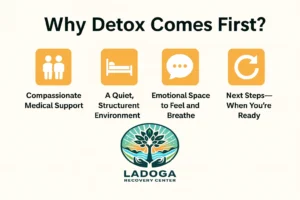
Compassionate Medical Support
You’ll be welcomed by licensed nurses and support staff who know how to care for people in withdrawal. Your vitals will be checked regularly, and any withdrawal symptoms—like shaking, sweating, nausea, or emotional distress—will be treated appropriately.
A Quiet, Structured Environment
Detox isn’t a time for pressure or performance. It’s a time for stabilization. You’ll have a comfortable space to rest, meals provided, and a daily routine that gently reintroduces structure without overwhelm.
Emotional Space to Feel and Breathe
For many, detox is the first time in a long time that they’ve been sober for more than a few hours. That can be emotionally intense. We give you room to cry, ask questions, or just be quiet. You don’t have to “show up” for anyone but yourself.
Next Steps—When You’re Ready
As you begin to feel stronger, our team will gently introduce what comes next. That might mean transitioning into residential treatment, or stepping into a lower level of care like PHP or IOP. We’ll walk you through every option, answer your questions, and help you make a plan that fits your goals.
Is Drug Detox Always Required?
No. Not everyone needs formal detox before beginning treatment. But if you:
- Use daily or multiple times per week
- Experience physical symptoms when you stop using
- Need more of a substance to get the same effect
- Feel panic, shaking, or intense cravings without it
…then medically supervised detox is strongly recommended.
Trying to skip this step isn’t a shortcut—it’s a risk. Even if you’ve detoxed before or believe your symptoms are mild, we urge you to consult a professional. Your safety matters.
Detox Isn’t a Cure—It’s a Starting Point
It’s easy to think of detox as the hard part. And in some ways, it is. But real recovery isn’t just about removing substances—it’s about understanding what they were covering.
Once your system is clear, that’s when the deeper healing can begin:
- Learning how to manage triggers without escape
- Exploring trauma or patterns you’ve buried
- Building healthy habits and honest relationships
- Creating a life you don’t need to numb
Detox opens the door to all of this. Not by fixing everything—but by helping you feel like yourself again, enough to begin.
Common Fears About Drug Detox—And What’s Actually True
Fear of detox keeps a lot of people stuck. Let’s name those fears—and answer them honestly.
“Will it hurt?”
Some withdrawal symptoms can be painful—but we don’t let you suffer in silence. Medication, hydration, and emotional support are all part of the process.
“What if I fail again?”
The fact that you’re even thinking about treatment is a sign of courage, not failure. You don’t have to be confident. Just willing.
“What if I’m not ready for everything that comes next?”
You don’t have to be ready for forever. You just have to be ready for today.
Frequently Asked Questions About Drug Detox
How long does detox take?
It depends on the substance and your physical health. Most people stay in detox between 3 and 7 days. Our team monitors your progress closely and helps determine when you’re ready for the next level of care.
What substances require detox?
Alcohol, opioids (like heroin or fentanyl), and benzodiazepines (like Xanax) typically require supervised detox. Stimulants and marijuana may not require medical detox, but can still benefit from stabilization support.
Will I be given medication?
If needed, yes. Medication-assisted detox is available to ease symptoms like anxiety, nausea, insomnia, or seizures. Every decision is made with your safety and comfort in mind.
Can I talk to my family during detox?
Yes, depending on your condition and consent. We believe connection is healing, and we support communication with loved ones when it supports your progress.
What happens after detox?
After detox, many people transition into residential treatment or outpatient care. Our staff helps guide that next step so you’re not left wondering what to do.
A Final Thought: You’re Not Broken—You’re Brave
If you’re considering detox, it means you haven’t given up on yourself. Even if everything feels uncertain, the part of you that wants healing is still alive.
At Ladoga Recovery Center, we don’t expect you to show up ready, polished, or full of hope. We just ask that you come as you are—and let us help you begin.
Whether you’re terrified, tired, or just quietly curious if recovery could work for you, know this: detox isn’t the whole story. But it is the first page of a better one.
Ready to take the first step?
Call (888) 628-6202 to learn more about our drug detox services in Ladoga, Indiana. You don’t have to do this alone.