


You don’t wake up one day suddenly convinced you need help.
It’s quieter than that.
It shows up in small moments—pausing before your first drink, noticing how your body feels without it, wondering if what used to feel casual now feels… necessary.
If you’re asking questions, you’re already paying attention. And that’s often where real change begins.
If you want to understand what early, medically supported support can look like, you can start by exploring alcohol detoxification treatment in Indiana. Not as a commitment—but as information.
“Do I really need help, or am I just overthinking this?”
This question tends to loop.
Part of you says, “It’s not that bad.”
Another part quietly asks, “Then why am I thinking about it this much?”
Here’s the truth most people don’t say out loud:
People who don’t have a complicated relationship with alcohol don’t spend this much time analyzing it.
You don’t need a diagnosis.
You don’t need a dramatic moment.
But if drinking is starting to:
- Take up more mental space than you want
- Feel harder to control than it used to
- Affect your mood, sleep, or energy
…then it’s worth paying attention.
Not panic. Just attention.
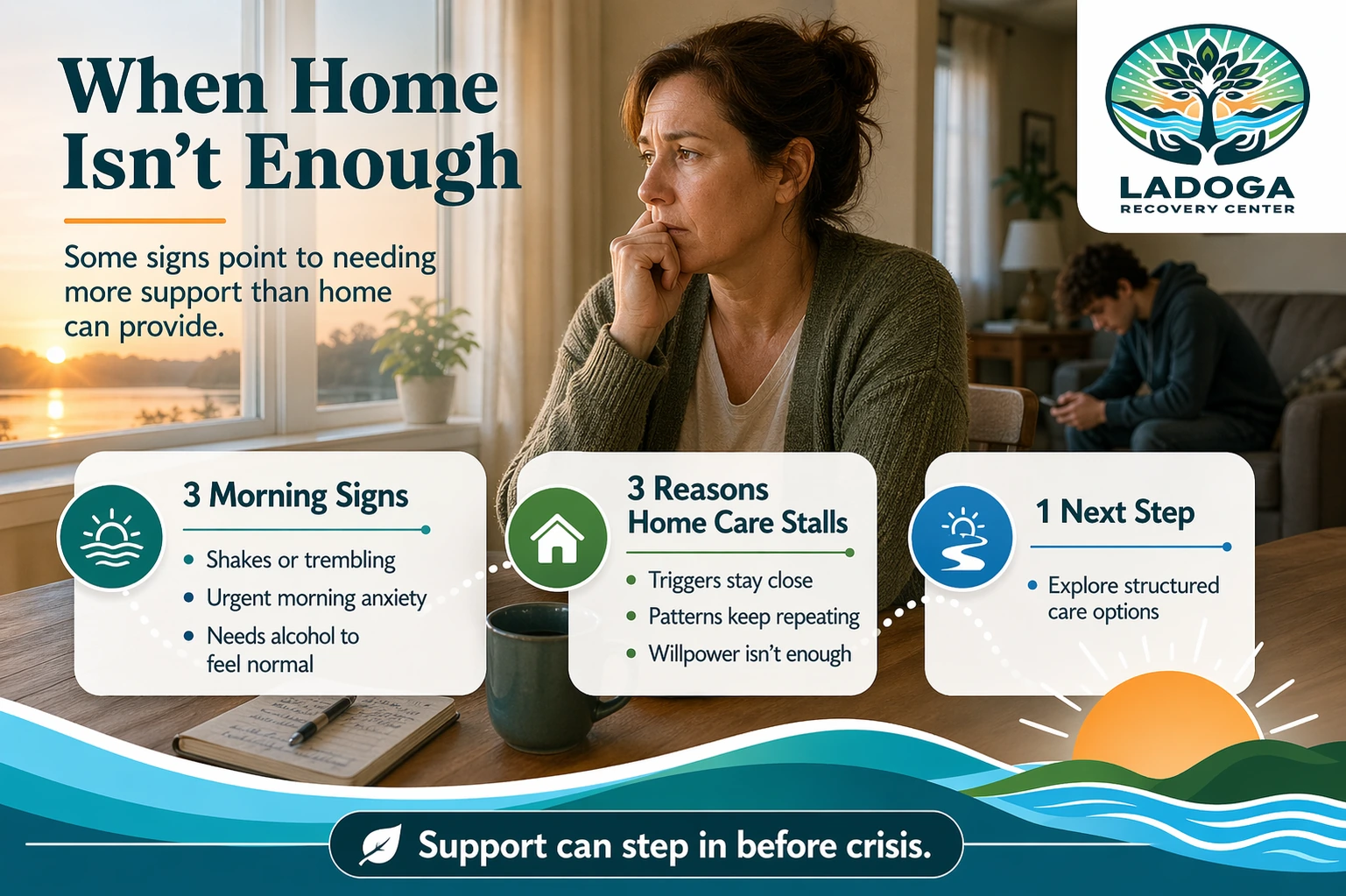
“What actually happens if I stop drinking for a few days?”
This is where things get more real.
Some people stop and feel fine. Others notice something different—something uncomfortable.
It might look like:
- Restlessness that doesn’t go away
- Trouble falling or staying asleep
- Anxiety that feels physical, not just mental
- A sense that your body is “off” without alcohol
For some, those symptoms escalate. That’s when support matters.
If your body has adapted, stopping suddenly can feel overwhelming—and in some cases, unsafe. That’s why people begin exploring alcohol detox Indianapolis options that include medical care, not just advice to “cut back.”
Because this isn’t just about habits anymore.
It’s about your body recalibrating.
“Is detox only for people who have it really bad?”
This is one of the biggest misconceptions.
Detox isn’t about how “bad” things look from the outside.
It’s about what your body is experiencing on the inside.
You can look completely put together and still:
- Feel withdrawal symptoms
- Need alcohol to steady yourself
- Struggle to get through the day without it
Detox is simply a way to make that transition safer and more manageable.
It’s not a label.
It’s support for your nervous system while it resets.
“What’s the difference between detox and everything else?”
Think of it like layers.
Detox is the first layer—it focuses on your body. Stabilizing. Regulating. Getting you through the immediate physical impact of stopping.
But once your body settles, there’s still the question of:
- Why drinking became part of your routine
- What triggers it
- What replaces it
That’s where ongoing care comes in.
Some people move into structured daytime support.
Others choose multi-day weekly treatment that fits around work or family.
If you’re exploring next steps, there are different treatment options in Indiana that meet you where you are—not where you think you’re supposed to be.
“What if I’m still functioning? Doesn’t that mean I’m okay?”
This is the part that keeps a lot of people stuck.
Because from the outside, everything looks fine.
You’re showing up. You’re working. You’re handling responsibilities.
But functioning can hide a lot.
You might still:
- Plan your day around drinking
- Feel anxious when you can’t drink
- Notice it’s harder to stop than it used to be
High-functioning doesn’t mean unaffected.
It just means the impact hasn’t become visible yet.
And waiting for it to become visible usually means waiting longer than necessary.
“What does getting help actually feel like?”
This is where fear tends to spike.
People imagine something extreme. Clinical. Cold. Restrictive.
But most modern care doesn’t look like that.
It looks like:
- Conversations that don’t judge you
- Medical support that keeps you safe
- Structure that actually reduces anxiety instead of increasing it
For many people, the biggest surprise is relief.
Not because everything is fixed overnight—but because they’re no longer trying to manage everything alone.
Someone in Indianapolis might walk into a conversation expecting pressure—and instead find clarity. That shift alone can change what comes next.
“What if I try this and realize I don’t actually need it?”
Then you leave with more awareness than you had before.
That’s not a mistake. That’s useful.
A lot of people delay getting help because they’re afraid of overreacting.
But in reality, early conversations often prevent things from escalating.
It’s easier to step back from support than it is to dig out of something that’s grown deeper over time.
You’re not locking yourself into anything.
You’re giving yourself more information.
“Will this completely change my life overnight?”
No.
And that’s actually a good thing.
Change that lasts tends to happen in layers, not in sudden flips.
You might start with:
- Understanding what your body needs
- Stabilizing physically
- Exploring what comes next
There’s no requirement to decide everything at once.
People near Crawfordsville, Indiana often begin with one conversation—just enough to understand their options—and then take the next step when they’re ready.
That’s how this usually works.
“Why do people wait so long before getting help?”
Because nothing looks urgent—until it does.
Because they’re managing—until they’re not.
Because they tell themselves:
- “I can figure this out.”
- “It’s not serious enough yet.”
- “I’ll deal with it later.”
But later tends to come with more complexity, not less.
There’s a quiet window where change is easier.
Not easy—but easier.
And asking questions like this is often the beginning of that window.
“What would taking the next step actually look like?”
It doesn’t have to be dramatic.
It can be simple:
- Reaching out and asking what support might look like
- Learning how your body responds to stopping
- Understanding the difference between levels of care
That’s it.
No pressure. No long-term commitment required upfront.
Just clarity.
“Am I allowed to explore this without labeling myself?”
Yes.
Completely.
You don’t need to call yourself anything.
You don’t need to decide where you fit.
You’re allowed to be in the middle of figuring it out.
In fact, most people who reach out are.
You Don’t Have to Be Certain to Be Curious
Here’s the part most people overlook:
You don’t need to be sure you need help to start exploring it.
You just need to be honest enough to admit something feels off.
That quiet awareness?
That’s not weakness.
That’s the beginning of change.
And you can move at your own pace from here.
Ready to Talk It Through?
You don’t have to commit to anything today.
You don’t have to have the perfect explanation.
You just have to take one step toward clarity.
Call (888) 628-6202 or visit alcohol detoxification treatment in Indiana to learn more.