


I remember sitting across from a father whose son had recently decided to stop drinking.
At first, he felt hopeful.
His son was finally trying.
Then the phone calls started.
His son couldn’t sleep. He was sweating through his sheets. His hands shook so badly he struggled to hold a glass of water. He seemed anxious one moment and exhausted the next.
By day three, the father looked at me and asked a question I’ve heard countless times over the years:
“How do I know what’s normal and what’s dangerous?”
If you’re the parent of a young adult who has been drinking heavily and is now trying to stop, you may be carrying that same question.
You may also be carrying fear.
Fear that you’re overreacting.
Fear that you’re underreacting.
Fear that you’re missing something important.
As a clinician, I want you to know that these concerns are understandable.
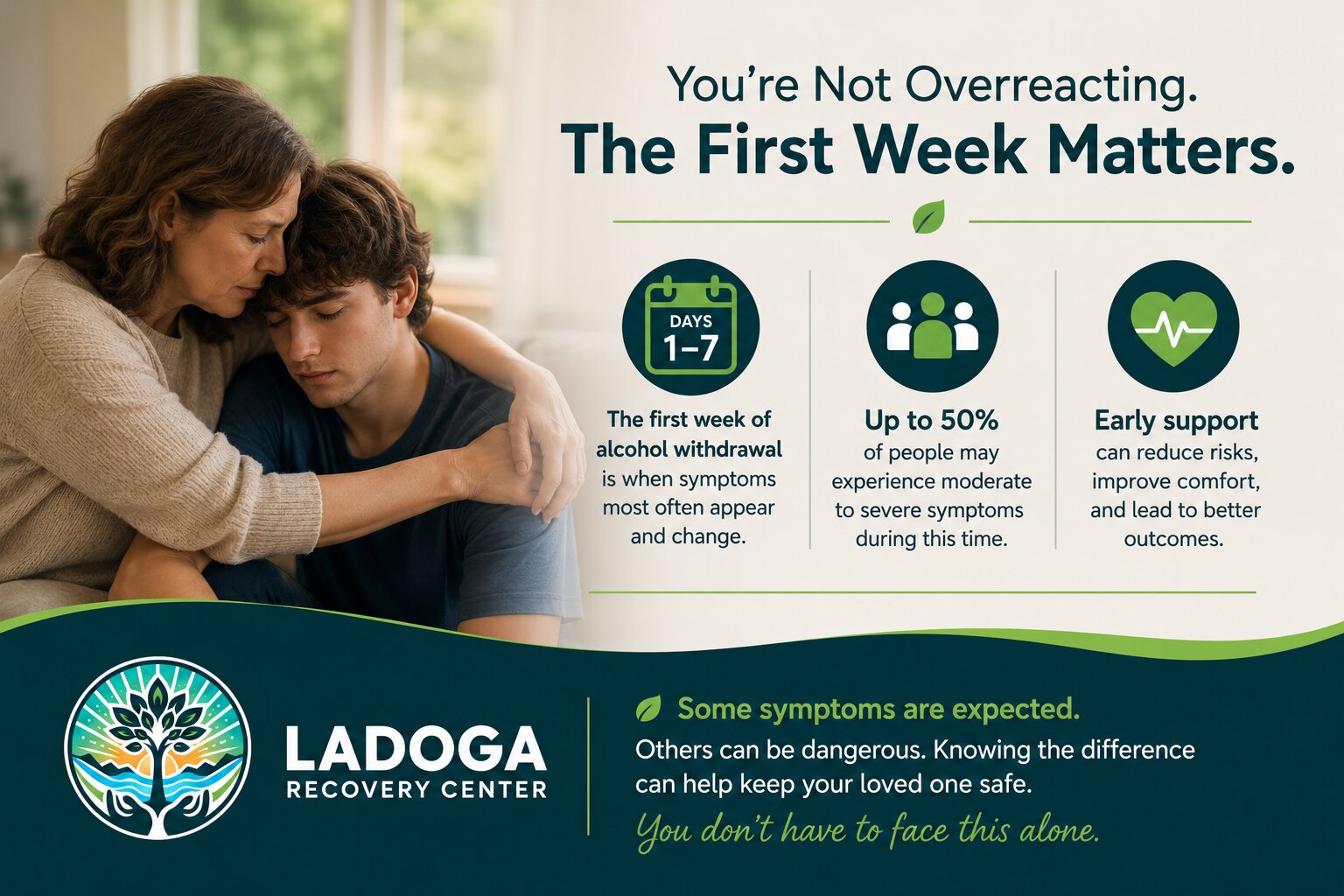
The first week after someone stops drinking can be unpredictable. Some symptoms are expected. Others can become serious. Knowing the difference can help you make informed decisions during a stressful and emotional time.
Many parents begin looking for answers long before they begin exploring professional support in Indiana.
The good news is that you do not have to navigate this uncertainty alone.
FAQ: Why Is the First Week So Important?
Many parents assume recovery begins the moment someone puts down a drink.
In reality, that’s often when the body’s adjustment process begins.
Alcohol affects multiple systems throughout the body, including the brain, nervous system, sleep regulation, heart rate, and mood.
When someone has been drinking heavily or regularly, the body gradually adapts to alcohol’s presence.
Once alcohol is removed, the body must work to regain balance.
That process can create symptoms ranging from uncomfortable to potentially dangerous.
The first week is often the period when those changes become most noticeable.
This is why medical supervision can be so important for some individuals.
The challenge is that symptoms don’t always follow a predictable pattern.
Someone may appear relatively stable one day and significantly worse the next.
That unpredictability is one reason families often feel overwhelmed.
FAQ: What Symptoms Are Common During the First Few Days?
One of the most reassuring things parents can hear is that certain symptoms are relatively common.
You may notice your child experiencing:
- Tremors or shaking
- Sweating
- Restlessness
- Anxiety
- Headaches
- Nausea
- Fatigue
- Mood swings
- Irritability
- Difficulty sleeping
These symptoms can be uncomfortable to witness.
Parents often describe feeling helpless because they want to make their child feel better but don’t know how.
One mother told me:
“I felt like I was watching someone fight an invisible battle.”
That description captures the experience well.
Withdrawal isn’t always obvious from the outside. Yet the physical and emotional discomfort can be significant.
FAQ: What Warning Signs Should Never Be Ignored?
This is where parents need to pay close attention.
Certain symptoms require immediate medical attention.
These may include:
- Hallucinations
- Seizures
- Severe confusion
- Loss of consciousness
- Extreme agitation
- Significant disorientation
- Difficulty staying awake or responsive
These symptoms are not something families should try to manage on their own.
Alcohol withdrawal can become medically dangerous for some individuals.
Parents sometimes hesitate because they worry about overreacting.
In situations involving serious withdrawal symptoms, it is generally safer to seek professional guidance rather than assume symptoms will improve on their own.
Trust your instincts.
If something feels wrong, it’s worth paying attention.
FAQ: Why Does My Child Seem Worse at Night?
Many parents notice symptoms intensify during the evening.
This can be especially frightening.
A young adult who seemed relatively stable during the day may become significantly more anxious, restless, or uncomfortable at night.
There are several reasons this can happen.
Fatigue accumulates throughout the day.
Anxiety often increases when distractions disappear.
Sleep difficulties become more noticeable as bedtime approaches.
The result is that evenings can feel emotionally and physically harder.
This doesn’t automatically mean something dangerous is happening.
However, it does mean parents should continue monitoring symptoms carefully.
FAQ: How Long Do Symptoms Last?
This is often the first question families ask.
Unfortunately, there isn’t a single answer.
Every person’s body responds differently.
Age, health history, drinking patterns, genetics, and other factors can all influence recovery.
Many families searching online for information about the alcohol withdrawal timeline first week are hoping to find certainty.
They want someone to tell them:
“By day four you’ll be okay.”
Recovery rarely works that way.
Some people improve quickly.
Others need additional time and support.
Rather than focusing on an exact timeline, it can be more helpful to focus on overall safety and symptom progression.
FAQ: What If They Start Drinking Again?
This is one of the most painful moments many parents experience.
You watch your child struggle through difficult symptoms.
You see effort.
You see determination.
Then suddenly they’re drinking again.
The emotional reaction is often immediate.
Disappointment.
Anger.
Fear.
Many parents assume the attempt has failed.
I encourage families to look at the situation differently.
Sometimes people return to alcohol because withdrawal symptoms become overwhelming.
Sometimes fear takes over.
Sometimes they underestimate how difficult the process will be.
A return to drinking does not automatically mean a person has given up on recovery.
Over the years, I’ve worked with many young adults who attempted to stop multiple times before finding lasting success.
Those earlier attempts weren’t wasted.
They were part of the journey.
FAQ: Should I Let Them Sleep Through Withdrawal?
Parents often become concerned when their child spends long periods sleeping.
In some situations, fatigue is expected.
The body is working hard to adjust.
However, significant changes in responsiveness should always be taken seriously.
If your child becomes unusually difficult to wake, appears confused when awake, or seems significantly different from their normal behavior, professional evaluation may be necessary.
When in doubt, seek guidance.
The goal is not to panic.
The goal is to stay informed.
FAQ: What Does Professional Support Actually Change?
Many parents imagine treatment only becomes necessary when someone reaches a crisis point.
In reality, professional support often helps prevent crises from developing.
Medical teams can:
- Monitor symptoms
- Assess risk factors
- Improve comfort
- Address complications quickly
- Create a recovery plan
- Provide ongoing recommendations
For families navigating uncertainty, professional guidance can reduce some of the fear that comes with not knowing what happens next.
Additional care in Indiana may help families better understand available options and appropriate next steps.
FAQ: Is It Normal for Parents to Feel Like They’re Falling Apart Too?
Absolutely.
Parents often spend so much time worrying about their child that they overlook their own exhaustion.
You may be:
- Constantly checking your phone
- Watching for symptoms
- Losing sleep
- Monitoring behavior
- Anticipating bad news
- Carrying guilt
- Questioning your decisions
That level of stress affects people.
I’ve worked with parents who couldn’t remember the last time they felt relaxed.
If this describes you, please know that your reactions are understandable.
Supporting someone through withdrawal can feel like standing outside during a storm, unable to control the weather but desperate to keep someone safe.
FAQ: What Gives Families Hope?
Hope usually doesn’t arrive all at once.
It arrives in small moments.
A treatment conversation accepted.
A difficult day completed safely.
A willingness to ask for help.
A night of better sleep.
A return phone call.
A step forward.
I’ve watched many families enter my office convinced things would never improve.
Months later, those same families were having entirely different conversations.
They weren’t celebrating perfection.
They were celebrating progress.
Recovery rarely happens overnight.
But it does happen.
And many people who once seemed stuck eventually find stability, connection, and purpose again.
Frequently Asked Questions
How soon can alcohol withdrawal symptoms begin?
Symptoms may begin within several hours after the last drink, although timing varies based on the individual’s drinking history and overall health.
Are shaking and sweating normal during withdrawal?
Yes. Tremors, sweating, anxiety, and sleep disturbances are among the more common symptoms people experience during early withdrawal.
When should parents seek emergency medical attention?
Immediate medical attention should be sought if a person experiences seizures, hallucinations, severe confusion, loss of consciousness, or other serious symptoms.
Can alcohol withdrawal become life-threatening?
In some situations, yes. This is one reason professional medical guidance can be important during the withdrawal process.
Is relapse common during withdrawal?
Some individuals return to drinking because symptoms become difficult to manage. Relapse does not mean recovery is impossible.
What if my child refuses help?
Continue expressing concern, sharing information, and keeping communication open. Many people become more willing to accept support over time.
Can someone recover after multiple attempts?
Absolutely. Many individuals who achieve long-term recovery experienced previous setbacks before finding lasting success.
The Next Step
If your child is experiencing alcohol withdrawal symptoms and you’re unsure what you’re seeing, trust yourself enough to ask questions.
You do not need to wait for certainty.
You do not need to wait for a crisis.
And you do not need to carry this burden alone.
Sometimes the most important thing a parent can do is reach out before things become overwhelming.
Call (888) 628-6202 or visit our levels of care for addiction treatment in Indiana and alcohol detoxification treatment program in Indiana services to learn more about our levels of care for addiction treatment in Crawfordsville, Indiana, detox treatment programs in Indianapolis, alcohol detoxification treatment program services in Indiana.