


Anxiety disorders affect millions of Americans, and benzodiazepines remain one of the most commonly prescribed short-term treatments for panic attacks, severe anxiety, and certain seizure disorders. Two of the best-known medications in this class are Klonopin and Xanax.
Although they belong to the same drug family, they are not interchangeable. They differ in how quickly they begin working, how long their effects last, and how they are typically prescribed. Understanding these differences can help patients have informed conversations with their healthcare providers and better understand the risks associated with long-term use.
For individuals who have developed dependence on either medication, professional benzo addiction treatment can provide medically supervised care and support throughout recovery. At Ladoga Recovery Center, we help people throughout Ladoga, Crawfordsville, Indianapolis, and surrounding Indiana communities safely address benzodiazepine dependence.
Klonopin vs Xanax: Quick Comparison
Feature |
Klonopin (Clonazepam) |
Xanax (Alprazolam) |
|---|---|---|
| Generic Name | Clonazepam | Alprazolam |
| Drug Class | Benzodiazepine | Benzodiazepine |
| FDA Approval | Panic disorder, seizure disorders | Anxiety disorders, panic disorder |
| Onset | Moderate | Rapid |
| Duration | Long-acting | Short-acting |
| Typical Half-Life | 30–40 hours | 11–16 hours |
| Common Dosing | 1–3 times daily | Several times daily |
| Risk of Dependence | High with prolonged use | High with prolonged use |
| Withdrawal Risk | Significant | Significant, especially after abrupt discontinuation |
While both medications are effective when prescribed appropriately, their differences influence how they are used in clinical practice.
What Is Klonopin (Clonazepam)? Uses, Side Effects, Addictiveness
Klonopin is the brand name for clonazepam, a prescription benzodiazepine approved by the U.S. Food and Drug Administration (FDA).
It increases the activity of gamma-aminobutyric acid (GABA), a neurotransmitter that slows activity in the central nervous system. This calming effect helps reduce excessive brain activity associated with anxiety and seizures.
Common Uses
Healthcare providers commonly prescribe Klonopin for:
- Panic disorder
- Certain seizure disorders
- Short-term management of severe anxiety (off-label in some situations)
Because Klonopin lasts longer than many other benzodiazepines, it often provides more sustained symptom relief throughout the day.
Common Side Effects
Like other benzodiazepines, Klonopin may cause:
- Drowsiness
- Fatigue
- Dizziness
- Problems with coordination
- Slower reaction time
- Memory difficulties
- Confusion
These effects may be more noticeable when treatment first begins or after dose increases.
Is Klonopin Addictive?
When taken exactly as prescribed for short periods, many people use Klonopin safely under medical supervision.
However, regular use over weeks or months can lead to physical dependence. This means the body adapts to the medication, making it unsafe to stop suddenly without medical guidance.
Dependence is not the same as addiction, but long-term use increases the possibility that misuse or addiction could develop in some individuals.
What Is Xanax (Alprazolam)? Uses, Side Effects, Addictiveness
Xanax is the brand name for alprazolam, another benzodiazepine that also enhances GABA activity in the brain.
Unlike Klonopin, Xanax reaches peak levels more quickly, making it especially effective for rapidly reducing acute anxiety and panic symptoms.
Common Uses
Xanax is commonly prescribed for:
- Generalized anxiety disorder
- Panic disorder
- Short-term anxiety relief
Because it works quickly, many patients experience symptom relief within an hour.
Common Side Effects
Possible side effects include:
- Sleepiness
- Lightheadedness
- Impaired coordination
- Memory problems
- Difficulty concentrating
- Slowed thinking
Alcohol and opioid medications significantly increase the risk of dangerous sedation when combined with Xanax.
Is Xanax Addictive?
Like Klonopin, Xanax has legitimate medical uses and can be effective when taken exactly as directed.
However, because it acts rapidly and leaves the body sooner, some people experience stronger fluctuations between doses. This may contribute to earlier withdrawal symptoms if doses are missed, particularly after prolonged use.
As with all benzodiazepines, dependence can occur even during appropriate therapeutic use, while addiction involves compulsive use despite harm.
Key Differences Between Klonopin and Xanax
Although these medications belong to the same drug class, several important differences affect how physicians prescribe them.
Speed of Onset
One of the biggest distinctions is how quickly they begin working.
Xanax
- Faster onset
- Often produces noticeable relief within 30–60 minutes
- Frequently used for sudden panic symptoms
Klonopin
- Slightly slower onset
- More gradual symptom control
- Better suited for longer-lasting anxiety management
Duration of Action
Klonopin remains active much longer.
Approximate durations include:
- Klonopin: effects may last 8–12 hours or longer
- Xanax: effects generally last 4–6 hours
Because of this difference, Xanax often requires more frequent dosing.
Half-Life
Half-life refers to how long it takes the body to eliminate half of a medication.
- Klonopin: approximately 30–40 hours
- Xanax: approximately 11–16 hours
The longer half-life of Klonopin contributes to more stable blood levels throughout the day.
Potency
Both medications are potent benzodiazepines.
Rather than asking which is “stronger,” physicians compare equivalent therapeutic doses. Neither medication is universally stronger—they simply differ in dosing, onset, and duration.
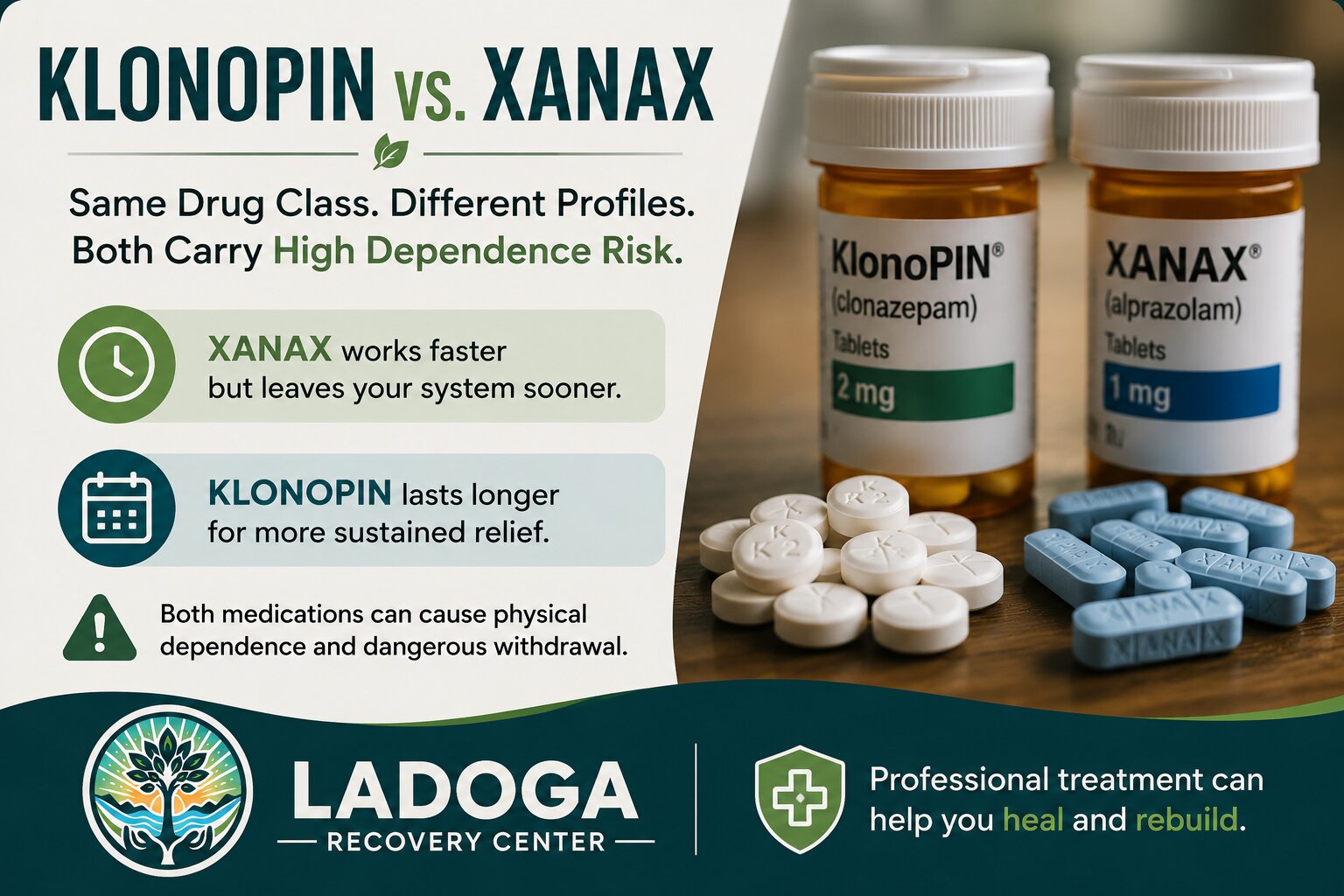
Which Is More Addictive?
Many people searching Klonopin vs Xanax want a simple answer.
The reality is more nuanced.
Both medications are Schedule IV controlled substances under the Controlled Substances Act and both carry a recognized risk of misuse, physical dependence, and addiction.
Several factors influence risk, including:
- Dose
- Length of treatment
- Personal history of substance use
- Mental health conditions
- Concurrent alcohol or opioid use
Some clinicians believe Xanax’s faster onset and shorter duration may make it more likely to produce cycles of relief followed by rebound anxiety, which can encourage repeated use in some individuals. However, Klonopin can also lead to dependence and addiction when used long term.
There is no “safe” benzodiazepine to misuse.
Instead of focusing on which medication is more addictive, it’s more accurate to understand that both require careful medical supervision and should never be stopped abruptly without physician guidance because withdrawal can be serious and, in some cases, life-threatening.
Signs Someone May Be Developing Benzodiazepine Addiction
Warning signs may include:
- Taking larger doses than prescribed
- Running out of medication early
- Visiting multiple doctors for prescriptions
- Intense cravings
- Continuing use despite relationship or work problems
- Needing higher doses to achieve the same effect
- Experiencing withdrawal symptoms between doses
These symptoms deserve professional evaluation rather than self-treatment.
Why Benzodiazepine Withdrawal Requires Medical Care
Unlike many other medications, stopping benzodiazepines suddenly can be dangerous.
Withdrawal symptoms may include:
- Severe anxiety
- Insomnia
- Tremors
- Sweating
- Panic attacks
- Increased heart rate
- Hallucinations
- Seizures
The safest approach is a medically supervised taper developed by qualified healthcare professionals.
Getting Benzo Addiction Treatment in Indiana
If Klonopin or Xanax use has become difficult to control, help is available.
At Ladoga Recovery Center, individuals from Ladoga, Crawfordsville, Indianapolis, and throughout Indiana receive personalized treatment designed around their medical needs.
Treatment may include:
- Comprehensive assessment
- Medical supervision during withdrawal
- Individual counseling
- Cognitive behavioral therapy
- Group therapy
- Relapse prevention planning
- Treatment for co-occurring mental health conditions
- Aftercare planning
Recovery is about more than stopping a medication. It involves addressing the underlying anxiety, trauma, or other conditions that contributed to benzodiazepine use while developing healthier coping strategies for the future.
Final Thoughts
Klonopin and Xanax are both effective prescription medications when used appropriately under medical supervision. While they share many similarities, differences in onset, duration, and prescribing patterns influence how healthcare providers use them.
Neither medication should be considered inherently “safer” than the other regarding dependence. Both have the potential to cause physical dependence with prolonged use, and both require careful medical oversight.
If you or someone you love is struggling to stop taking Klonopin or Xanax, professional treatment can make the process significantly safer. Ladoga Recovery Center provides compassionate, evidence-based care for individuals seeking recovery from benzodiazepine dependence throughout Indiana.
Call (844) 628-6202 today to speak with our admissions team or learn more about our benzo addiction treatment programs. Recovery starts with one conversation, and we’re here to help every step of the way.
Frequently Asked Questions
What is the difference between Klonopin and Xanax?
Both are benzodiazepines used to treat anxiety-related conditions. The primary differences are that Xanax works faster but has a shorter duration, while Klonopin acts longer and typically requires less frequent dosing.
Which is stronger, Klonopin or Xanax?
Neither medication is universally stronger. They have different dosing strengths, onset times, and durations, so healthcare providers prescribe equivalent therapeutic doses based on an individual’s medical needs.
Which is more addictive?
Both medications have a high potential for physical dependence with prolonged use and can lead to addiction in some individuals. Xanax’s rapid onset and shorter duration may increase misuse risk for some people, but Klonopin also carries significant dependence potential. Both should be taken only as prescribed and discontinued under medical supervision.