


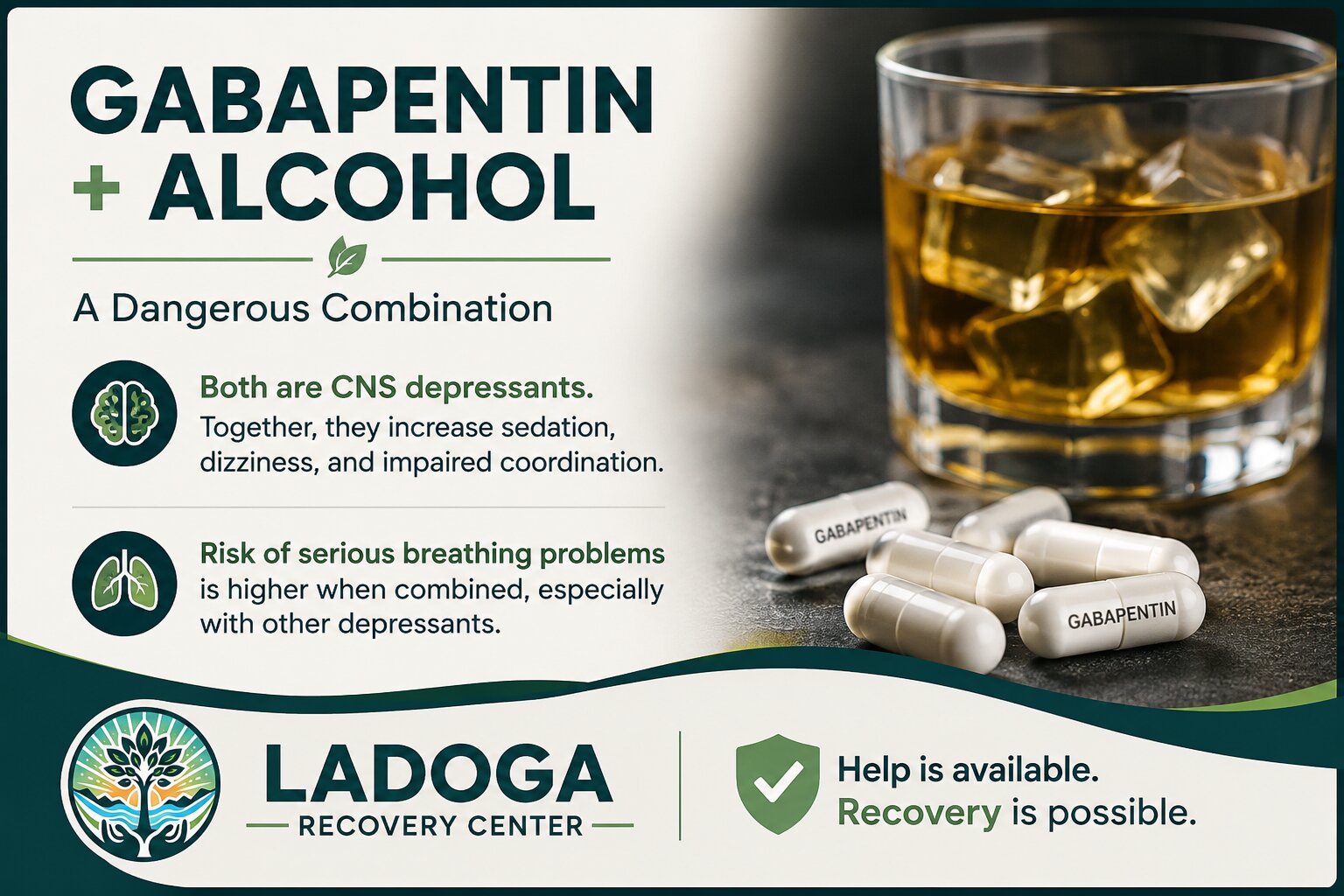
Gabapentin may seem safer than many other prescription medications because it is not an opioid or benzodiazepine. However, it still affects the brain and nervous system. Drinking alcohol while taking it can make sedation, dizziness, poor coordination, and impaired judgment more intense and less predictable.
For someone using both substances regularly, the concern goes beyond simply feeling sleepy. Combining gabapentin and alcohol can contribute to dangerous impairment and may increase the risk of slowed or ineffective breathing, especially when high doses, opioids, benzodiazepines, sleep medications, or existing respiratory conditions are involved.
If mixing substances has become difficult to control, professional prescription drug addiction treatment can help address both the immediate risks and the reasons the pattern developed.
Gabapentin Compared With Alcohol
Gabapentin and alcohol affect the central nervous system in different ways, but some of their effects overlap.
The central nervous system, or CNS, includes the brain and spinal cord. It controls movement, coordination, judgment, alertness, and automatic functions such as breathing.
How Gabapentin Affects the Nervous System
Gabapentin is a prescription anticonvulsant medication. It is approved by the U.S. Food and Drug Administration to treat certain seizure disorders and postherpetic neuralgia, a form of nerve pain that can occur after shingles. Different formulations may also be prescribed for restless legs syndrome.
Although its name resembles gamma-aminobutyric acid, or GABA, gabapentin does not act on GABA receptors in the same way that benzodiazepines do. It primarily binds to a specific subunit of voltage-gated calcium channels, changing the release of certain excitatory chemical messengers in the nervous system.
Its therapeutic effects can help control seizures and reduce some forms of nerve pain. At the same time, gabapentin can cause side effects such as:
- Sleepiness
- Dizziness
- Fatigue
- Blurred or double vision
- Slower thinking
- Poor coordination
- Unsteadiness while walking
These effects may be more noticeable after starting gabapentin, increasing the dose, or taking more than prescribed.
How Alcohol Affects the Nervous System
Alcohol is a psychoactive substance and CNS depressant. The word “depressant” does not necessarily mean that it causes emotional depression. It means alcohol slows or disrupts activity in the brain and nervous system.
As alcohol levels rise, a person may experience:
- Reduced inhibitions
- Impaired judgment
- Slower reaction time
- Slurred speech
- Poor balance
- Confusion
- Extreme drowsiness
- Vomiting
- Loss of consciousness
- Slowed or irregular breathing
Alcohol can initially make someone appear energetic or talkative because it weakens the brain systems responsible for inhibition and self-control. As more alcohol is consumed, its sedating and impairing effects become increasingly apparent.
What Happens When They Are Combined?
Gabapentin and alcohol do not have to work through the exact same receptor to create a dangerous combination. Their overlapping effects can result in greater sedation and impairment than a person expects.
Someone who can normally tolerate a particular amount of alcohol may react differently while taking gabapentin. Similarly, a prescribed gabapentin dose may feel much more sedating after alcohol is consumed.
The interaction can be difficult to predict because it is influenced by:
- The gabapentin dose
- The amount and speed of alcohol consumption
- Whether the medication was recently started or increased
- Age and body composition
- Kidney function
- Respiratory health
- Tolerance to either substance
- Other prescription or illicit substances being used
A person should not assume that the combination is safe simply because they have mixed the two before without experiencing an emergency.
Side Effects of Combining the Two Substances
The most common immediate concern is an increase in nervous-system side effects. Alcohol can add to the drowsiness caused by gabapentin, making routine activities unexpectedly dangerous.
Potential side effects include:
Extreme Sleepiness
A person may become much sleepier than anticipated, struggle to remain awake, or fall asleep in an unsafe setting.
Someone who appears to be “sleeping it off” may actually be experiencing severe intoxication or an overdose. It can be dangerous to leave an unusually sedated person alone without checking whether they can be awakened and are breathing normally.
Dizziness and Poor Balance
Both substances can affect balance and coordination. When they are combined, the likelihood of falling, stumbling, or sustaining an injury may rise.
This risk can be particularly serious for older adults, people with mobility limitations, and anyone who must use stairs or walk near traffic.
Impaired Thinking and Judgment
The combination may interfere with attention, memory, reaction time, and decision-making. A person may underestimate how impaired they are and make unsafe choices, including driving, swimming, taking more medication, or consuming additional alcohol.
Driving after using both substances is unsafe even when the person does not feel heavily intoxicated.
Nausea and Vomiting
Alcohol can irritate the stomach, while intoxication from either substance may cause nausea. Vomiting becomes especially dangerous when someone is deeply sedated because they may be unable to protect their airway.
A person who vomits while unconscious can choke or inhale vomit into the lungs.
Slurred Speech and Loss of Coordination
Slurred speech, staggering, dropping objects, and an inability to walk normally are signs of significant neurological impairment. These symptoms should not be dismissed as harmless drunkenness, particularly when prescription medications are also involved.
Memory Gaps
Alcohol can interfere with the brain’s ability to create new memories. Heavy sedation or intoxication may also make it difficult to recall how much gabapentin was taken, which can lead to accidental redosing.
The Risk of an Overdose
Mixing gabapentin and alcohol does not guarantee that an overdose will occur. Many people who take a prescribed gabapentin dose and consume alcohol will not experience fatal respiratory depression.
That does not make the combination safe.
The most immediate danger is additive impairment. In severe cases, CNS depression can interfere with consciousness, protective airway reflexes, and normal breathing. The FDA has also warned that serious breathing problems can occur with gabapentin in people who have respiratory risk factors, particularly when it is used with opioids or other medications that depress the central nervous system.
The danger becomes greater when the combination also includes:
- Opioids such as heroin, fentanyl, oxycodone, or hydrocodone
- Benzodiazepines such as Xanax, Klonopin, Ativan, or Valium
- Prescription sleep medications
- Muscle relaxants
- Sedating antihistamines
- Other anticonvulsants or sedatives
- Large amounts of alcohol
Older adults and people with chronic obstructive pulmonary disease, sleep apnea, kidney impairment, or other breathing problems may also be more vulnerable.
Kidney function matters because gabapentin is eliminated primarily through the kidneys. If the body cannot clear it effectively, the medication can accumulate and produce stronger or longer-lasting effects.
Warning Signs of a Medical Emergency
Call 911 immediately if someone who has used gabapentin with alcohol shows signs such as:
- They cannot be awakened or kept awake
- Breathing is slow, shallow, irregular, or difficult
- There are long pauses between breaths
- The person is gasping, choking, or making unusual snoring sounds
- The lips, fingertips, or skin appear blue, gray, pale, or clammy
- They are extremely confused or unable to respond appropriately
- They cannot stand or control their movements
- They have a seizure
- They repeatedly vomit
- They lose consciousness
Do not assume the person will recover by sleeping.
Place an unconscious but breathing person on their side to reduce the risk of choking. Stay with them while waiting for emergency responders. Do not give them coffee, put them in a cold shower, force them to walk, or try to make them vomit.
Naloxone can reverse an opioid overdose, but it does not reverse the effects of alcohol or gabapentin. When opioid involvement is possible, administer naloxone if it is available and call 911. A person still needs emergency care even if they wake up after naloxone.
Why People Combine Them
Not everyone mixes substances with the intention of becoming heavily intoxicated. Sometimes the interaction occurs because someone does not realize alcohol can intensify a medication’s side effects.
A person may take gabapentin as prescribed and then drink at dinner, a party, or a social event without considering the combined effects.
In other situations, people intentionally combine them because they hope to:
- Feel more relaxed
- Become intoxicated more quickly
- Intensify alcohol’s effects
- Reduce anxiety
- Fall asleep
- Numb emotional pain
- Cope with chronic pain
- Manage withdrawal from another substance
- Replace an unavailable drug
Gabapentin is sometimes viewed as harmless because it is a prescription medication and is not federally classified as a controlled substance. That perception can create a false sense of security.
How the Pattern Can Escalate
Repeated use can gradually change a person’s expectations and behavior. They may begin to believe they cannot relax, sleep, socialize, or cope with stress without taking gabapentin and drinking.
Tolerance may also develop. This means more of one or both substances may be needed to produce the desired effect. As the amounts increase, so do the risks of injury, severe impairment, overdose, and dependence.
Possible signs that the pattern is becoming more serious include:
- Taking gabapentin in ways other than prescribed
- Increasing the dose without speaking to a doctor
- Drinking specifically to strengthen the medication’s effects
- Running out of prescriptions early
- Seeking prescriptions from multiple providers
- Hiding alcohol or medication use
- Experiencing blackouts or unexplained injuries
- Continuing to mix substances after a frightening reaction
- Feeling unable to sleep or function without both
- Experiencing cravings or distress when unable to use them
Dependence is not the same as addiction. A person can become physically dependent on a medication while taking it as prescribed. Addiction involves patterns such as compulsive use, loss of control, cravings, and continued use despite harmful consequences.
Both situations deserve medical attention.
Long-Term Risks of Combining Them
Repeatedly combining alcohol with gabapentin can affect more than a single evening. Over time, it may contribute to physical, emotional, and social harm.
Accidents and Injuries
Ongoing dizziness, impaired judgment, and poor coordination can lead to falls, car crashes, burns, head injuries, and workplace accidents.
A serious injury may also result in additional pain medications being prescribed, creating further interaction risks.
Worsening Mental Health Symptoms
Some people mix alcohol and medication to manage anxiety, depression, trauma symptoms, pain, or insomnia. Although the combination may provide brief relief, alcohol can worsen sleep quality, mood instability, anxiety, and emotional distress over time.
This can create a cycle in which a person uses more substances to manage symptoms partly intensified by previous use.
Increasing Polysubstance Use
Gabapentin misuse is particularly concerning when it occurs alongside opioids, benzodiazepines, or other sedatives. Adding more CNS depressants can make sedation and respiratory effects increasingly dangerous.
A complete assessment should therefore consider every substance, medication, and supplement a person is using—not only gabapentin and alcohol.
Dependence and Withdrawal
A person who has taken gabapentin regularly should not abruptly stop it without speaking to the prescribing clinician. Sudden discontinuation may cause withdrawal symptoms and can increase seizure risk, particularly when the medication is being used to control seizures.
Possible gabapentin withdrawal symptoms can include:
- Anxiety
- Agitation
- Insomnia
- Sweating
- Nausea
- Restlessness
- Confusion
- Increased heart rate
- Seizures
Alcohol withdrawal can also become medically dangerous. Severe cases may involve seizures, hallucinations, profound confusion, or delirium tremens.
Anyone who regularly uses large amounts of alcohol, gabapentin, or multiple substances should obtain medical guidance before attempting to stop. A healthcare professional can determine whether monitoring, a gradual medication taper, or supervised withdrawal care is needed.
Getting Help for Prescription Drug Misuse in Indiana
Realizing that substance use has become unsafe can bring up fear, shame, or uncertainty. Some people worry they will be judged because gabapentin was originally prescribed for a legitimate medical condition. Others may not know whether their use is “serious enough” to require treatment.
You do not need to wait for an overdose or another crisis before asking for help.
Treatment begins with understanding the complete situation, including:
- How much gabapentin is being taken
- How frequently alcohol is being consumed
- Whether opioids, benzodiazepines, or other drugs are involved
- The presence of withdrawal symptoms
- Existing medical conditions
- Mental health symptoms
- Chronic pain or sleep problems
- Previous attempts to reduce or stop use
Depending on the person’s needs, care may involve medical evaluation, withdrawal management, individual therapy, group counseling, family support, relapse-prevention planning, and treatment for co-occurring mental health conditions.
At Ladoga Recovery Center, treatment is designed to address the person rather than only the substance. Individuals from Ladoga, Crawfordsville, Indianapolis, and surrounding Indiana communities can receive support in a structured environment while building safer ways to cope with pain, anxiety, stress, and other challenges.
Take the Next Step Toward Safer Recovery
Mixing gabapentin with alcohol can produce more sedation, dizziness, confusion, and loss of coordination than either substance may cause alone. Severe reactions are not inevitable, but the risk becomes more serious when large amounts or additional CNS depressants are involved.
If you or someone you love is repeatedly mixing prescription medication with alcohol, compassionate help is available. Ladoga Recovery Center provides individualized support for people struggling with prescription drug misuse, alcohol use, and polysubstance addiction throughout Indiana.
Call (844) 628-6202 today to speak with the admissions team or learn more about prescription drug addiction treatment at Ladoga Recovery Center.
Frequently Asked Questions
Can you drink alcohol while taking gabapentin?
Alcohol can intensify gabapentin-related sleepiness, dizziness, slowed thinking, and poor coordination. The safest guidance depends on the person’s dose, medical history, other medications, and reason for taking gabapentin. Speak with the prescribing clinician or pharmacist before drinking rather than assuming a particular amount is safe.
Can mixing the two substances cause an overdose?
The combination can cause severe impairment and may contribute to dangerous CNS depression. The risk is higher with large doses, heavy drinking, respiratory conditions, older age, or the use of opioids, benzodiazepines, sleep aids, and other sedatives. Unresponsiveness or abnormal breathing requires immediate emergency care.
How long should you wait after gabapentin before drinking?
There is no universal waiting period that guarantees alcohol will be safe. Gabapentin can remain in the body for many hours, and clearance varies with dose and kidney function. Ask the prescribing clinician or pharmacist for individualized guidance.
What should you do after accidentally mixing them?
Stop drinking and do not take extra gabapentin or other sedatives. Do not drive or perform dangerous activities. Stay with a trusted, sober person who can watch for worsening symptoms. Call 911 if severe sleepiness, confusion, vomiting, loss of consciousness, seizures, or slow or irregular breathing occurs.
Should gabapentin be stopped suddenly if alcohol is also being used?
No. Do not abruptly discontinue prescribed gabapentin without medical guidance, especially if it is used to control seizures. Regular heavy alcohol use should also not be stopped without an assessment because alcohol withdrawal can become dangerous. A healthcare professional can recommend the safest next steps.