

Watching someone you love change because of substance use can be heartbreaking. Sometimes the first signs are changes in behavior, mood, or sleep. Other times, families notice physical changes—especially wounds on the face, arms, or other parts of the body that don’t seem to heal.
If you’re searching about meth sores, you’re probably trying to understand what you’re seeing and whether it could be related to methamphetamine use.
While skin sores are commonly associated with methamphetamine addiction, they do not develop for just one reason. In fact, there are two major processes that often work together. One involves compulsive scratching caused by the sensation of “meth bugs.” The other involves the way methamphetamine affects blood vessels, the immune system, and the body’s ability to repair damaged skin.
Understanding these differences can help families recognize why these wounds occur and why they often continue to worsen until the underlying addiction is treated.
If methamphetamine use has become a concern, professional meth addiction treatment can help address both the addiction itself and many of the health complications that accompany it. At Ladoga Recovery Center, we provide compassionate, evidence-based care for individuals throughout Ladoga, Crawfordsville, Indianapolis, and surrounding Indiana communities.
What These Skin Sores Are
Meth-related sores are open wounds, scabs, scratches, ulcers, or areas of damaged skin that develop during ongoing methamphetamine use.
Some wounds begin as tiny scratches that gradually become larger through repeated picking. Others develop because the skin becomes more vulnerable to injury and slower to heal.
The sores may:
- Bleed easily
- Become infected
- Form thick scabs
- Heal slowly
- Leave permanent scars
- Reappear repeatedly
Although many people associate these wounds only with scratching, the process is usually more complex than that.
Cause #1: “Meth Bugs” — Formication and Skin Picking
One of the best-known causes of meth-related sores is a sensation called formication.
Formication is the false feeling that insects, bugs, or small creatures are crawling on or underneath the skin. This sensation is a type of tactile hallucination that can occur during heavy methamphetamine use, prolonged periods without sleep, or meth-induced psychosis.
Many people refer to this experience as “meth bugs.”
The sensation feels very real to the person experiencing it.
Someone may:
- Scratch constantly
- Pick at tiny bumps
- Dig into otherwise healthy skin
- Remove scabs before they can heal
- Believe insects are trapped beneath the skin
Because the hallucination feels genuine, the person often continues scratching despite pain or bleeding.
Why the Picking Doesn’t Stop
Methamphetamine powerfully stimulates the brain’s reward system while also increasing impulsive and repetitive behaviors.
As a result, someone may spend hours picking at a single spot without realizing how much damage they are causing.
This repetitive behavior can lead to:
- Deep scratches
- Open wounds
- Bleeding
- Permanent scarring
- Secondary bacterial infections
Family members sometimes assume the sores were caused by poor hygiene alone. While hygiene can influence healing, compulsive skin picking driven by formication is often one of the primary reasons these wounds develop.
Cause #2: Vascular and Immune Changes From Methamphetamine Use
Not every meth-related sore begins with scratching.
Methamphetamine also affects the body in ways that make the skin much more susceptible to injury and much slower to recover.
Reduced Blood Flow
Methamphetamine causes blood vessels to constrict, a process known as vasoconstriction.
When blood vessels narrow:
- Less oxygen reaches the skin.
- Fewer nutrients reach damaged tissue.
- Waste products are removed less efficiently.
- Healing slows significantly.
Even minor cuts or scratches may take much longer to close.
Effects on the Immune System
Long-term methamphetamine use can also weaken immune function.
A weakened immune response makes it more difficult for the body to fight bacteria that enter through small breaks in the skin.
This increases the likelihood of:
- Skin infections
- Cellulitis
- Abscesses
- Delayed wound healing
Without treatment, relatively small wounds can become much more serious.
Dry, Fragile Skin
Methamphetamine commonly causes dehydration and poor nutrition.
Over time, this may contribute to:
- Dry skin
- Cracking
- Irritation
- Increased susceptibility to injury
Dry, irritated skin is more likely to itch, creating another reason someone may continue scratching.
Poor Nutrition
People struggling with meth addiction often experience a decreased appetite.
Significant weight loss and nutritional deficiencies may interfere with the body’s ability to:
- Produce new skin cells
- Repair damaged tissue
- Fight infection
- Build collagen
These nutritional problems can further delay healing.
Where These Sores Most Commonly Appear
Although wounds may develop almost anywhere on the body, certain areas are affected more frequently.
Face
The face is one of the most common locations because it is easy to reach repeatedly.
People may develop:
- Sores on the cheeks
- Chin wounds
- Forehead scabs
- Lesions around the mouth
Repeated picking can leave noticeable scars over time.
Arms and Hands
The arms are another common location because they are easily accessible.
Someone may develop:
- Small scabs
- Multiple scratches
- Open sores
- Crusted wounds
If meth is injected, additional skin complications can occur near injection sites, including abscesses and infections.
Legs and Torso
Some people experience sores on the:
- Chest
- Shoulders
- Legs
- Back
The exact pattern varies depending on scratching behavior, skin condition, and overall health.
Other Skin Changes Families May Notice
Methamphetamine affects much more than the skin alone.
Loved ones may also notice:
- Significant weight loss
- Dry or flaky skin
- Premature aging
- Poor wound healing
- Frequent skin infections
- Hair thinning
- Dental problems (“meth mouth”)
- Persistent scratching
These physical changes often occur alongside behavioral changes such as staying awake for days, unusual energy, paranoia, irritability, secrecy, or social withdrawal.
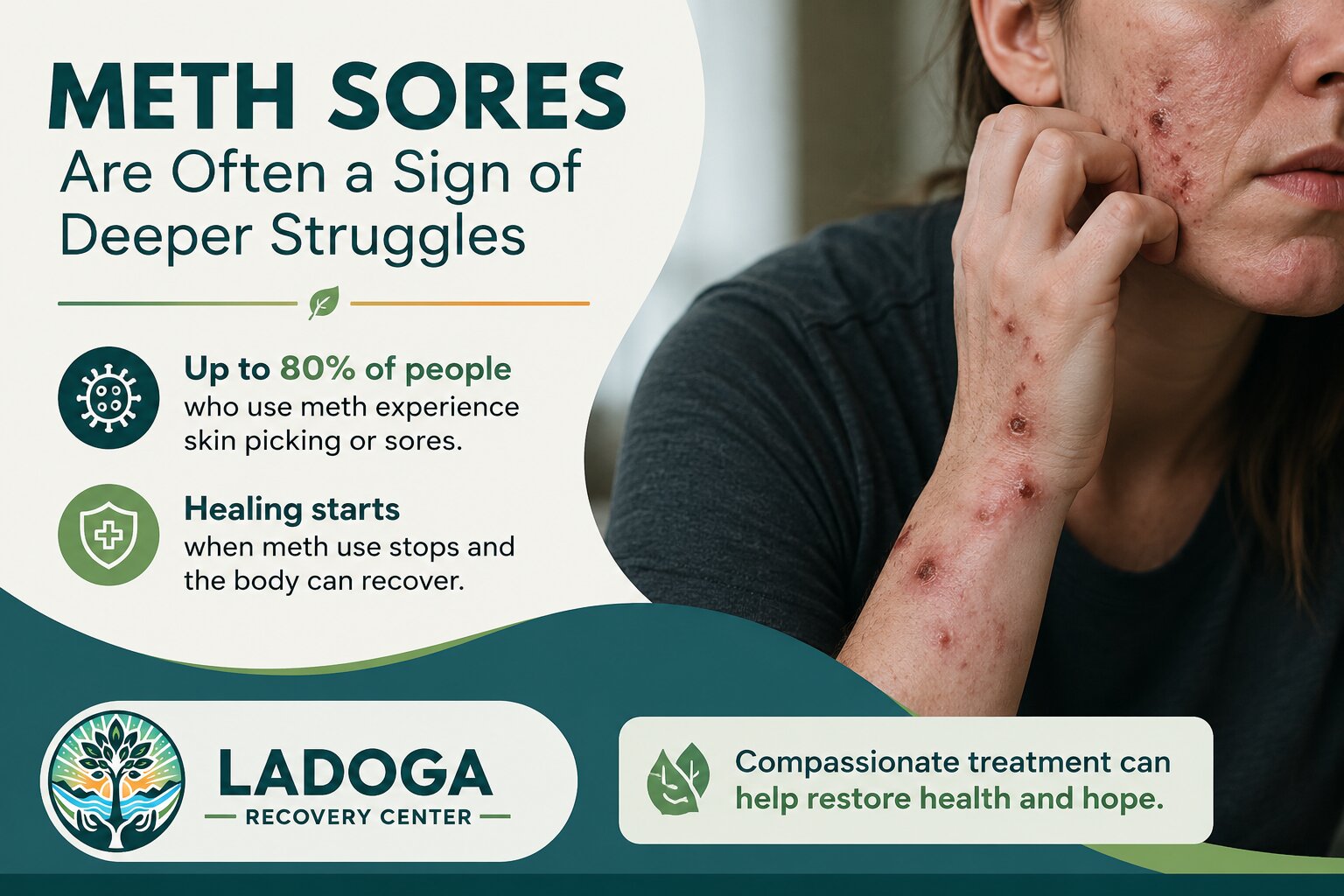
Can These Sores Heal?
In many cases, yes.
The body’s ability to heal often improves significantly after methamphetamine use stops and overall health begins to recover.
Healing depends on several factors, including:
- How long meth has been used
- Whether wounds have become infected
- Nutritional status
- Overall health
- Continued skin picking
- Access to medical care
Early Improvement
During early recovery, many people notice:
- Less itching
- Reduced picking behaviors
- Better hydration
- Improved sleep
- Better nutrition
These changes help create a healthier environment for wound healing.
More Severe Cases
Deep wounds or infections may require:
- Professional wound care
- Antibiotics
- Drainage of abscesses
- Dermatology evaluation
- Scar management
Some scars may be permanent, but many wounds improve considerably with proper medical care and sustained recovery.
When Medical Attention Is Needed
Some skin problems require prompt evaluation by a healthcare professional.
Seek medical care if a sore:
- Becomes increasingly painful
- Produces pus
- Has spreading redness
- Feels warm to the touch
- Is accompanied by fever
- Does not improve over time
- Develops black or dead tissue
These symptoms may indicate a serious infection that requires treatment.
How Meth Addiction Treatment Supports Healing
Treating the wounds alone is rarely enough if methamphetamine use continues.
Recovery begins by addressing the underlying addiction.
Comprehensive treatment may include:
- Medical evaluation
- Individual therapy
- Group counseling
- Cognitive behavioral therapy (CBT)
- Treatment for co-occurring mental health conditions
- Relapse prevention planning
- Ongoing recovery support
As recovery progresses, many people also experience improvements in:
- Nutrition
- Sleep
- Immune function
- Hydration
- Mental health
- Skin healing
Families often notice that their loved one’s overall appearance gradually becomes healthier as recovery continues.
Recovery Is About More Than Healing the Skin
Meth-related skin sores can be one of the most visible signs that someone is struggling with methamphetamine addiction, but they are only one part of a much larger health condition.
Behind those wounds is often a person dealing with addiction, sleep deprivation, nutritional deficiencies, emotional distress, and changes in brain function that make stopping incredibly difficult without support.
With appropriate treatment, many of these physical and emotional effects begin to improve.
If you’re worried about someone you love, you don’t have to navigate this alone.
Call (844) 628-6202 today to speak with the admissions team at Ladoga Recovery Center or learn more about our meth addiction treatment programs serving Ladoga, Crawfordsville, Indianapolis, and communities across Indiana.
Frequently Asked Questions
What causes meth-related skin sores?
They commonly develop from two overlapping processes. One is compulsive scratching caused by formication (“meth bugs”), and the other is reduced healing caused by methamphetamine’s effects on blood vessels, nutrition, immune function, and overall skin health.
Do all people who use meth develop skin sores?
No. Not everyone develops noticeable sores, and their severity varies. Factors such as duration of use, overall health, nutrition, skin-picking behaviors, and access to medical care all play a role.
Can meth sores heal?
Yes. Many wounds improve after methamphetamine use stops, especially when the person receives medical care, improves nutrition and sleep, and no longer engages in repetitive skin picking. Severe infections or deep scars may require additional treatment.
Are meth sores contagious?
No. The sores themselves are not contagious. However, open wounds can become infected with bacteria, and infections should be evaluated and treated by a healthcare professional when necessary.