


There is a moment that happens for many people before they ever reach out for help.
It’s usually not dramatic.
It’s not a movie scene. It’s not a rock-bottom moment. It’s often much quieter than that.
Maybe you’re sitting in your car after work. Maybe you’re awake at 2 a.m. scrolling through treatment websites. Maybe you’ve told yourself for the hundredth time that tomorrow will be different.
Then a thought appears:
“What if I actually called someone?”
That thought is often followed immediately by another one:
“But how long would it take? What if I finally ask for help and then have to wait weeks?”
At Ladoga Recovery Center, we hear versions of that question every day.
Many people assume getting help is a long, complicated process filled with waiting lists, paperwork, and obstacles. While every situation is unique, the reality is often far more encouraging than people expect.
If you’ve been searching for answers and wondering whether treatment can begin quickly, you’re asking a smart question. Many individuals exploring treatment options in Indiana discover that taking the first step may happen much sooner than they imagined.
Are Detox Programs Really Available the Same Day?
In many situations, yes.
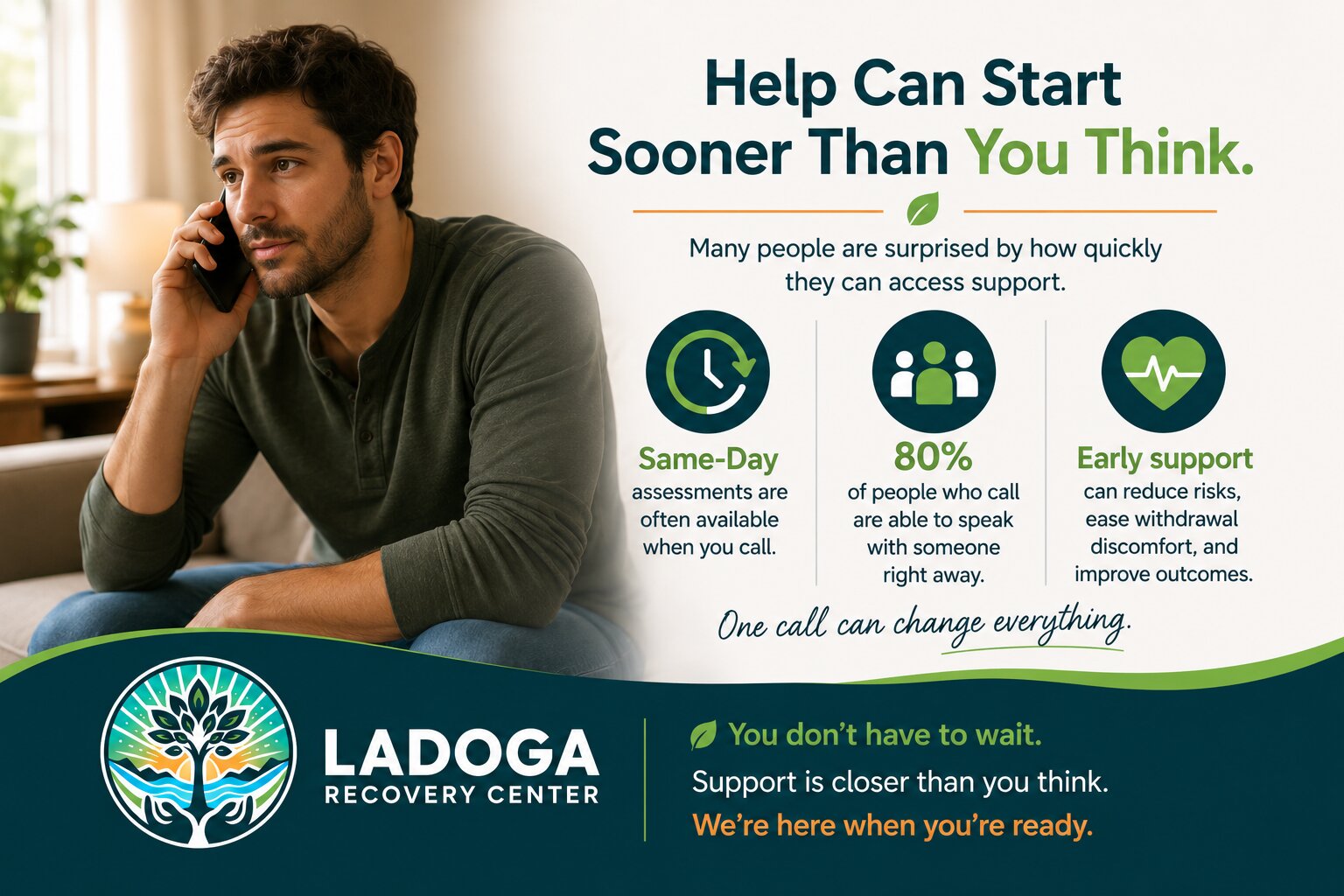
While admission depends on factors such as medical needs, availability, and individual circumstances, it is often possible to begin the process the same day you call.
This surprises many people.
They expect to leave a voicemail.
They expect a callback days later.
They expect to spend weeks waiting.
Instead, many callers find themselves speaking with someone who can answer questions immediately and help them understand what options may be available.
When someone is experiencing withdrawal or struggling to stay motivated, timing matters.
Hope can be fragile.
The ability to connect with support quickly can make a significant difference.
Why Does Fast Access Matter So Much?
Because addiction rarely follows a schedule.
The decision to get help often comes during a brief window when someone feels ready.
That readiness may arrive after a difficult night, a frightening withdrawal experience, a conversation with family, or simply exhaustion from living the same cycle over and over.
Unfortunately, fear often returns quickly.
The longer someone waits, the easier it becomes to talk themselves out of reaching out.
We’ve seen many people spend months debating whether they need treatment.
Then one morning they decide to call.
Providing support during that moment can be incredibly important.
Recovery often begins when someone finally chooses action over uncertainty.
What Happens During the First Phone Call?
Many people avoid calling because they imagine an uncomfortable conversation.
Some worry they’ll be judged.
Others worry they’ll be pressured into making decisions before they’re ready.
Most first conversations are much simpler.
The goal is understanding your situation and helping identify potential next steps.
You may be asked about:
- Current substance use
- Withdrawal concerns
- Medical history
- Previous treatment experiences
- Insurance coverage
- Safety concerns
- Recovery goals
Think of the call as a starting point rather than a commitment.
You are gathering information.
The treatment team is gathering information.
Together, you’re trying to determine what kind of support may fit your needs.
Do I Need to Be 100% Ready Before Calling?
No.
In fact, many people who call are deeply uncertain.
One of the biggest myths about treatment is that people arrive feeling completely confident.
Most don’t.
Many callers are scared.
Some are skeptical.
Others are simply curious.
That uncertainty is normal.
You do not need to have every answer before reaching out.
You don’t need to promise you’ll never use again.
You don’t need to know exactly what treatment looks like.
You only need enough willingness to ask a question.
Sometimes recovery starts with curiosity long before it starts with confidence.
What If I’m Experiencing Withdrawal Right Now?
Withdrawal is one of the most common reasons people reach out.
Many individuals spend months managing symptoms on their own before deciding they’ve had enough.
The discomfort can become overwhelming.
The unpredictability can become exhausting.
The fear can become difficult to ignore.
If you’re experiencing withdrawal symptoms, reaching out promptly can help you better understand your options.
Many people looking for opioid detox Indianapolis services initially begin by searching online because they’re trying to determine whether professional support is available when symptoms become difficult to manage.
For many, the first call provides clarity they haven’t been able to find on their own.
Do Treatment Centers Just Give Medication and Send You Home?
This concern comes up frequently.
Many people assume detox means receiving medication and waiting for symptoms to pass.
Quality care is usually much more comprehensive.
Depending on individual needs, support may include:
- Medical monitoring
- Symptom management
- Emotional support
- Clinical assessments
- Recovery planning
- Recommendations for continued treatment
- Guidance for long-term recovery
Medication can be one tool among many.
But recovery is rarely built on medication alone.
Most people benefit from support that addresses both physical discomfort and the underlying challenges that brought them to treatment in the first place.
What If My Situation Isn’t “Bad Enough”?
This question stops many people from getting help.
They compare themselves to others.
They tell themselves someone else needs treatment more.
They convince themselves they should wait.
The problem is that addiction doesn’t hand out permission slips.
There is no official threshold where you’re suddenly allowed to ask for support.
If substance use is affecting your health, relationships, peace of mind, or ability to live the life you want, your concerns matter.
You do not have to wait for catastrophe.
You do not have to lose everything.
You do not have to prove your suffering.
The fact that you’re searching for answers may already be telling you something important.
What Happens After Detox?
Many people assume detox is the finish line.
In reality, it’s often the starting point.
Detox primarily focuses on helping individuals navigate the immediate physical challenges associated with stopping substance use.
Once that phase is complete, many people benefit from continued care.
Depending on individual needs, recommendations may include:
- Live-in treatment
- Structured daytime care
- Multi-day weekly treatment
- Individual counseling
- Recovery support services
- Ongoing treatment planning
The goal is not simply helping someone stop using.
The goal is helping them build a foundation for lasting recovery.
For many individuals, additional support in Indiana can provide valuable structure during the early stages of healing.
What If I’m Afraid to Tell My Family?
You’re not alone.
Many people delay seeking treatment because they’re worried about how others will react.
They fear disappointment.
They fear judgment.
They fear becoming a burden.
The reality is that many families would rather hear about a treatment phone call than another crisis.
And even if those conversations feel difficult, they don’t have to happen all at once.
The first step isn’t explaining everything to everyone.
The first step is getting accurate information and understanding your options.
What If I’ve Tried Before?
Previous attempts do not disqualify you from recovery.
Many people arrive carrying disappointment from past experiences.
They worry treatment won’t work because something else didn’t.
But recovery isn’t a single event.
It’s a process.
Every attempt teaches something.
Every setback provides information.
Every return to treatment represents another decision to keep moving forward.
The fact that you’ve struggled before doesn’t mean you’ll struggle forever.
Can One Phone Call Really Change Anything?
A phone call doesn’t solve everything.
But it can change the direction you’re heading.
It can replace confusion with clarity.
It can replace isolation with connection.
It can replace uncertainty with a plan.
Many people remember the day they entered treatment.
What they often forget is that recovery usually started earlier.
It started the moment they stopped carrying the burden alone.
The phone call was simply the first visible step.
Frequently Asked Questions
How quickly can I get admitted after calling?
Admission timelines vary, but many individuals can begin the assessment or admissions process the same day they reach out.
Do I need insurance to call?
No. You can still call to discuss your situation, ask questions, and learn about available options.
Will someone force me into treatment if I call?
No. The purpose of the call is to provide information, answer questions, and help you understand potential next steps.
What should I have ready before calling?
Helpful information may include insurance details, current substance use information, medications, and any relevant medical history, but you do not need everything prepared to start the conversation.
Is detox painful?
Experiences vary from person to person. Professional care is often designed to improve comfort and safety while individuals navigate withdrawal.
What if I’m still unsure about treatment?
That’s okay. Many people call while they are still deciding. Asking questions is often the first step toward making an informed decision.
Can I call on behalf of a loved one?
Yes. Family members frequently reach out seeking guidance and information about available treatment options.
The Bottom Line
When people finally decide to ask for help, they often imagine a long wait standing between them and recovery.
The reality is often different.
In many cases, support can begin far sooner than expected. A single phone call can provide answers, direction, and hope at a moment when all three may feel difficult to find.
If you’ve been waiting for certainty before reaching out, remember this:
Recovery doesn’t usually begin when fear disappears.
It begins when hope becomes just strong enough to make the call anyway.
Call (888) 628-6202 or visit our levels of care for addiction treatment in Indiana and opiate detoxification program in Indiana services to learn more about our levels of care for addiction treatment in Crawfordsville, Indiana, detox treatment programs in Indiana, opiate detoxification program services in Indianapolis.