
Here’s what they don’t tell you when you graduate from treatment: the silence after the applause can be deafening.
When I left alcohol addiction treatment, I had 92 days clean, a family that finally trusted me again, and a plan in place. I thought I had it all figured out. And for a while, I did.
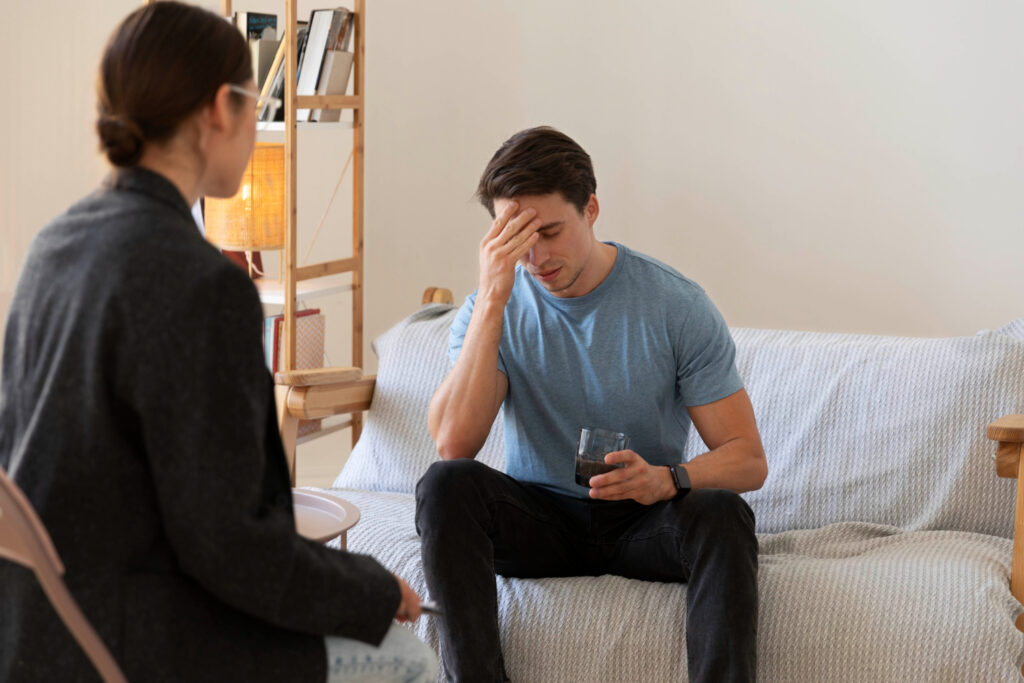
But no one warns you about the crash that can come later. Not a relapse. Not a crisis. Just… a slow drift. Into numbness. Isolation. Disconnection.
The high of early sobriety fades. The check-in texts stop. The emergency’s over, so everyone goes back to their lives. Except you. You’re still here, doing everything “right” — and quietly wondering why it still feels off.
That’s the story I want to tell. Not just about how alcohol addiction treatment saved my life. But how staying connected — to people, to support, to meaning — saved my recovery.
I write this from the perspective of someone who found their way back when things got quiet. And if you’re reading this from Indianapolis, Lafayette, or anywhere in between — and wondering if you’re the only one feeling disconnected after the fact — you’re not.
Getting Sober Was Hard. Feeling Numb Was Harder.
The first three months were all fire and adrenaline. I was focused, determined, surrounded by structure. I was the “star client.” Always early to group. Always ready to share.
But when I stepped out of treatment, the world didn’t pause for me. I had bills. A job I wasn’t sure I wanted. Family relationships to repair. And suddenly, no one was clapping anymore.
I was sober. But I wasn’t okay.
No one told me that healing doesn’t end when you leave the building. And that “doing well” can sometimes feel a lot like disappearing.
I Lost My Spark — Not My Sobriety
I didn’t relapse. I didn’t pick up. But I lost something that mattered.
I stopped laughing.
Stopped writing.
Stopped calling anyone back.
Everything was fine. And “fine” almost killed me.
Because here’s the thing: addiction isn’t just about drinking. It’s about the way you disconnect from yourself. And I was still doing that — just without the bottle.
What saved me wasn’t another detox. It wasn’t a crisis. It was a single alumni text from someone who said, “Hey, haven’t seen you around. Wanna grab coffee?”
That message changed the direction of my recovery.
Long-Term Recovery Isn’t a Solo Sport
At Ladoga, they used to say “community is the opposite of addiction.” I thought that was just a slogan. Until I realized that when I stopped engaging, the old voices got louder.
The ones that said:
- “No one really gets you.”
- “You’re too far out to go back now.”
- “You should be past this.”
But connection doesn’t expire. Recovery isn’t something you graduate from. You live it. And if you’re living it in silence, you’re not weak — you’re at risk.
I started showing up to alumni groups again. Not because I was in trouble. But because I didn’t want to wait until I was.
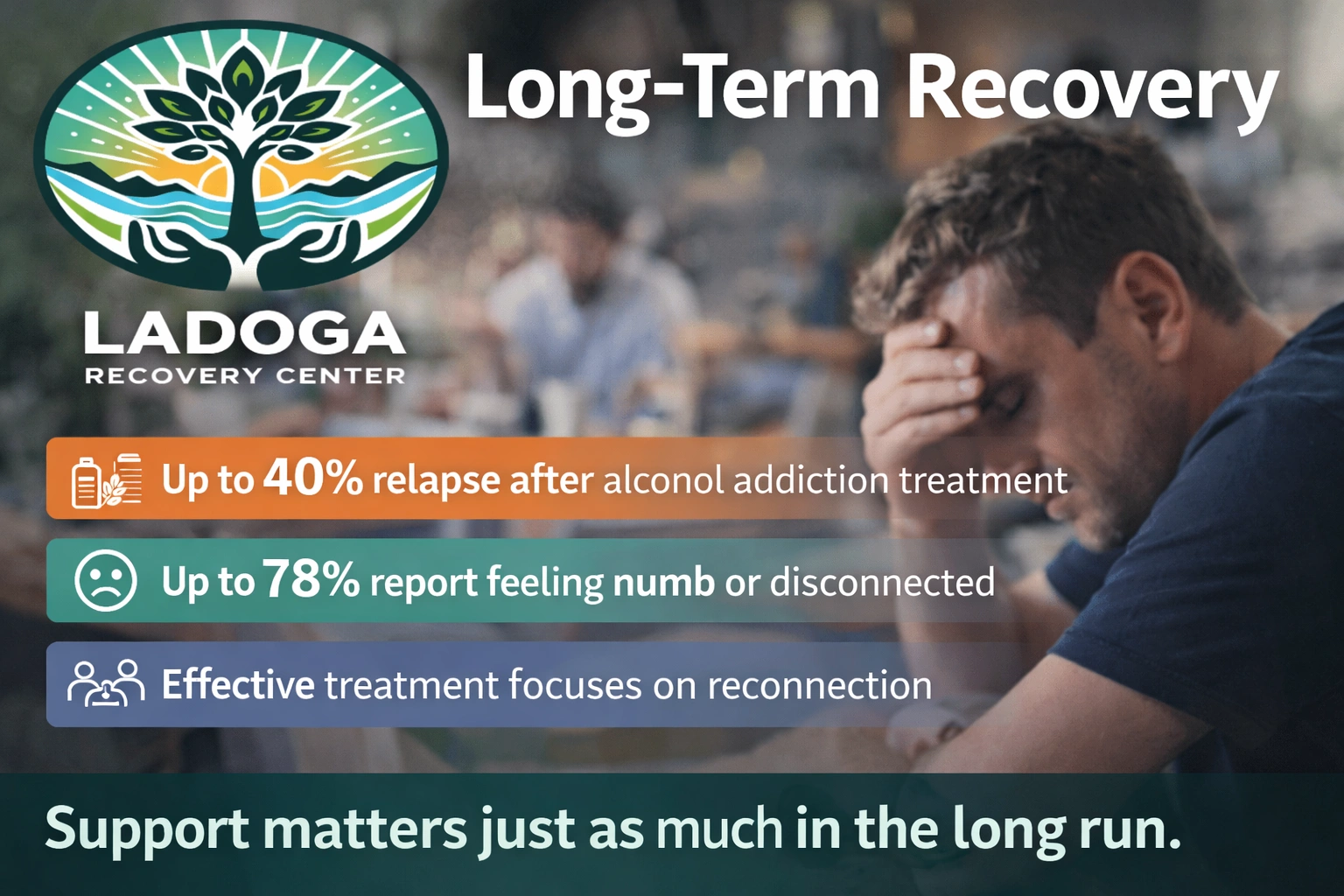
Recovery Doesn’t Flatten You — Disconnection Does
At one point, I thought I didn’t need meetings anymore. Or therapy. Or check-ins. I thought, “I’ve got this.”
But “got this” turned into white-knuckling. And white-knuckling turned into numbing out. No substances, just scrolling, zoning, eating, working, hiding.
Recovery isn’t just staying clean. It’s staying human. And that takes effort — especially after the novelty wears off.
The truth is, long-term recovery evolves. And your support needs should evolve with it. If your program isn’t fitting anymore, that’s not a sign to isolate. It’s a sign to reconnect.
Ladoga helped me see that I didn’t need to “go backward” to re-engage. I just needed to come home.
If you’ve drifted, explore treatment options in Substance Abuse that focus on reconnection, not just abstinence.
What Staying Connected Looks Like (Even Years Later)
For me, staying connected now looks like:
- Answering alumni texts, even when I don’t feel like it
- Showing up to at least one group a month
- Letting people know when I’m struggling (even if I’m still sober)
- Talking to my sponsor when I feel nothing, not just when I feel cravings
- Saying yes to volunteer or mentoring roles — not to be the hero, but to stay honest
Some weeks, I do more. Some weeks, that’s all I’ve got. But I do something — because silence is sneaky.
Your Recovery Is Allowed to Shift
You’re not failing because your recovery feels different now. You’re maturing. Growing. Healing.
But even healed wounds need checking. And even long-term alumni deserve support.
I used to think going back to group after a year was admitting weakness. Now I know it’s the bravest thing I’ve done.
If you’re reading this and something in you is whispering, “Reach out” — listen. That’s not failure. That’s wisdom.
Ladoga gets it. They’ve walked this with people at every stage — not just day one.
If you’re in Indianapolis or Lafayette and looking for renewed structure, guidance, or just a reconnection point, their team is still here. Still human. Still willing to walk with you, even when you’re tired of walking alone.
FAQs for Long-Term Alumni Feeling Disconnected
Is it normal to feel emotionally flat in recovery—even years later?
Yes. Many long-term alumni hit a phase where things feel “blah” even if they’re staying clean. This is often a sign of emotional fatigue, unresolved trauma, or spiritual disconnection—not failure.
Do I need to go back to treatment if I’m still sober?
Not necessarily. Sometimes a return to group therapy, alumni engagement, or one-on-one counseling is enough. Ladoga can help assess what level of support would be helpful without judgment.
What if I feel embarrassed to reach out after so long?
You’re not the first. Ladoga’s team understands the quiet shame that can build after disconnection—and they’re trained to welcome people back with respect, not pressure.
Can I still participate in alumni programming if I graduated years ago?
Yes. Re-entry is always open. Whether it’s been 6 months or 6 years, your seat is still there.
What if I’m doing “okay” but I’m not growing?
That’s valid. Recovery isn’t just about avoiding relapse—it’s about building a life that feels worth staying sober for. If you’ve plateaued, that’s worth exploring.
You didn’t get sober to feel stuck. Let’s reconnect.
Call (888) 628-6202 to learn more about our Alcohol addiction treatment in Indiana.