


You’ve made a brave decision. You’re here because you know something needs to change—and you’re finally looking at what recovery might really take.
That first step is no small thing.
If you’re starting to seek care for alcohol use, you’ve likely been carrying the weight of your own guilt, questions, or shame for a while. And now that you’re doing something about it, there’s a quiet hope in the air: Maybe this time, something shifts.
But here’s the truth that catches a lot of people off guard: recovery doesn’t happen in isolation. Even if you are doing the work, the dynamics around you can either help your healing or quietly sabotage it.
At Ladoga Recovery Center, we see this every day. People arrive ready—willing to face the hard parts—and they do. But when they go home, the progress starts to shake.
Why? Because the old patterns are still there. The silence. The blame. The anxiety no one talks about. The role you’ve always played. And the expectations that haven’t changed—even though you have.
If you’re wondering whether family dynamics might be part of your recovery journey, here are 7 signs worth paying attention to.
1. You’re Doing Well in Treatment—But Going Home Feels Heavy
You might feel clearer in sessions. Stronger in your choices. More grounded in who you’re becoming.
But the moment you walk through the front door at home—or even think about it—something shifts.
Old tension creeps back in. You brace yourself. You shrink. You slip into old patterns, or your voice feels a little smaller.
That feeling matters.
When your progress feels solid until you step into your family environment, that’s not weakness—it’s wisdom. It means you’re recognizing that recovery is happening in you, but not around you.
That’s where family dynamics support can help close the gap.
2. You’re Still Being Treated Like “The Problem”
You’ve owned your choices. Maybe you’ve apologized. Maybe you’ve stopped drinking.
But somehow, every conversation still circles back to your past.
Every disagreement becomes an indirect comment about your progress—or your perceived failure.
You’re trying to move forward, but your family still talks to you like you haven’t started.
This kind of dynamic isn’t just frustrating—it can chip away at your sense of self-worth.
When your recovery isn’t being seen for what it is, you might find yourself questioning its value.
Bringing family into the process—gently, with guidance—can help everyone update the story they’ve been stuck in.
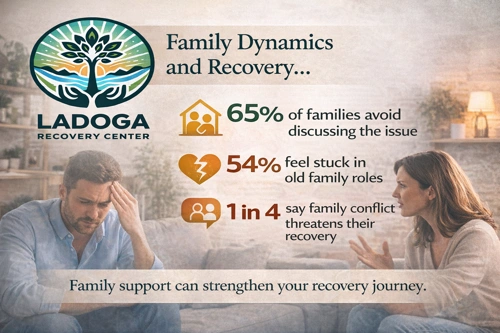
3. You Keep Playing the Same Role, Even When You Don’t Want To
In a lot of families, roles form early—and they stick.
Maybe you’ve always been the fixer.
The peacekeeper.
The one who takes the fall.
Or the one who lashes out to distract from deeper pain.
Even when you’re doing the work to grow, families often unconsciously push you back into the role that kept the system stable.
If you’ve changed—but your family still expects you to act like the “old you”—something deeper needs to shift.
You can’t fully heal in a dynamic that punishes your growth.
4. No One Knows How to Talk About What’s Happening
Some families avoid the topic altogether.
Some use jokes to sidestep real questions.
Others default to polite distance—“We’re proud of you,” with no real conversation underneath.
This kind of silence doesn’t just block connection—it can isolate you in your recovery.
You might feel like you’re carrying a new emotional language, but no one around you is willing to learn it.
Structured family work can help everyone speak the same language again—not by force, but with care. And when families are guided gently into those conversations, real healing can begin.
5. Your Progress Feels Fragile Around Certain People
This one’s subtle but powerful.
Maybe you feel confident most days… until you’re in a room with your father.
Maybe you’ve been honest for weeks… until your sibling brings up the past in a way that stings.
Maybe you feel at peace—until you return to your old bedroom, and the air shifts.
That fragility doesn’t mean you’re not recovering. It means your nervous system remembers.
It means your body still braces, even when your mind says, “I’m okay now.”
When your healing feels conditional on avoiding certain people or conversations, that’s not your fault. But it is a sign that more support may be needed—not just for you, but for your environment.
6. Boundaries Create Conflict Instead of Clarity
Recovery often brings new boundaries—things like:
- Not answering late-night calls when you’re emotionally drained
- Saying no to invitations where alcohol is present
- Asking for space to process your own emotions
- Refusing to be guilted into “proving” you’re better
These boundaries are a sign of health. But if your family reacts to them with anger, guilt, or manipulation, that’s a red flag.
Healthy support should support your boundaries—not make you feel guilty for having them.
If every time you try to protect your recovery, you’re made to feel like the villain, it’s time to bring those patterns into the light—with help.
7. You Want More—for Them, Too
This might be the most important one.
Even if your family didn’t cause your drinking… maybe they’ve been hurt by it. Or confused by it. Or emotionally worn down in ways they haven’t named.
Maybe they’re scared. Or stuck. Or trying their best and still saying the wrong thing.
Sometimes, the clearest sign that family support is needed is when you start wondering what healing might look like for all of you.
Not because it’s your job to fix them.
But because part of you knows… recovery could be deeper, stronger, and more sustainable if everyone had the tools—not just you.
That’s not selfish. That’s visionary.
Family Dynamics Work Is Not About Blame
At Ladoga, we work hard to create space where growth isn’t limited by fear or shame. That includes support in Substance Abuse that looks beyond the individual and asks: What else could help this person stay well once they leave here?
We never force family therapy. But we always make it available—because it works.
When appropriate, we also offer referrals to therapists who can continue the work with your family outside of treatment, and we tailor our approach based on what you need: whether that’s intensive care in Crawfordsville or flexible outpatient support.
We’re not here to put anyone on trial. We’re here to help people stop walking in circles—and that includes the families who’ve been walking in pain, too.
FAQs About Family Support in Recovery
Do I need family therapy to succeed in treatment?
Not always. But it can deepen your healing and prevent future setbacks—especially if your home life is a source of stress, pressure, or conflict.
What if my family refuses to participate?
You can still heal. Many people begin recovery without direct family involvement. Our clinicians can help you work through family wounds and build support elsewhere if needed.
Can family work help if they don’t “believe” in therapy?
Yes. We’ve supported many families who were skeptical at first. Our approach is gentle, respectful, and focused on shared understanding—not blame or confrontation.
Is family therapy only for parents and partners?
Not at all. We welcome siblings, adult children, chosen family—whoever plays a significant role in your life and impacts your recovery environment.
What if I don’t want to reopen old wounds?
That’s valid. Family work is paced thoughtfully. You never have to share more than you’re ready for—and you’ll be supported every step of the way.
You’re Allowed to Want More Than Survival
If something in you is whispering, “This would be easier if I didn’t feel so alone in it…”
We hear you.
If your progress is strong, but your home life still feels like quicksand…
You’re not imagining it.
You’re doing a brave thing—working toward healing.
And you’re allowed to ask for help building an environment that supports it.
Call 888-628-6202 or visit our alcohol addiction treatment services in Indiana to learn more.
You don’t have to fix your family. But you don’t have to carry the silence, either. We’re here to help with both.