


I used to think treatment was a one-time thing.
Go in. Detox. Get some therapy. Come out fixed. That was the story I had in my head the first time I tried opioid addiction treatment. I honestly believed that if I could just make it through those 30 days, my problems would fall into place.
But the crash after I left? It felt worse than the withdrawal. I told myself, See? I knew this wouldn’t work. And just like that, I gave up on the idea of recovery—at least the way everyone else talked about it.
It took me a long time to realize I didn’t fail treatment. I just misunderstood what it really was. Now, after giving it another shot at Ladoga Recovery Center, I finally see why it didn’t click the first time—and why it’s different now.
I Was Looking for Rescue, Not Recovery
I walked into treatment the first time thinking someone would save me. I didn’t say that out loud, but deep down, I wanted to be rescued. From my cravings. From my shame. From the wreckage I’d made of my relationships.
The hard truth? Treatment doesn’t save you. It teaches you how to stop sinking. I didn’t want to hear that at the time. I wanted someone to drag me out of the water, dry me off, and tell me everything was going to be fine.
But healing doesn’t come gift-wrapped. It comes through sweat, tears, and staying when you’d rather run.
When I Relapsed, I Took It as Proof That Nothing Works
I left that first program clean, hopeful, and scared. I’d followed the rules. I’d done the worksheets. But I had no idea how to live sober in my own life.
Within weeks, I was using again. I didn’t want to be—but I didn’t know what else to do with all the feelings that flooded in. And I told myself, Treatment doesn’t work. Not for people like me.
Looking back, I see that my relapse wasn’t proof of failure. It was a symptom of unfinished support. Nobody had prepared me for the free fall after discharge. And I didn’t know that was normal.
Coming Back Felt Humiliating—Until It Didn’t
The second time I reached out for help, I was drowning in self-loathing. I thought the staff at Ladoga Recovery would look at me like a lost cause. Instead, they greeted me like someone who still mattered.
No judgment. No lectures. Just: “We’re glad you’re here.”
That moment cracked something open in me. I realized that maybe trying again wasn’t weakness. Maybe it was the beginning of doing this differently.
I Let Go of the Quick Fix Fantasy
This time, I didn’t come in expecting anyone to fix me. I came in ready to face what I’d been running from: grief, anger, loneliness, shame.
I learned that opioid addiction treatment isn’t just about quitting substances. It’s about learning to live without needing to escape your own life. That’s not a quick fix—it’s a slow rebuild.
Some days were messy. Some therapy sessions made me want to bolt. But I stayed. And slowly, I stopped needing every moment to feel “better.” I started caring more about what felt real.
Recovery Isn’t Linear—And That’s Not a Cop-Out
Here’s something I wish more people told me: healing doesn’t happen in straight lines.
You don’t go from rock bottom to reborn overnight. You get a week of peace, then three days of anxiety. You crush a goal, then get triggered by a song. It’s normal. It’s human.
The difference this time was, I had a team who helped me ride those ups and downs without falling off the map. I didn’t need to perform my recovery—I just had to keep showing up for it.
I Left With Tools, Not Just Advice
The last time I left treatment, I had a list of do’s and don’ts. This time, I had actual tools. I knew where to go when I felt shaky. I had people I could call who got it.
The team at Ladoga made sure my discharge plan wasn’t just paper—it was personal. I had connections to outpatient support, a primary therapist, and realistic next steps. It didn’t guarantee I wouldn’t struggle. But it gave me a fighting chance.
If You’re Feeling Skeptical—That’s Not a Sign of Failure
I know how it feels to hear recovery stories that sound nothing like yours. I know what it’s like to think, Why didn’t that happen for me?
You’re not broken. You’re just telling the truth. Maybe treatment didn’t land the first time. Maybe you’re tired of trying. But that doesn’t mean it can’t still help you—if you go in without the pressure to be perfect or the fantasy of fast results.
Let it be messy. Let it be slow. Let it be real.
What Helped Me the Second Time
If you’re wondering what made this round different, here’s what shifted:
- I told the truth faster. Even when it was ugly.
- I asked for help more often. Even when I felt dumb doing it.
- I stopped waiting to feel ready. I acted before the perfect mood struck.
- I let go of “supposed to.” My healing didn’t have to match anyone else’s timeline.
FAQs: Opioid Addiction Treatment for Second-Timers (and Skeptics)
What if I already tried treatment and it didn’t work?
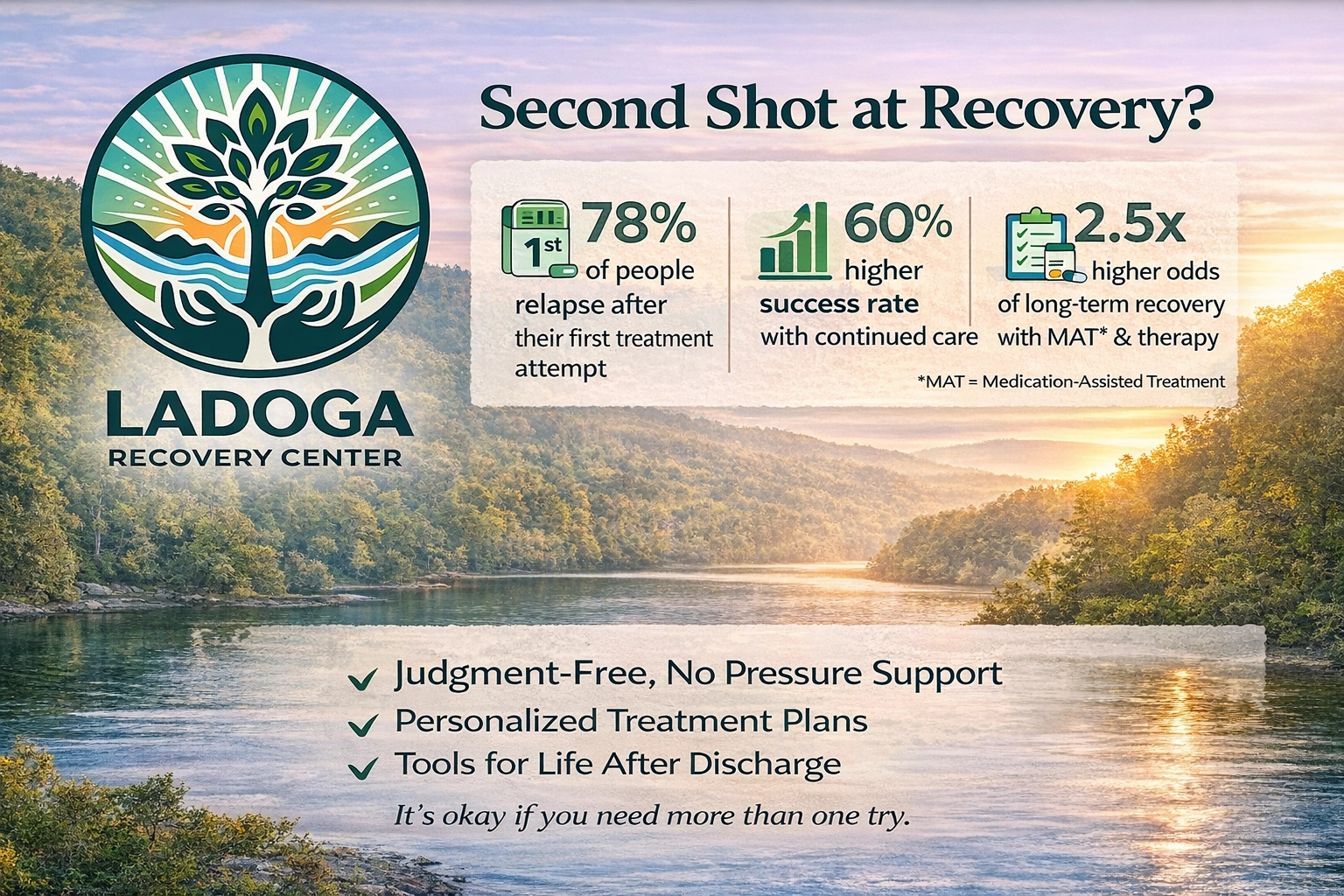
That’s more common than you think. Many people need more than one round of treatment—not because they failed, but because addiction is complex. The right setting, timing, or support system can make a huge difference the next time around.
How is Ladoga Recovery Center different?
At Ladoga, treatment isn’t one-size-fits-all. Whether it’s your first or fourth time seeking help, we meet you where you are—without shame or judgment. Our team works with you to create a plan that fits your real life, not just a brochure.
Will I be judged if I’ve relapsed before?
No. In fact, your relapse gives us insight into what kind of support you might need now. You’ll be welcomed back—not scolded.
Is treatment just detox and therapy?
That’s part of it—but real recovery involves more. At Ladoga, we focus on long-term planning, trauma-informed care, medication support if needed, and practical tools for life after discharge.
Can I choose medication-assisted treatment if I return?
Yes. Many people benefit from MAT, especially when it’s combined with therapy. You’ll talk through your options with a provider to decide what feels right for you.
What if I’m afraid to hope again?
You don’t have to feel hopeful to take action. Courage often looks more like showing up scared than waiting to feel inspired. We’ll hold that space with you—no pressure.
One More Thing—It’s Okay If You Don’t Believe in It Yet
I didn’t, either. I thought I’d always be the exception—the one treatment couldn’t reach. But maybe it wasn’t about believing in the process. Maybe it was about giving it one more honest try.
That’s what Ladoga Recovery gave me. Not a miracle. Not a fix. Just a chance to stop pretending, slow down, and start over—with better tools, better boundaries, and a team who actually listened.
Thinking About Trying Again?
Call (888) 628-6202 to learn more about our opioid addiction treatment services in Ladoga, Indiana.
We’re not here to impress you. We’re here to support you. And we’ll be ready when you are.