


I didn’t hit rock bottom.
I didn’t get arrested, lose custody, or crash my car into a utility pole. I wasn’t sleeping under an overpass or begging my friends for help. I paid my bills on time. I still got promotions. I showed up for parent-teacher conferences and client meetings.
To most people, I looked fine.
But that was the problem—how I looked. Not how I felt.
Inside, I was running on fumes. My drinking wasn’t out of control in the way people think addiction looks. It was calculated. Controlled. Hidden. But it was constant. And it was exhausting.
I had convinced myself for years that residential treatment was for people who’d burned it all down. Not for people like me—people who were still “functioning.”
Turns out, I was wrong.
Learn more about our Residential Treatment services in Ladoga, Indiana.
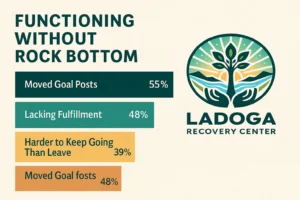
I Kept Moving the Goalposts on What “Bad Enough” Looked Like
I used to say things like, “If I start drinking before noon, I’ll get help.”
Then it was, “If I miss a day of work.”
Then, “If I lie to someone I care about.”
One by one, those lines got crossed—and I still didn’t stop.
When you’re high-functioning, the scary part isn’t falling apart. It’s that you can keep going while falling apart. You can maintain the illusion. You can smile, perform, check the boxes.
But there’s a quiet cost to holding it together that tightly. And it compounds. Mentally. Emotionally. Physically.
I Was Living in a House With No Furniture
That’s the best way I can describe it now.
From the outside, everything looked put together. A stable life. A clean kitchen. A “successful” version of adulthood. But emotionally, everything felt hollow. Numb. Like walking around in a house that looked finished but had no furniture. No warmth. No place to rest.
I didn’t know how to stop. But I also didn’t know how to keep going like that.
So I did what high-functioning people do when they’re falling apart: I Googled it.
That’s how I found Ladoga Recovery Center.
“Residential Treatment” Felt Like a Sledgehammer for a Cracked Window
At first, the idea of residential treatment in Indiana sounded extreme. I wasn’t some college kid blacking out every weekend. I wasn’t on the street. I still had my job, my car, my routines.
Why would I need to live somewhere for treatment?
But when I finally let go of how it sounded and started paying attention to how I felt, I realized this wasn’t about saving face anymore. It was about saving myself.
I didn’t need a bandaid. I needed a reset.
Quiet Changed Everything
I’ll never forget my first night at Ladoga. It was so quiet.
Not just the kind of quiet that comes from being out in nature, away from the noise of traffic and deadlines. But the quiet that comes when you finally step outside the performance.
Nobody was expecting me to hold it together. Nobody needed me to be “on.”
For the first time in years, I could just be…a person. Not a role. Not a function. Not a facade.
It Wasn’t About Quitting Drinking—It Was About Relearning How to Live
I went in thinking I had a drinking problem.
What I learned was that I had a living problem. I didn’t know how to rest. I didn’t know how to ask for help. I didn’t know how to feel my feelings without anesthetizing them.
Residential treatment didn’t just give me tools to stop drinking—it gave me space to understand why I started.
I learned how my perfectionism, people-pleasing, and high expectations all fed into the exhaustion that alcohol was numbing.
I wasn’t broken. I was burned out. And residential treatment gave me the space to heal.
It Was Hard to Leave My Life Behind—But It Was Harder to Keep Living It That Way
The hardest part wasn’t treatment itself—it was making the decision to go.
Taking time off work. Telling people. Admitting I needed help.
But every excuse I gave not to go—“I’m too busy,” “People need me,” “It’s too much”—was the same thinking that kept me stuck.
I kept telling myself I couldn’t afford to stop. But the truth? I couldn’t afford not to.
You Don’t Have to Fall Apart Publicly to Deserve Help Privately
Addiction isn’t always loud.
Sometimes, it’s the quiet erasure of your own needs. The slow fading of joy. The tightening grip of routines that keep you busy but never free.
If you’re “still functioning” but feel like you’re dying inside, you don’t have to wait for things to get worse.
You’re allowed to get better now.
FAQs About Residential Treatment for High-Functioning Adults
Is residential treatment only for people who’ve hit rock bottom?
No. That’s one of the biggest myths. Residential treatment is for anyone who needs immersive, structured care—regardless of how “bad” things look from the outside. High-functioning individuals often wait longer to seek help because their lives seem fine on paper. But emotional pain is valid, even if it’s not dramatic.
Can I take time off work for residential treatment?
Yes, and in many cases, it’s protected under FMLA (Family and Medical Leave Act). Taking a break isn’t failure—it’s an investment in your long-term health and productivity. Ladoga’s team can help you navigate this confidentially.
What happens in residential treatment?
At Ladoga, residential care includes individual therapy, group counseling, wellness activities, and time for rest and reflection. It’s a chance to reset—not just stop using substances, but to rebuild your emotional foundation in a safe, structured environment.
How long does residential treatment last?
Length of stay varies, but many programs range from 30 to 90 days. What matters most is finding the time you need to fully engage in healing. At Ladoga, treatment plans are personalized based on your goals and needs.
What makes Ladoga different?
Ladoga Recovery Center offers a peaceful setting in Indiana where you can step away from daily stressors and focus fully on healing. You’re not just a “client”—you’re a whole person, seen and supported every step of the way.
You can learn more about the program here: Residential Treatment in Ladoga, Indiana
I Didn’t Go to Treatment Because I Was Failing—I Went Because I Wanted to Stop Just Surviving
Looking back now, I realize how long I lived in survival mode.
Always performing. Always producing. Always pretending.
But recovery? It’s not about becoming someone new. It’s about remembering who you are underneath the roles, the routines, the substances.
If you’re tired of holding it together, there’s another way.
Call (888) 628-6202 to learn more about our Residential Treatment services in Ladoga, Indiana.
You don’t have to wait for a breakdown. You just have to be ready for a breakthrough.