

Even if you’re not sure you need help, something is pulling at your attention.
Maybe it’s the way weekends feel lately. Maybe it’s how you catch yourself wondering what life would feel like with more clarity, or how you wake up wishing things were just… lighter.
If you’re exploring the idea of a residential program, it doesn’t mean you’re broken. It means you’re paying attention. Something in you is curious. And that curiosity deserves answers, not pressure.
So how do you figure out if a residential treatment program is actually a good fit—not just clinically, but emotionally, spiritually, personally?
This guide is for you.
Whether you’re just browsing or seriously considering options like Ladoga’s residential treatment in Indiana, here’s how to check if a program aligns with what really matters to you.
Start With What You Actually Value—Not What You Think You Should
A lot of programs will talk about structure, evidence-based care, or success rates. Those things matter. But what matters more is whether you can see yourself in that environment.
Before looking at websites, take five quiet minutes and jot down what you’d want in a space where you’re asked to be vulnerable. For example:
- Do you need privacy?
- Do you feel better in nature or in a home-like setting?
- Are you looking for structure—or flexibility?
- Do you want to be around peers your age?
You don’t have to have all the answers. But being honest with yourself about what makes you feel safe is the first step in finding a place that aligns with your needs.
Ask About Daily Life—Not Just the Treatment Approach
It’s easy to get lost in big words like “trauma-informed” or “holistic.” But healing happens in the small, ordinary moments—what the mornings feel like, whether the food is nourishing, if the staff remember your name.
Here are a few human-centered questions to ask:
- “What does a typical day look like?”
- “Is there downtime, or are activities scheduled all day?”
- “Are there outdoor areas or quiet spaces?”
- “Is there room for introverts, or people who don’t want to share in groups right away?”
A good program will welcome those questions. In fact, they’ll be relieved you’re asking.
One peer at Ladoga put it this way:
“I wasn’t scared of the therapy. I was scared of not having a soft place to land between sessions. Ladoga had that. I didn’t expect it to feel like a reset and a retreat—but it did.”
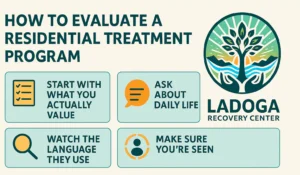
Watch the Language They Use—It Reveals Their Values
Language tells you who a program thinks you are. If you see language that labels, blames, or treats people like problems to be fixed—that’s a red flag.
On the other hand, if their materials speak with kindness and clarity—if you feel like a full human reading them—that’s a sign the program might be values-aligned.
You can also look at their team bios. Do staff share about their lived experience or only their credentials? Are there phrases like “We honor your story” or “We walk beside you”? Do they mention consent, choice, or cultural sensitivity?
A values-driven residential program doesn’t just offer respect—it’s baked into how they speak, listen, and support.
Make Sure You’re Seen in Their Structure, Not Just Their Brochure
The best programs understand that “fit” goes beyond clinical diagnosis. They ask: Who are you as a whole person?
That includes:
- Cultural background
- Gender identity and expression
- Faith (or lack thereof)
- Neurodiversity
- Past experiences with healthcare systems
Ask how they handle identity-based needs. Do they offer culturally responsive care? Do they avoid assumptions about family, faith, or relationships?
One Ladoga staff member shared:
“We don’t need you to be someone else to heal here. We just need you to show up—and we’ll meet you where you are.”
That’s the difference between checking a box and truly belonging.
Ask What Happens When Things Get Hard
It’s easy for a program to talk about support when everything’s going well. But what about when you’re struggling?
- What if you want to leave early?
- What if you don’t connect with your therapist?
- What if you relapse in the middle of your stay—or after?
These aren’t negative questions. They’re real ones. And the answers will tell you whether the program is built for your humanness, not just your recovery.
Programs like Ladoga don’t treat setbacks as failure. They see them as information. If a program can talk about challenge without shame, that’s a strong sign it honors the complexity of change.
Learn What Comes After Residential
A great residential experience can create meaningful breakthroughs—but what comes next is just as important.
Ask whether the program helps you create a plan for outpatient care, community connection, or safe return to your environment. Do they offer direct pathways into step-down options like intensive outpatient care in Indiana? Or alumni support groups?
Values-aligned care doesn’t just offer you a place to land—it helps you lift off again.
Trust Your Gut—Even If You Can’t Explain It
If you talk to someone at a program and something feels performative, rigid, or salesy—trust that.
On the flip side, if you walk away from a conversation feeling calm, curious, or even gently surprised—that matters too.
One person shared:
“I didn’t think I was ready. But after the call, I felt… not convinced, just seen. And that was enough to say yes.”
A good fit isn’t about logic alone. It’s about felt safety. If your body exhales when you imagine being there, pay attention.
Frequently Asked Questions About Values-Aligned Residential Care
What if I’m not sure I even need residential treatment?
That’s okay. Many people start out unsure. Residential treatment isn’t about labeling yourself—it’s about giving yourself a supportive container to explore change. Programs like Ladoga’s residential recovery option in Indiana can walk you through whether it’s the right level of care for where you are now.
Can I still be sober curious and go to residential?
Yes. Residential programs aren’t only for people who identify as addicts or alcoholics. If you’re questioning your relationship with substances and want space to reflect, that’s enough. Some people enter residential care just to pause, reset, and figure out what they want.
What should I ask when I call a program?
Here are a few conversation starters that can help you gauge alignment:
- “What do you believe about how people change?”
- “How do you handle resistance or ambivalence?”
- “Is spirituality optional or integrated?”
- “What’s the culture like among clients?”
You’re allowed to ask questions that speak to your values—not just logistics.
What if I’ve had a bad experience in treatment before?
You’re not alone. A values-aligned program won’t make you feel like you failed. They’ll be open to hearing what didn’t work for you—and how to do it differently this time.
Do I have to commit to 30 days or more?
Not always. Many residential programs offer flexible lengths of stay. Ladoga can work with you to build a timeline that makes sense for your goals—not just their calendar.
Ready to Talk?
If you’re exploring what’s next, Ladoga Recovery Center offers residential options that respect your pace, your values, and your humanity. Call (888) 628-6202 or visit our Residential services in Ladoga, Indiana to learn more. No pressure—just possibilities.