


You’ve been watching closely. Maybe more closely than anyone else realizes.
The small changes. The mood shifts. The way mornings have started to feel… off.
And now there’s a question sitting quietly in the back of your mind: Is this something I can still manage at home?
If you’re here, something in you already knows the answer might be no. And that’s not failure—it’s awareness.
Early on, many families begin exploring what more structured support looks like, especially options like residential treatment in Indiana, because what’s happening isn’t surface-level anymore.
The Part No One Prepares You For as a Parent
There’s no guidebook for this version of parenting.
No one tells you what to do when your child is technically an adult—but still deeply struggling. When you can’t enforce rules the same way. When love doesn’t seem to land the way it used to.
You might find yourself:
- Checking your phone constantly
- Listening for movement in the house
- Replaying conversations, wondering what you missed
It becomes exhausting. Not just physically—but emotionally.
And the truth is, no parent can stay on high alert forever without breaking down themselves.
What Those Early Morning Signs Often Mean
One of the most concerning patterns parents notice is what happens first thing in the morning.
Before coffee. Before conversation. Before the day even starts.
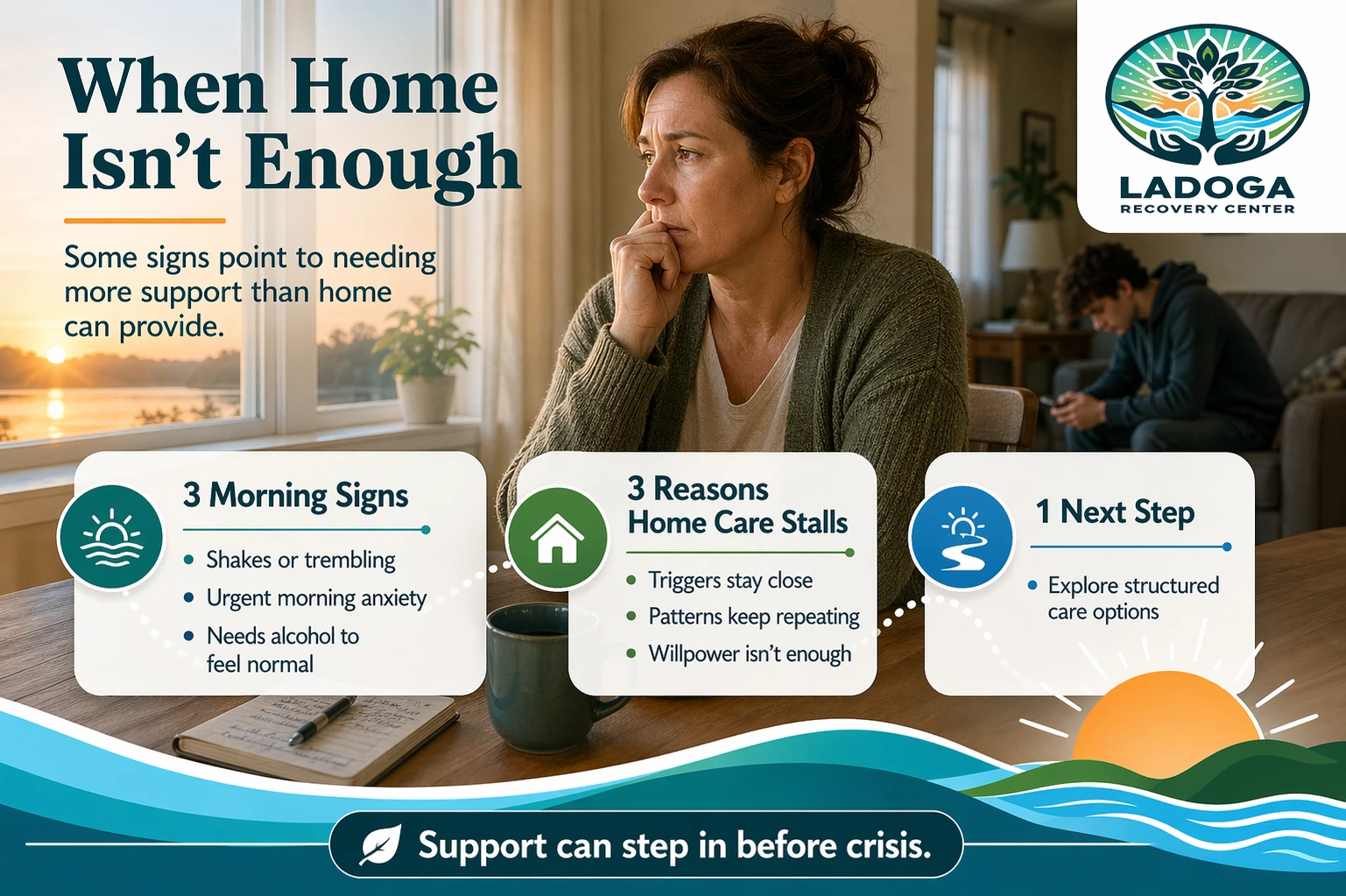
If your child is dealing with alcohol withdrawal morning shakes, it can look like:
- Hands trembling or difficulty holding objects
- Anxiety that feels almost urgent
- Irritability that quickly improves after drinking
- Needing alcohol just to feel “normal”
This isn’t about willpower.
It’s about the body adapting in a way that now requires alcohol to function. And once that line is crossed, it’s incredibly difficult to reverse without structured help.
Why “Trying Harder at Home” Stops Working
Most parents try everything before considering outside help.
You talk. You set boundaries. You research. You stay up late waiting for them to come home.
But addiction doesn’t respond to effort alone.
At a certain point, the environment itself becomes part of the cycle:
- Familiar spaces tied to using
- Easy access to alcohol
- Patterns that repeat without interruption
Even in a loving home, those factors don’t just disappear.
This is where different levels of care become essential—not because you’ve run out of options, but because the situation requires a different kind of support.
Understanding the “Levels” Without the Overwhelm
It can feel confusing at first—there are so many terms, so many options.
But at its core, addiction care is about matching the intensity of support to the intensity of the problem.
Some people start with medical detox, where their body can safely stabilize.
Others move into structured daytime programs, spending several hours in therapy and support each day.
And then there’s live-in care—where support is constant, and the environment is fully focused on recovery.
Each level exists for a reason.
Each one meets your child where they are—not where you wish they were.
When Round-the-Clock Support Becomes Necessary
This is often the hardest step for parents to accept.
Because it feels like letting go.
But in reality, it’s creating space for something new to happen.
Round-the-clock care offers:
- A break from daily triggers
- Medical oversight during vulnerable periods
- Emotional support that’s consistent, not reactive
- Time away from the patterns that keep repeating
For many young adults, this level of care becomes the turning point—not because they’re forced into it, but because they finally have the structure they couldn’t create on their own.
Families in Indianapolis often reach this point after trying to manage things at home for longer than they should have. Not because they didn’t care—but because they cared so much they kept hoping things would shift.
The Guilt Parents Carry (And Don’t Talk About)
There’s a quiet narrative that shows up in moments like this:
“Maybe I missed something.”
“Maybe I should have stepped in sooner.”
“Maybe this is somehow my fault.”
Let’s be clear—addiction is complex. It’s influenced by biology, environment, mental health, and more.
It is not caused by a lack of love.
In fact, most parents in your position have done more than most people ever will.
Choosing additional support doesn’t mean you’re stepping back.
It means you’re stepping smarter.
What Support Can Look Like Moving Forward
You don’t have to commit to everything today.
But you can begin understanding your options.
That might mean:
- Learning what detox involves and how it helps
- Exploring structured care that fits your child’s needs
- Talking to professionals who can guide you without judgment
Families near Crawfordsville, Indiana often start by simply asking questions—no pressure, no commitment—just trying to understand what’s possible.
And that’s enough for a first step.
A Different Way to Think About Help
It’s easy to see treatment as something extreme. Something reserved for “worst-case scenarios.”
But in reality, it’s just support at the level that’s needed.
Nothing more. Nothing less.
If your child had a medical condition that required daily care, you wouldn’t hesitate.
This is no different.
Except it’s harder to see. And harder to talk about.
You Don’t Have to Wait for Things to Get Worse
One of the most common things parents say later is:
“I wish we had done something sooner.”
Not because they failed—but because they didn’t realize how quickly things could escalate.
You don’t have to wait for a crisis.
You don’t have to wait for something irreversible.
You can act while there’s still space to change direction.
FAQs: What Parents Usually Ask at This Point
How do I know if my child needs more than outpatient support?
If you’re seeing physical symptoms, repeated relapse patterns, or daily functioning tied to substance use, it often means a higher level of care is needed. Especially if attempts at managing things at home haven’t worked.
Will they be forced to stay in treatment?
In most cases, treatment for young adults involves collaboration and consent. Programs are designed to engage—not control—so your child can begin taking ownership of their recovery.
What if they refuse help?
This is incredibly common. Sometimes the first step isn’t immediate admission—it’s conversation, education, or even a professional intervention. You don’t have to solve that alone.
Is residential care too extreme?
Not necessarily. It’s simply the most structured form of support. For someone struggling with physical dependence or repeated relapse, it can actually be the safest and most effective option.
How long does treatment usually last?
It varies. Some programs are a few weeks, others longer. What matters most is matching the duration to your child’s needs—not rushing the process.
What happens after treatment ends?
Recovery doesn’t stop after one program. Most people continue with step-down care, therapy, or support groups to maintain progress.
You’re Allowed to Choose Support
There’s a version of this where you keep trying to hold everything together on your own.
And there’s another version where support steps in—steady, experienced, and consistent.
You don’t have to have all the answers.
You just have to be willing to take the next step toward something different.
Call (888) 628-6202 or visit residential treatment in Indiana to learn more.