


Thinking about inpatient treatment doesn’t mean you’ve failed.
It might just mean you’re tired of wondering if things could feel better. Maybe you’re not in crisis, but you’ve been circling the question: “What if I stopped?” “Would I still be me?” “Do I really need treatment—or just a break?”
That kind of curiosity is worth listening to.
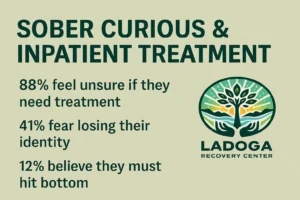
At Ladoga Recovery Center’s inpatient treatment program in Indiana, we meet people at all stages of readiness. You don’t have to hit rock bottom to benefit from inpatient care. You just have to be open to exploring something different—even if you’re not sure what recovery looks like yet.
Here’s how to prepare for inpatient treatment when you’re still figuring things out.
1. Let Curiosity Count as Readiness
You don’t have to be convinced. Just curious. That’s enough.
So many people wait until things fall apart to consider treatment. But you don’t need to be in crisis to step into care. In fact, people who enter an inpatient program from a place of curiosity or quiet discomfort often experience meaningful change—because they still believe life can feel better.
If you’re asking, “Could this help me?”—you’re ready to explore.
You’re not committing to a label. You’re not promising to change everything overnight. You’re just giving yourself the space to ask better questions in a supportive environment.
2. Understand What an Inpatient Treatment Program Really Is
For many first-timers, the word “inpatient” sounds intense. But it might be gentler than you think.
At Ladoga Recovery Center, inpatient care means living onsite for a period of focused support. That usually lasts 30–45 days. During that time, your daily schedule includes a combination of:
- Individual and group therapy
- Medical and psychiatric care, if needed
- Nutrition and rest
- Emotional processing and education
- Time to reflect without outside pressure
It’s not a hospital. It’s not jail. It’s not a place where you’re “fixed.” It’s a place where you can safely pause the noise and get curious about what’s underneath your patterns.
Many clients describe it as the first time in years they’ve been able to breathe.
3. Pack Light—But Pack With Intention
There’s no perfect checklist. But here’s a practical way to think about what to bring when you check in:
Pack for comfort, not performance.
You’re not going to be judged on your outfits or expected to “present” a version of yourself. Bring clothes you feel okay wearing during therapy, downtime, light activities, and rest.
Bring a few things that ground you.
A favorite book, a photo, a journal, a blanket. Something that feels familiar in a new space.
Keep it simple.
Our team can help you prepare a packing list and explain what’s permitted. You don’t need to figure it all out alone.
What matters most is showing up—not having the perfect suitcase.
4. Give Yourself Permission to Be Supported
You don’t need to hold everything together in treatment. That’s the point.
A lot of sober-curious people have spent years being the strong one. The capable one. The “I’m fine” one.
But inpatient care is the place where you can lay some of that down. You don’t have to be on. You don’t have to perform. You don’t even have to know what you’re doing.
That’s what we’re here for.
You’ll have a care team who gets it. You’ll have peers who feel just as unsure. You’ll have structure so you don’t have to plan your day. You’ll have real meals, real rest, and real conversations.
And slowly, maybe even surprisingly, you’ll realize you were never meant to do this alone.
5. Prepare to Pause the Outside World—Not Cut It Off
Inpatient doesn’t mean isolation. It means creating a focused container so healing can begin.
You’ll still be able to connect with loved ones—just in a structured, intentional way. Phones and devices are typically limited at first to help reduce distraction and anxiety, but communication is never fully shut off. Our staff helps coordinate phone calls, visits, and check-ins with the people who matter most.
If you’re worried about work, kids, pets, or home obligations—talk to us. We’ve helped hundreds of people navigate logistics. We can help you find coverage, understand legal protections (like FMLA), or just create a plan that feels doable.
You’re allowed to prioritize your health without walking away from your life.
6. You Don’t Have to Be Fully Sure to Take the First Step
You might still be telling yourself:
- “I’m not like other people who go to treatment.”
- “I can still manage things on my own.”
- “What if it’s not that bad?”
These thoughts don’t disqualify you from care. They’re part of the process.
It’s okay to arrive in treatment feeling unsure. We don’t expect you to show up convinced. We expect you to show up human.
At Ladoga, we’ve created a space where exploration is just as valid as commitment. You can ask hard questions here. You can wrestle with doubts. You can arrive as a maybe, not a yes.
And still find support.
7. Make the Call That Changes the Tone—Not Your Whole Life
People sometimes think calling a treatment center locks them into a big decision. But the truth is—calling is just a conversation.
You can ask questions. You can say you’re not sure. You can take your time.
We’ll walk you through:
- What inpatient care actually looks like
- How insurance and cost work
- What your options are for dates, length of stay, and next steps
- What it might feel like to come through the doors
Sometimes just having that first call is enough to ease the fear. Even if you don’t enroll today, you’ll leave that call with more clarity than you started with.
FAQs: First-Time Inpatient Treatment and the Sober Curious
Do I have to be diagnosed with an addiction to go to inpatient treatment?
No. You don’t need a formal diagnosis or a crisis moment to benefit from treatment. Many people enter inpatient care while exploring sobriety, seeking clarity, or wanting a structured break to reset their relationship with substances.
What if I still feel unsure while I’m in the program?
That’s completely normal. Especially for people in early stages of exploration, doubt and uncertainty are part of the work. Our team knows how to support that process gently. You’ll never be shamed for having questions.
Will I be forced to commit to sobriety forever?
No. Our job isn’t to force a future—it’s to help you get clear in the present. You’ll explore what sobriety means for you, at your pace, with support and no pressure.
What happens after inpatient treatment ends?
We help you plan for what’s next—whether that’s outpatient care, sober living, community support, or simply staying connected with resources. Your care doesn’t end the day you leave.
Can I leave if I change my mind?
Yes. Inpatient care is voluntary. You can choose to leave at any time, though we encourage honest conversations with your treatment team before making that decision. Many people find that the hardest part is just staying through the discomfort—and that’s where the breakthroughs often happen.
Is treatment confidential?
Absolutely. Your privacy is protected under HIPAA and other federal and state laws. No one will know you’re in treatment unless you choose to tell them.
When You’re Ready to Step Into Something New
You don’t need to wait until things fall apart to want more from your life.
If you’re sober curious—tired, questioning, or simply wondering what it might feel like to live without substances for a while—we’re here to help.
Call (888) 628-6202 or visit our inpatient treatment program page to talk with someone who can walk you through your options.
You don’t have to be certain.
You just have to be open.
And we’ll meet you there.