


You’re still showing up every day.
You’re getting to work on time. Your responsibilities are handled. Bills are paid. From the outside, life probably looks stable—maybe even successful.
But inside, something feels different than it used to.
There’s a quiet fatigue that never quite goes away. A habit that started as relief now feels more like maintenance. A thought that appears more often than it once did: Why can’t I just stop when I say I will?
As clinicians, we meet many people living in this exact space. They’re still functioning. Still achieving. Still moving forward in life. But privately, they’re wondering if it might be time to look at opioid addiction treatment options in Indiana.
Not because their life collapsed.
Because holding everything together has become exhausting.
The Quiet Reality of High-Functioning Addiction
Addiction doesn’t always look the way people expect it to.
Many people imagine chaos—missed work, legal trouble, dramatic life disruptions. But high-functioning substance use often hides behind routines that appear normal.
You may still be productive. Responsible. Dependable.
At the same time, there may be patterns developing beneath the surface:
You promise yourself you’ll cut back soon.
You notice you’re thinking about the next drink or pill earlier in the day.
You tell yourself you’re just dealing with stress like everyone else.
And yet, the routine slowly becomes harder to control.
High-functioning addiction often lives in the quiet space between capability and exhaustion. You’re still managing your life, but the energy it takes to maintain that balance grows heavier every month.
When the Inner Conversation Starts Changing
Many people in this situation experience a shift in their internal dialogue.
At first, the voice might sound dismissive:
It’s not that serious.
Everyone drinks or uses something to unwind.
I’ll deal with it later.
Over time, that voice begins to change.
It becomes more reflective. More honest.
You might catch yourself asking questions you never asked before:
Why do I feel uneasy when I try to stop?
Why is it harder to control this than I expected?
Why do I feel relieved when I finally use?
These questions aren’t signs of failure.
They’re often signs of awareness beginning to grow.
And awareness is frequently the first real step toward change.
The Hidden Cost of Maintaining the Image
For high-functioning individuals, one of the hardest parts of substance use is the invisible pressure of maintaining an image.
You may be the person others rely on.
The responsible one. The stable one. The one who always has things handled.
Because of that, it can feel impossible to admit that something underneath the surface might need attention.
This creates a quiet double life.
There’s the version of you that the world sees—competent, productive, dependable.
Then there’s the private version that knows the habit is becoming heavier than it used to be.
Living between those two realities requires enormous emotional energy.
And eventually, that energy runs low.
Success Doesn’t Cancel Out Struggle
One of the most common misunderstandings about addiction is that success protects people from it.
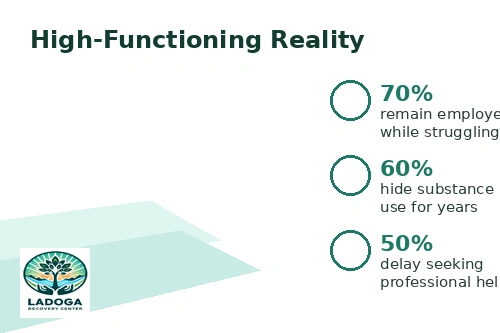
In reality, many high-achieving individuals struggle quietly for years before seeking help.
Professional responsibility, financial stability, and strong relationships can actually make it easier to hide the problem longer.
But addiction doesn’t measure itself by external success.
It measures itself by the loss of control.
If you’ve found yourself trying to reduce or stop and discovering it’s harder than expected, that experience matters—no matter how stable the rest of your life appears.
Many people working in and around Indianapolis quietly face the same struggle: balancing demanding careers, family expectations, and stress while relying on substances that gradually take up more space in daily life.
No one sees the internal negotiations happening every day.
But the people living it feel them deeply.
When Stress Relief Becomes Dependence
Substance use often begins with a very understandable goal: relief.
Relief from stress.
Relief from anxiety.
Relief from constant pressure.
At first, it works.
The mind quiets down. The body relaxes. The tension fades.
But over time, the brain adapts.
What once provided relief begins to feel necessary.
Instead of being an option at the end of the day, the substance becomes something the mind expects in order to feel normal.
This shift can happen slowly enough that it’s hard to notice.
People often look back months or years later and realize the relationship with the substance has quietly changed.
That realization can be unsettling—but it’s also an opportunity to reclaim control.
The Moment People Begin Considering Help
There’s rarely a dramatic turning point for high-functioning individuals.
Instead, there’s often a quiet moment of clarity.
Maybe it happens late at night when the house is quiet.
Maybe it happens after trying to take a break and realizing the cravings feel stronger than expected.
Or maybe it simply happens after one more evening of telling yourself, Tomorrow will be different.
That moment doesn’t mean things are hopeless.
It means something important has surfaced: honesty.
In communities like Crawfordsville, Indiana, many people quietly reach this moment long before anyone else notices. They’re still going to work, still caring for family, still participating in everyday life.
But privately, they’re starting to ask whether continuing the same pattern will eventually lead somewhere they don’t want to go.
Recognizing that question is often the beginning of real change.
Treatment Isn’t What Many People Expect
For high-functioning individuals, one of the biggest fears about seeking help is disruption.
People imagine that treatment means stepping away from life completely.
In reality, care today often includes flexible options designed to support people who still have work and family responsibilities.
Some individuals benefit from live-in care that provides complete stability for a period of time. Others participate in structured daytime treatment while continuing parts of their normal routine.
If physical dependence has developed, medical support can make the early stage of recovery far safer and more comfortable.
Detox programs provide medically supervised stabilization and recovery support, including options for people seeking support in Indiana.
The goal is not to punish someone for struggling.
The goal is to create a space where healing can begin.
The Truth Many People Discover in Recovery
People often assume treatment will feel like losing something.
Losing freedom. Losing identity. Losing the coping mechanism that helped them manage stress.
But many individuals discover something very different once recovery begins.
They discover:
Better sleep.
Clearer thinking.
Energy returning to parts of life that had slowly gone quiet.
Relationships becoming easier instead of harder.
And perhaps most importantly, the return of a sense of control.
Instead of planning life around substances, people begin planning life around what actually matters to them.
That shift can be profound.
You Don’t Have to Wait for Things to Collapse
One of the biggest myths about addiction is that people must reach rock bottom before getting help.
In reality, many of the most successful recovery stories begin much earlier.
They begin when someone simply acknowledges:
This pattern isn’t working anymore.
Seeking help early often means avoiding the deeper consequences that addiction can bring later.
It also allows people to rebuild stability while their life is still largely intact.
Recovery doesn’t require everything to fall apart first.
Sometimes it simply begins with curiosity about whether life could feel lighter than it does right now.
Frequently Asked Questions
Can someone really have an addiction if they’re still functioning?
Yes. Many people with substance use disorders maintain careers, families, and daily responsibilities for years. Functioning externally doesn’t always reflect what someone is experiencing internally.
How do people know when it’s time to seek help?
A common signal is when attempts to cut back or stop become more difficult than expected. If substance use begins to feel less like a choice and more like a necessity, it may be worth exploring professional support.
Do people have to stop working to enter treatment?
Not always. Many treatment options allow people to continue working while receiving structured care. The appropriate level of support depends on individual needs and circumstances.
Is detox always necessary?
Detox is recommended when physical dependence is present. Medical supervision can help people withdraw safely and manage symptoms that might otherwise make stopping extremely difficult.
What if someone isn’t sure they’re “ready”?
Uncertainty is very common. Many people begin the process simply by having a conversation with a treatment professional to better understand their options.
Does seeking help mean someone has failed?
No. In fact, seeking help is often one of the strongest decisions a person can make. It reflects honesty, courage, and a willingness to protect one’s future.
A Quiet Decision Can Change Everything
If you’ve been holding everything together while privately wondering whether things could be different, you’re not alone.
Many people continue working, caring for their families, and managing their responsibilities while quietly struggling with substance use.
And many of them eventually reach the same realization:
They don’t have to carry it alone anymore.
Call (888) 628-6202 to learn more about our substance abuse treatment in indiana.