


There’s a strange kind of loneliness that can come with questioning your drinking.
Not everyone around you sees it. Maybe you still go to work. Maybe you still laugh at dinner with friends. Maybe nobody would even guess how often you think about alcohol.
But somewhere underneath the routines, there’s a quieter question forming:
What happens if I try to stop?
For many sober-curious people, that question feels both hopeful and terrifying. You may not even know if you “have a problem.” You just know your relationship with alcohol feels heavier than it used to.
And if you’ve started wondering whether it’s safe to quit drinking at home, you’re not alone. Many people begin exploring alcohol detoxification treatment in Indiana after realizing withdrawal can become more serious than expected.
Why So Many People Try to Quit Quietly
A lot of people don’t tell anyone they’re thinking about stopping drinking.
Not at first.
They test themselves privately:
- “I’ll only drink on weekends.”
- “I’ll take a week off.”
- “I just need more self-control.”
Sometimes it works briefly. Sometimes it doesn’t.
For many people, the hardest part isn’t even the alcohol itself. It’s what the thought of quitting seems to mean. Losing comfort. Losing routine. Losing the thing that helped take the edge off difficult days.
Alcohol can quietly become emotional armor.
And even when someone knows it’s hurting them, part of them may still feel attached to it.
That internal conflict is incredibly common.
Can Alcohol Withdrawal Actually Be Dangerous?
Yes—sometimes dangerously so.
This surprises people because drinking is so normalized socially. Alcohol is legal, everywhere, and often tied to celebration, stress relief, or connection. Because of that, many people underestimate how deeply alcohol can affect the body physically.
Over time, heavy or long-term drinking changes how the brain and nervous system function. The body adapts to alcohol being present regularly.
When alcohol suddenly disappears, the nervous system can react intensely.
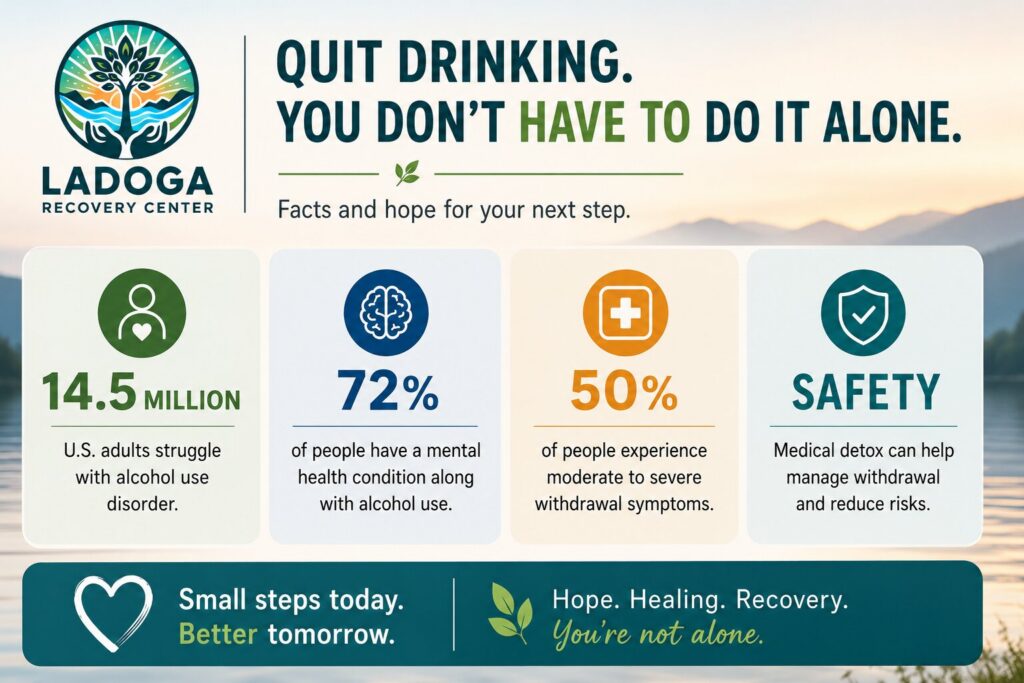
Withdrawal symptoms can range from mild to severe, including:
- Anxiety
- Sweating
- Tremors
- Nausea
- Insomnia
- Panic
- Hallucinations
- Seizures
- Dangerous confusion
The difficult part is that people often don’t know ahead of time how severe their withdrawal might become.
Someone may think they’re simply “taking a break” from drinking and suddenly find themselves physically overwhelmed.
That unpredictability is one reason medically supervised detox exists.
What Does It Mean if I’m Afraid to Stop Drinking?
Honestly? That fear often says more than people realize.
Many sober-curious people aren’t drinking constantly. Some are highly functional. Some only drink at night. Some binge on weekends and swear they’ll cut back every Monday morning.
But fear around stopping can sometimes signal that alcohol has become emotionally or physically important in ways that feel difficult to untangle.
You might notice thoughts like:
- “What if I can’t sleep without it?”
- “What if my anxiety gets worse?”
- “What if I don’t know how to relax anymore?”
- “What if people notice I’m different?”
Those fears deserve compassion, not shame.
For many people, alcohol slowly shifts from something recreational into something protective. It becomes a coping mechanism for stress, loneliness, overthinking, grief, or emotional exhaustion.
That doesn’t make you broken. It makes you human.
What Are the Signs I Might Need Medical Detox?
Not everyone needs the same level of support. But there are certain signs that suggest stopping drinking without medical supervision may carry risks.
You may benefit from medical support if:
- You drink daily or heavily
- You’ve experienced withdrawal symptoms before
- You wake up shaky or anxious
- You drink to steady your nerves
- You’ve blacked out
- You’ve tried quitting before and restarted because symptoms became overwhelming
- Your heart races or you panic after cutting back
A lot of people searching for medical alcohol detox Indianapolis aren’t necessarily looking for lifelong treatment at first.
They’re often searching for one thing:
A safe way to stop.
And that’s a valid reason to reach out.
What Does Detox Actually Feel Like?
Many people imagine detox as harsh, sterile, or emotionally cold.
But most are surprised by how human it feels.
Medical detox is designed to help people withdraw from alcohol safely while reducing complications and discomfort. Staff monitor symptoms, help stabilize the body, and support patients emotionally through those first difficult days.
There’s no gold medal for suffering through withdrawal alone.
In fact, many people say the most unexpected part of detox is relief.
Relief that someone finally understands.
Relief that they don’t have to keep pretending everything is under control.
Relief that their body can finally rest.
One of the quiet tragedies of alcohol dependence is how exhausting it becomes to maintain the appearance of functioning while struggling internally.
Detox can interrupt that cycle.
What If I’m Still Not Sure I Need Help?
You don’t have to decide your entire future today.
That’s important.
Many people delay reaching out because they think asking questions automatically means committing to lifelong sobriety or intensive treatment.
It doesn’t.
Sometimes the first step is simply having an honest conversation about your drinking and learning what your options are.
Curiosity counts.
You do not have to hit rock bottom before you deserve support.
In reality, many people who seek treatment early are trying to prevent things from getting worse—not recover from total collapse.
That’s wisdom, not weakness.
What Happens After Detox?
Detox addresses the physical side of withdrawal, but recovery usually involves more than just stopping alcohol temporarily.
Many people continue with some form of ongoing support afterward because alcohol often becomes connected to:
- Stress
- Anxiety
- Trauma
- Burnout
- Loneliness
- Depression
- Social pressure
- Emotional avoidance
Without support, those underlying struggles can pull people back toward drinking even after detox ends.
Some people continue with:
- Individual counseling
- Group therapy
- Multi-day weekly treatment
- Mental health support
- Relapse prevention planning
- Structured daytime care
Others explore broader treatment options in Substance Abuse that help address both substance use and emotional health together.
Depending on individual needs, some also transition into additional treatment options in Indiana for continued support after detox.
Recovery doesn’t usually happen through one dramatic breakthrough.
It’s often built slowly. Quietly. One decision at a time.
Is It Normal to Feel Both Ready and Not Ready?
Completely.
That emotional tug-of-war is one of the most common experiences people have before seeking help.
Part of you may want peace. Better sleep. Clarity. Energy. Freedom from constantly thinking about alcohol.
Another part may still want the comfort, escape, or familiarity drinking provides.
Both feelings can exist at once.
Recovery rarely begins with perfect certainty.
It usually begins with honesty.
The Goal Isn’t Becoming Someone Else
A lot of sober-curious people secretly fear that quitting drinking will erase part of who they are.
They worry they’ll become boring. Flat. Socially awkward. Less fun. Less creative.
But alcohol often doesn’t preserve identity nearly as much as it drains people slowly over time.
Many people eventually realize they weren’t becoming “more themselves” while drinking. They were becoming more exhausted.
Recovery isn’t about turning into a different person overnight.
It’s about getting enough distance from survival mode to hear yourself think again.
That can feel scary at first.
But it can also feel like breathing deeper after years of shallow air.
Frequently Asked Questions About Alcohol Detoxification
How long does alcohol withdrawal usually last?
Withdrawal symptoms can begin within 6–24 hours after the last drink. Symptoms often peak within the first few days, though anxiety, sleep issues, and mood changes may linger longer for some people.
Is it safe to quit drinking cold turkey?
For some people, stopping abruptly can be dangerous. Severe alcohol withdrawal may lead to seizures, hallucinations, or delirium tremens (DTs). Medical evaluation is the safest way to determine risk.
What are early signs of alcohol withdrawal?
Common symptoms include:
- Sweating
- Anxiety
- Tremors
- Nausea
- Trouble sleeping
- Headaches
- Increased heart rate
Do I need detox if I’m still functioning normally?
Possibly. Many people with alcohol dependence continue working, parenting, and maintaining routines while struggling privately. External functioning does not always reflect physical dependence.
What if I’ve tried quitting before and couldn’t stick with it?
That’s extremely common. Alcohol withdrawal, stress, cravings, and emotional triggers can make quitting alone very difficult. Support exists because recovery is hard—not because you failed.
Will detox force me into long-term treatment?
No. Reaching out for detox information does not lock you into a lifelong plan. Many people begin by simply asking questions and exploring their options.
Is medical detox painful?
Withdrawal can be uncomfortable, but medically supervised detox programs are designed to improve safety and reduce distress as much as possible.
Can anxiety get worse after I stop drinking?
Yes, temporarily. Alcohol often masks anxiety while also contributing to it long-term. During withdrawal, emotions can feel more intense before the nervous system stabilizes.
What if I’m sober curious but not fully committed to quitting forever?
You are still allowed to ask questions, explore support, and learn about your options. Many people begin recovery with uncertainty.
How do I know if treatment is the right step?
If alcohol is taking up more emotional energy than you want it to, affecting your health, or making you feel trapped, it may be worth talking with someone about support options.
Call (888) 628-6202 or visit our levels of care for addiction treatment in Indiana, detox treatment programs in Indiana, alcohol detoxification treatment program in Indiana to learn more about safe, supportive options for stopping alcohol and beginning recovery at your own pace.