


There’s a moment a lot of people quietly reach before they ever ask for help.
Maybe it happens at 2 a.m. after another shaky night. Maybe it’s after trying to stop drinking “just for a few days” and realizing your body isn’t reacting the way you expected.
If you’ve been wondering whether alcohol withdrawal can actually be dangerous, you’re not overreacting. For some people, it can become serious very quickly. That’s why medically supported detox exists—and why many people begin recovery through programs like alcohol detoxification treatment in Indiana.
For many first-time treatment seekers, the fear isn’t just about stopping drinking. It’s about everything that comes after. The unknown can feel enormous. But understanding what withdrawal really looks like—and knowing help exists—can make that first step feel a little less frightening.
Alcohol Withdrawal Can Feel Different Than People Expect
A lot of people imagine withdrawal as a bad hangover that fades after some sleep and hydration.
Sometimes it’s more complicated than that.
Alcohol changes the way the brain and nervous system function over time. If someone has been drinking heavily or consistently for months or years, the body starts adjusting to alcohol being present all the time. It learns to operate around it.
When alcohol suddenly disappears, the nervous system can react intensely.
That reaction may begin with symptoms people expect:
- Sweating
- Restlessness
- Anxiety
- Trouble sleeping
- Nausea
- Shaking
But for some people, symptoms become more severe as the hours pass.
Withdrawal can also include:
- Rapid heart rate
- High blood pressure
- Panic attacks
- Hallucinations
- Severe confusion
- Seizures
One of the hardest parts is that many people don’t know ahead of time how serious their withdrawal could become. Someone may assume they can “push through it,” only to find their body reacting in ways they didn’t anticipate.
That uncertainty is part of why medical detox matters.
Why Suddenly Stopping Alcohol Can Become Dangerous
The phrase quitting alcohol cold turkey dangers is something many people search after they’ve already tried stopping on their own.
Often, it starts with good intentions.
Someone decides they’re done drinking. Maybe they’re exhausted from hiding it. Maybe relationships are suffering. Maybe they wake up one morning and simply can’t keep doing it anymore.
So they stop.
At first, they may feel shaky or anxious. Then symptoms intensify. Sleep disappears. Their heart races. Panic rises. Some people become disoriented or begin hallucinating.
This isn’t weakness. It’s the body struggling to rebalance itself.
Alcohol withdrawal can become medically dangerous because the nervous system has become dependent on alcohol’s depressant effects. Removing alcohol abruptly can overstimulate the brain and body.
For some people, this can lead to a severe condition called delirium tremens (DTs), which may involve:
- Extreme confusion
- Fever
- Hallucinations
- Dangerous changes in blood pressure
- Seizures
Not everyone experiences severe withdrawal. But there’s no reliable way to predict who will without professional evaluation.
That’s why trying to detox alone can carry real risks.
Signs Your Body May Be Physically Dependent on Alcohol
Some people hesitate to seek help because they don’t think their drinking is “serious enough.”
But physical dependence doesn’t always look dramatic from the outside.
Many people are still working, parenting, socializing, or managing daily responsibilities while quietly struggling.
You may be dealing with alcohol dependence if:
- You feel shaky or anxious after several hours without drinking
- You drink in the morning to steady yourself
- You’ve tried cutting back but felt sick afterward
- Your tolerance has increased over time
- You hide how much you drink
- You feel panic or dread at the idea of stopping
- Drinking feels less like a choice and more like survival
A lot of high-functioning people live in this exhausting middle ground for years.
They aren’t falling apart publicly. But privately, they’re tired. Tired of planning life around alcohol. Tired of wondering whether they can stop. Tired of feeling trapped between wanting help and fearing it.
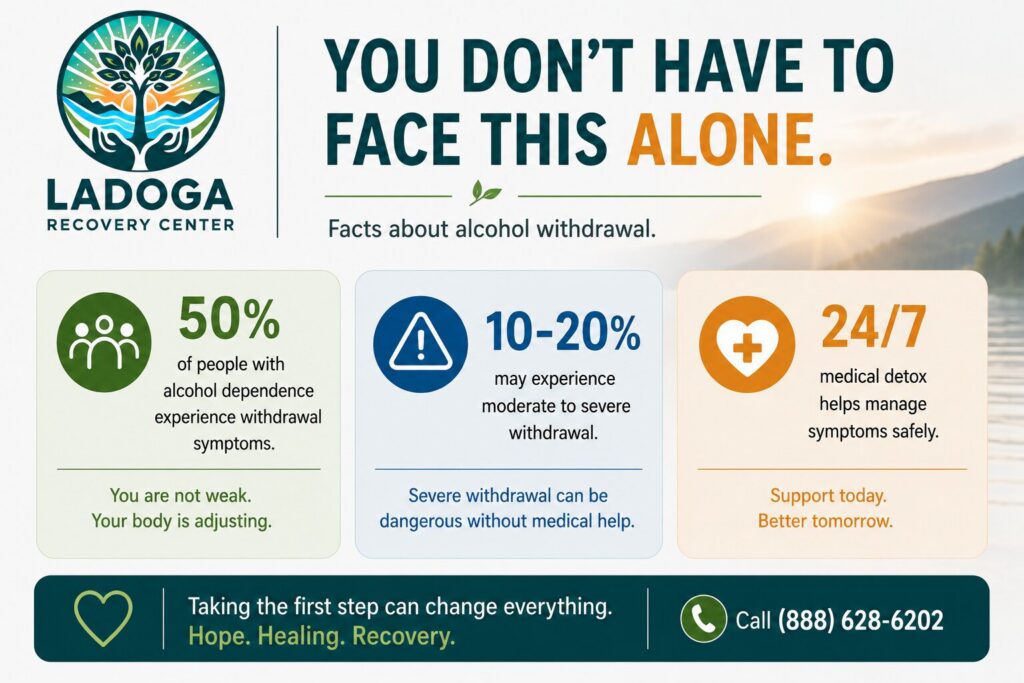
What Medical Detox Actually Looks Like
People often imagine detox as something cold or punitive.
The reality is usually much more human.
Medical detox programs are designed to help people withdraw from alcohol safely while reducing physical distress and monitoring complications. Instead of facing symptoms alone at home, patients are supported by medical professionals who understand how alcohol withdrawal works.
That support may include:
- Monitoring vital signs
- Managing withdrawal symptoms
- Medication support when appropriate
- Hydration and nutrition
- Emotional support during the earliest phase of recovery
Many people arrive terrified.
Then something unexpected happens: they exhale.
Because for the first time in a long time, they don’t have to pretend they’re okay.
One of the quiet truths about detox is this: people often sleep deeply for the first time in years once their body starts stabilizing.
The Emotional Side of Withdrawal Is Real Too
Alcohol withdrawal isn’t only physical.
For many people, emotions hit hard once drinking stops.
Anxiety may surge. Shame may surface. Grief, loneliness, anger, or fear can suddenly feel louder without alcohol numbing them.
That emotional crash can make people want to start drinking again quickly—not because they don’t want recovery, but because they want relief.
This is another reason professional support matters.
Detox isn’t about “being tough enough” to suffer through withdrawal. It’s about safety, stabilization, and helping people move through those first vulnerable days with support around them.
Recovery is hard enough. You do not have to white-knuckle the beginning alone.
What Happens After Detox?
Detox is an important first step, but it’s rarely the whole picture.
Once withdrawal symptoms begin to stabilize, many people benefit from continued treatment that helps them understand the emotional and behavioral patterns connected to alcohol use.
That might include:
- Individual therapy
- Group counseling
- Trauma support
- Mental health care
- Relapse prevention planning
- Structured daytime or weekly treatment programs
Some people continue into broader care in Substance Abuse that addresses both addiction and the stress underneath it.
Others transition into additional care in Indiana depending on their medical needs, support system, and recovery goals.
Recovery doesn’t usually happen all at once.
It’s often built slowly, one honest step at a time.
You Don’t Have to Hit “Rock Bottom” First
A lot of people delay treatment because they think they haven’t “earned” help yet.
They compare themselves to someone worse. Someone who lost more. Someone whose drinking looks more visible.
But suffering quietly still counts.
You do not need a dramatic collapse to deserve support.
In fact, getting help earlier can sometimes prevent deeper medical, emotional, and relational damage later.
There’s a line many people cross internally before they ever call anyone:
“I can’t keep living like this.”
That moment matters.
And you are allowed to respond to it before things become catastrophic.
Asking for Help Is Not the Same as Giving Up
Many first-time treatment seekers fear detox because they think entering treatment means losing control of their life.
In reality, many people describe it as finally getting some control back.
They stop waking up afraid.
They stop negotiating with themselves every morning.
They stop planning every day around alcohol.
That doesn’t mean recovery is easy. But it does mean life can become quieter, steadier, and more manageable than it feels right now.
The version of you underneath the exhaustion is still there.
Sometimes detox is simply the first step toward finding that person again.
Frequently Asked Questions About Alcohol Withdrawal
How long does alcohol withdrawal last?
Withdrawal symptoms can begin within 6–24 hours after the last drink. Mild symptoms may improve within a few days, but more severe symptoms can last longer. Some people also experience lingering anxiety, sleep problems, or mood changes after detox.
Can alcohol withdrawal really be life-threatening?
Yes. Severe alcohol withdrawal can lead to seizures, delirium tremens (DTs), dangerously high blood pressure, and other medical complications. That’s why medical supervision is strongly recommended for people with heavy or long-term alcohol use.
Is it safe to detox from alcohol at home?
For some people with mild dependence, outpatient guidance may be appropriate. But for others, detoxing alone can become dangerous quickly. A professional assessment can help determine the safest option.
What are the first signs of alcohol withdrawal?
Early symptoms often include anxiety, sweating, nausea, shaking, irritability, headaches, and insomnia. Symptoms may worsen over time depending on the level of alcohol dependence.
Will detox cure alcohol addiction?
Detox helps the body stabilize physically, but recovery usually involves ongoing emotional and behavioral support afterward. Detox is often the beginning of treatment—not the end of it.
What if I’m scared to start treatment?
That fear is incredibly common. Many people entering detox are afraid of withdrawal, afraid treatment won’t work, or afraid life will feel unfamiliar without alcohol. You do not have to feel fully confident to ask for help. You only have to take one next step.
Call (888) 628-6202 or visit our levels of care for addiction treatment in Indiana, detox treatment programs in Indiana, alcohol detoxification treatment program in Indiana to learn more about supportive detox options and what recovery can look like from here.