


You fought hard to get here.
The early days of recovery demanded everything—discipline, courage, honesty, and the willingness to rebuild life from the ground up. At first, every day mattered in a visible way. You counted milestones. You protected routines. You surrounded yourself with support.
But years later, something quieter can settle in.
Life is stable. The chaos is gone. Yet sometimes recovery starts to feel… routine.
Not terrible. Not dramatic. Just flat in a way you didn’t expect.
If you’ve been sober for years after opioid addiction and find yourself feeling a little disconnected lately, you’re not alone. Many long-term alumni quietly reach this phase. It doesn’t mean recovery failed. In many ways, it means recovery has moved into a deeper stage—one that people rarely talk about.
And sometimes that stage raises a difficult question:
Is this all there is now?
When Recovery Stops Feeling Urgent
In early sobriety, recovery is front and center in your life.
You think about it constantly.
You organize your schedule around it.
You rely on meetings, counselors, and structured routines.
There’s momentum in those early months and years. The progress feels visible.
But eventually, something shifts.
Sobriety stops being the main focus of your day. It simply becomes the way you live.
Bills still need to be paid. Work continues. Relationships evolve. Daily life fills the space that addiction once occupied.
That stability is the goal—but it can also feel surprisingly quiet.
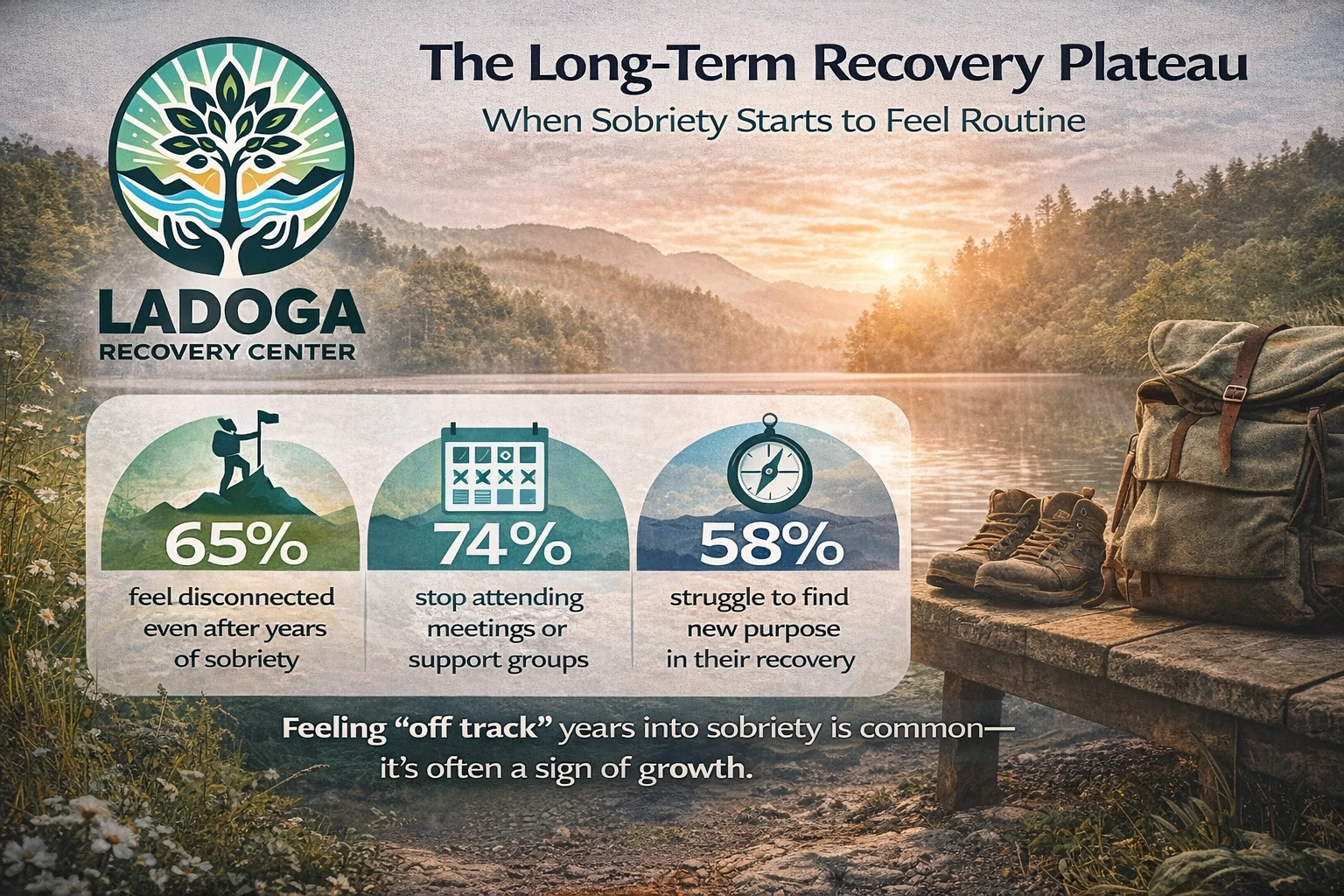
Without the urgency of early recovery, many people experience a strange emotional plateau where everything is fine, yet something inside feels a little distant.
The Quiet Plateau Many People Experience
Long-term recovery doesn’t always look dramatic. Sometimes it looks like normal life.
And that normalcy can feel confusing.
People often describe it as:
- Feeling emotionally flat even though life is stable
- Losing the strong sense of purpose they felt in early sobriety
- Drifting away from recovery communities or conversations
- Wondering why the excitement of early milestones faded
It’s similar to reaching the summit of a mountain you spent years climbing. The view is calm and peaceful—but the adrenaline that carried you upward is gone.
That shift can make people question themselves.
They might think something is wrong with their recovery or their motivation.
But more often, it simply means recovery is evolving.
Recovery Changes as Life Expands
In the beginning, recovery is about survival.
You focus on staying sober one day at a time. You avoid triggers. You rebuild stability piece by piece.
But years later, survival is no longer the only goal.
Now the work becomes something deeper: learning how to live fully again.
This stage asks different questions.
What gives your life meaning now?
What kind of person do you want to become?
What purpose exists beyond simply staying sober?
For many people, this is the moment when they begin exploring identity again—career changes, creative pursuits, community involvement, or mentoring others.
It’s not uncommon for people in long-term recovery to reconnect with support networks or recovery spaces in places like Indianapolis as they look for new ways to grow emotionally and spiritually.
Not because they are struggling with sobriety—but because they are seeking something more meaningful in the next chapter of life.
Feeling Disconnected Doesn’t Mean You’re Failing
One of the biggest misunderstandings about recovery is the idea that once someone reaches long-term sobriety, everything should feel permanently fulfilling.
But emotional life doesn’t work that way.
People grow. Life circumstances change. Goals evolve.
Even years after completing substance abuse treatment in indiana, opioid addiction treatment, it’s normal for people to revisit their recovery from a new perspective.
Some long-term alumni realize they stopped actively nurturing their recovery once life became busy again. Others simply feel emotionally distant from the person they used to be during early sobriety.
Neither of those experiences means recovery is slipping away.
It simply means you are human—and human growth doesn’t move in straight lines.
Why Routine Can Sometimes Feel Hollow
Structure is incredibly powerful in early recovery.
Schedules, therapy sessions, meetings, and accountability systems help stabilize life after addiction.
But once those structures loosen, people sometimes feel like something important disappeared.
The sense of mission that once guided their days fades, and routine takes over.
Wake up. Work. Eat dinner. Sleep.
Repeat.
Without intention, that cycle can begin to feel emotionally empty.
Many long-term alumni describe realizing that sobriety alone doesn’t automatically create fulfillment. It creates space—but what fills that space becomes the next challenge.
That realization isn’t discouraging.
It’s an invitation.
Rediscovering Purpose After Years of Sobriety
For many people, the most meaningful part of recovery happens long after the first year.
Once stability returns, there’s room to ask deeper questions about life direction and personal meaning.
Some people reconnect with recovery communities. Others start mentoring or sponsoring people earlier in the process.
Many explore therapy again—not because they’re in crisis, but because they want to grow emotionally.
And sometimes, returning to recovery environments near Crawfordsville, Indiana helps people reconnect with the perspective that first changed their lives.
Those moments of reflection can reignite the sense of purpose that originally fueled sobriety.
Signs You Might Be Experiencing a Long-Term Recovery Plateau
If recovery has felt a little distant lately, you might notice some of these subtle signs:
- You rarely think about recovery even though it once shaped your life
- Meetings or support groups slowly disappeared from your routine
- Life feels stable but emotionally repetitive
- You feel disconnected from the motivation that once kept you focused
- You sometimes wonder what the next stage of recovery should look like
None of these signs mean you’re heading toward relapse.
In many cases, they simply mean your recovery is ready for its next phase of growth.
How to Reconnect With Recovery Without Starting Over
One of the most encouraging things about long-term recovery is that reconnection doesn’t require going backward.
You don’t have to return to the same exact structure you had in early sobriety.
Instead, reconnection often looks like building something new.
That might include:
Talking honestly about emotional fatigue
Long-term sobriety can come with its own challenges. Speaking openly about them often helps people reconnect with the recovery community in meaningful ways.
Mentoring someone earlier in recovery
Helping others can bring powerful perspective back into your own life.
Exploring therapy or personal development again
Growth doesn’t stop after treatment. Many alumni continue discovering new insights about themselves years later.
Revisiting recovery environments
Sometimes returning to supportive recovery spaces reminds people of the strength they discovered when they first got sober.
These steps aren’t about fixing something broken.
They’re about continuing the process of becoming who you’re meant to be.
The Unexpected Gift of Long-Term Recovery
Recovery doesn’t promise constant excitement.
What it offers instead is something far more valuable: freedom from chaos.
Freedom from the daily spiral of addiction.
Freedom from hiding, lying, and surviving crisis after crisis.
That freedom creates room for real life to unfold.
But real life includes periods of reflection, growth, and even occasional uncertainty.
Feeling a little lost after years of sobriety doesn’t erase the progress you made.
It often means you’re ready to explore what recovery looks like now—not just who you were when it began.
Recovery Is Not a Finish Line
One of the most powerful truths about recovery is that it never truly ends.
It evolves.
The person you were in the first year of sobriety is not the same person you are today. Your needs, goals, and identity have changed.
And that’s exactly what recovery was supposed to make possible.
If life has started to feel routine lately, it might simply mean you’ve reached the next chapter—the stage where recovery becomes less about surviving addiction and more about building a meaningful life.
That stage deserves attention, curiosity, and sometimes renewed support.
Frequently Asked Questions
Is it normal to feel disconnected years after addiction recovery?
Yes. Many people in long-term recovery experience periods where sobriety feels routine or emotionally distant. This stage often reflects personal growth rather than failure.
Why does recovery sometimes feel less exciting after several years?
Early recovery involves major life changes and milestones, which create a strong sense of momentum. Over time, life stabilizes and the urgency fades, which can make recovery feel quieter.
Does feeling flat mean relapse is coming?
Not necessarily. Emotional plateaus are common in long-term sobriety. They often signal a need for renewed purpose or deeper personal growth rather than a return to substance use.
How can someone reconnect with recovery after years of sobriety?
People often reconnect by engaging with recovery communities again, mentoring others, exploring therapy, or focusing on new life goals that bring meaning and direction.
Do people still seek support many years after treatment?
Yes. Recovery is a lifelong process, and many alumni revisit support networks throughout different phases of their lives.
Recovery doesn’t stop once life becomes stable.
Sometimes stability simply opens the door to the deeper work of discovering who you are without addiction—and what kind of life you want to build next.
If you or someone you care about is seeking guidance, support, or a fresh perspective on recovery, help is available.
Call (888) 628-6202 or visit our opioid addiction treatment program Indianapolis, Indiana to learn more about.