


I didn’t walk into treatment hopeful. I walked in tired.
Tired of the cycle. Tired of people saying “you just have to want it.” Tired of pretending the last program didn’t leave me more defeated than before.
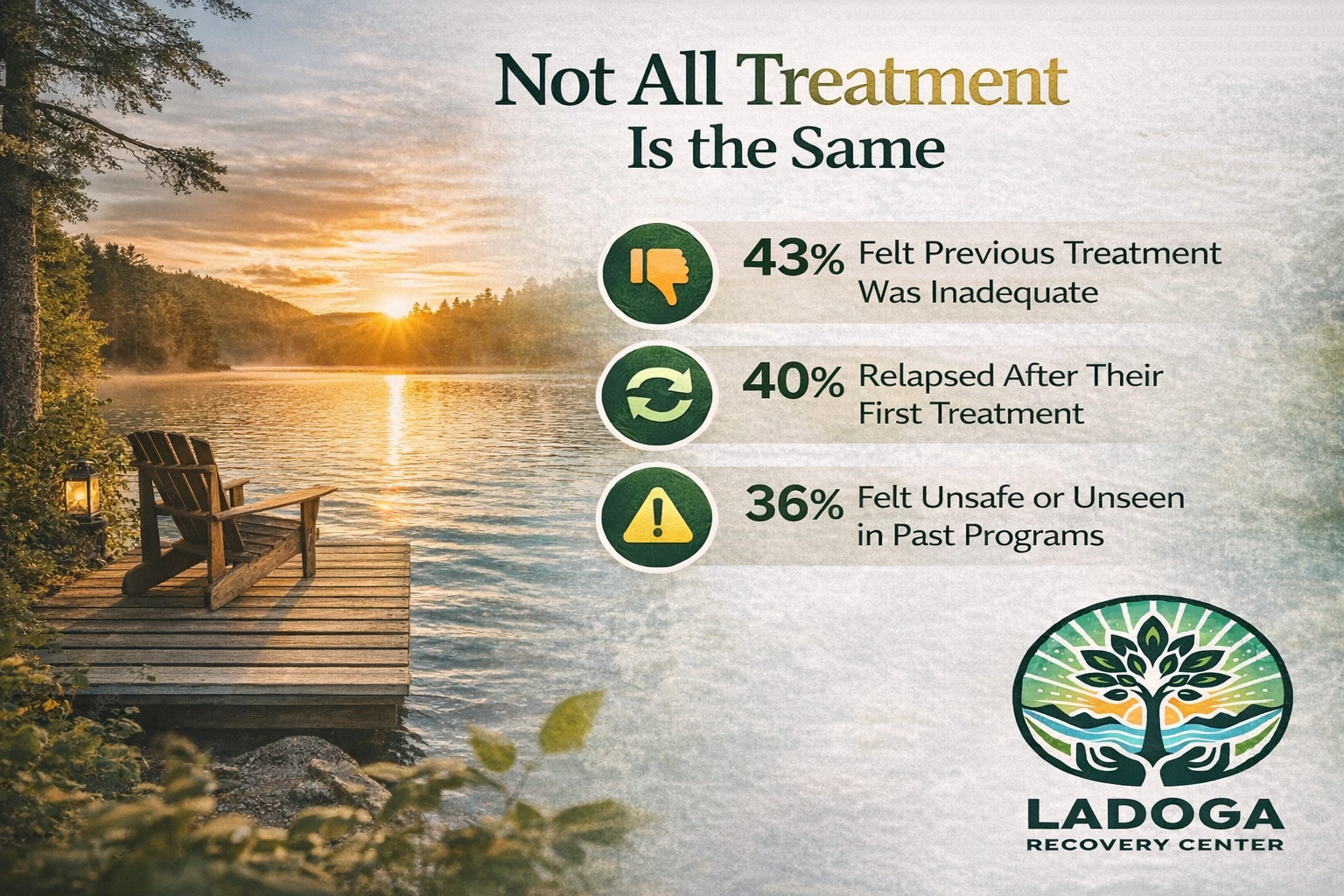
The first time I tried treatment, I thought I was doing the right thing. I followed the schedule, did the groups, even shared a bit in therapy. But when I left, nothing felt different. No big shift. No inner clarity. Just me, my cravings, and a growing sense that maybe I was the problem.
So when things got bad again—worse, honestly—I didn’t rush back to treatment. I waited. I resisted. I told myself I’d figure it out on my own.
But nothing changed. And eventually, I had to face a hard truth: not everything I’d tried was useless… but not everything I’d tried had really met me, either.
The Truth About Treatment “Not Working”
Let’s get one thing out of the way: if you’ve done treatment before and it didn’t help, you’re not broken.
I can’t say that loud enough.
There’s this unspoken pressure in recovery culture that if treatment doesn’t work, it’s because you didn’t try hard enough or you weren’t ready. But sometimes, the issue isn’t you—it’s the program, the approach, or just bad timing.
Maybe you weren’t emotionally safe there. Maybe it was too rigid or too rushed. Maybe no one actually saw you for who you are and what you needed.
And when that happens, it’s easy to lose faith in the whole system.
I did.
I didn’t just doubt treatment—I started to doubt myself. I questioned whether I was capable of change at all. And honestly, that’s a scary place to live. That level of self-doubt becomes its own kind of addiction. You numb yourself with low expectations because hoping hurts too much.
So Why Did I Try Again?
Short answer: because not trying wasn’t working either.
Long answer? I realized I was existing in a kind of limbo—afraid of going back to treatment because it might not work, but equally afraid of staying stuck where I was because that was clearly not working either.
Eventually, it wasn’t about hope or motivation or “hitting bottom.” It was about not wanting to waste another year feeling numb, frustrated, and disconnected.
I didn’t need another big breakdown to try again. I just needed a quiet moment of truth:
“If there’s even a small chance something different could help… don’t I owe that to myself?”
What Made This Residential Treatment Program Different?
This time, I chose a residential treatment program that felt less like a hospital and more like a reset. At Ladoga Recovery Center, the tone was different from day one.
No one forced me to smile. No one told me what I should feel. They asked questions instead of giving speeches. They let me sit quietly when I needed to. They met my silence with patience instead of pressure.
I didn’t have to pretend.
And over time, that made room for something I hadn’t felt in a long time: readiness.
Not because they convinced me. Not because they sold me on a dream. But because the space they created was safe enough for my guard to come down.
Recovery Didn’t Look How I Thought It Would
I thought recovery would be some dramatic moment. A big catharsis. An “aha” in group. Some lightning bolt of healing that would erase all the pain.
That’s not what happened.
Instead, it was a slow series of moments:
- Sitting in group and realizing I wasn’t the only one who felt skeptical.
- Hearing someone else say, “I didn’t think this would work either.”
- Letting myself cry during a therapy session without trying to fix it.
- Laughing at something dumb during movie night and remembering I still had a sense of humor.
Little by little, I stopped performing and started participating.
And for the first time, I didn’t feel like I was just trying to survive treatment—I felt like I was starting to live again.
It’s Okay to Not Trust This Right Away
If you’ve been let down by treatment—or by your own attempts to get better—you might feel numb when people talk about hope or healing.
That’s not failure. That’s protection. And it makes sense.
You don’t have to believe today that this will change your life. You don’t have to convince yourself that this time will be the one that works.
You just have to stay open to the possibility that something could be different.
That you deserve care that actually fits. That meets you where you are. That doesn’t punish you for not healing fast enough.
And that’s what I found in this residential treatment program.
If You’re Skeptical, You’re Not Alone
We don’t talk enough about the people who’ve tried treatment and walked away disappointed. But there are more of us than you think.
People who showed up with hope and left with more questions than answers. People who want to get better—but have no idea how to trust again. People who are exhausted by the cycle but terrified to step back in.
If that’s you, I want you to hear this:
You don’t have to feel inspired to take action.
You just have to be willing to try something—even if all you can muster is a quiet maybe.
There’s Support in Indiana That Gets It
One of the things that helped me most was knowing that this wasn’t just another rigid system. The team at Ladoga understood that people like me existed—that sometimes healing looks like hesitation before it looks like hope.
They created space for that.
If you’ve struggled to find the right fit, know that help in Indianapolis exists. Not perfect. Not magic. But real.
And sometimes that’s enough to start.
FAQs About Residential Treatment Programs
What if I’ve already done treatment before and relapsed?
Relapse doesn’t mean failure—it means more support might be needed. Many people return to treatment more than once, especially when earlier programs weren’t the right fit. Choosing a residential program that listens to your actual experience—not just your symptoms—can make a major difference.
Will I be judged for not being hopeful or motivated?
Absolutely not. At Ladoga, we understand that people come in at all stages of readiness. You don’t have to show up with a perfect attitude or a ready-to-change mindset. You just have to show up—and we’ll meet you where you are.
How long is a residential treatment stay?
It varies based on your needs. Some stays are 30 days, others are longer. The key is to make sure you’re given enough time and space to begin healing—not rushed through a process. Your care team will work with you to find a timeline that makes sense for you.
Not sure if this is the right next step? That’s okay. Just starting the conversation can be a win.
Call (888) 628-6202 to learn more about our Residential treatment program in Indianapolis, Indiana.