

I thought I knew what treatment was.
I thought I knew what it would fix.
And then I went—and left—feeling like maybe I was the one thing it couldn’t help.
This isn’t one of those stories where I say, “I went to treatment and everything changed.”
At least, not at first.
I’m writing this for the person who’s been there. Or kind of there. Or never quite let themselves get all the way in.
I’m writing for the person who says, “I tried it, and it didn’t work.”
Because that was me too.
And what I wish someone had told me back then is this:
There’s a part of recovery no one explains. And it matters more than you think.
I Thought Treatment Would Make Me Feel Better
When I first walked into treatment, I thought I knew what was supposed to happen.
You detox. You go to group. You meet people who get it.
And then—you feel better, right?
But detox just made me tired and weirdly emotional.
Group made me want to crawl out of my skin.
And the therapist asked questions I didn’t even want to ask myself.
I kept waiting for the moment I’d feel different.
Clearer. Motivated. Hopeful.
But what no one told me was that early recovery often feels worse before it feels better.
It’s not a fresh start—it’s a flood of feelings you’ve been pushing down for years.
And for a while, it’s overwhelming.
I thought that meant I was doing something wrong.
But really, it meant I was starting.
It Wasn’t Just About Drugs—It Was About Everything I Was Avoiding
No one explained how much would come up when the heroin wore off.
I thought I was there to quit using. But the real work? It wasn’t about the drugs.
It was about everything I’d been avoiding:
- Grief I never processed
- Shame I didn’t have words for
- Loneliness I covered with chaos
- A constant fear that I didn’t matter
At places like Ladoga Recovery Center, the goal isn’t just to get you clean—it’s to help you figure out who you are without the thing that’s been getting you through.
That’s deep work. And it doesn’t always feel good.
But it is real. And that’s what started to matter more than feeling better.
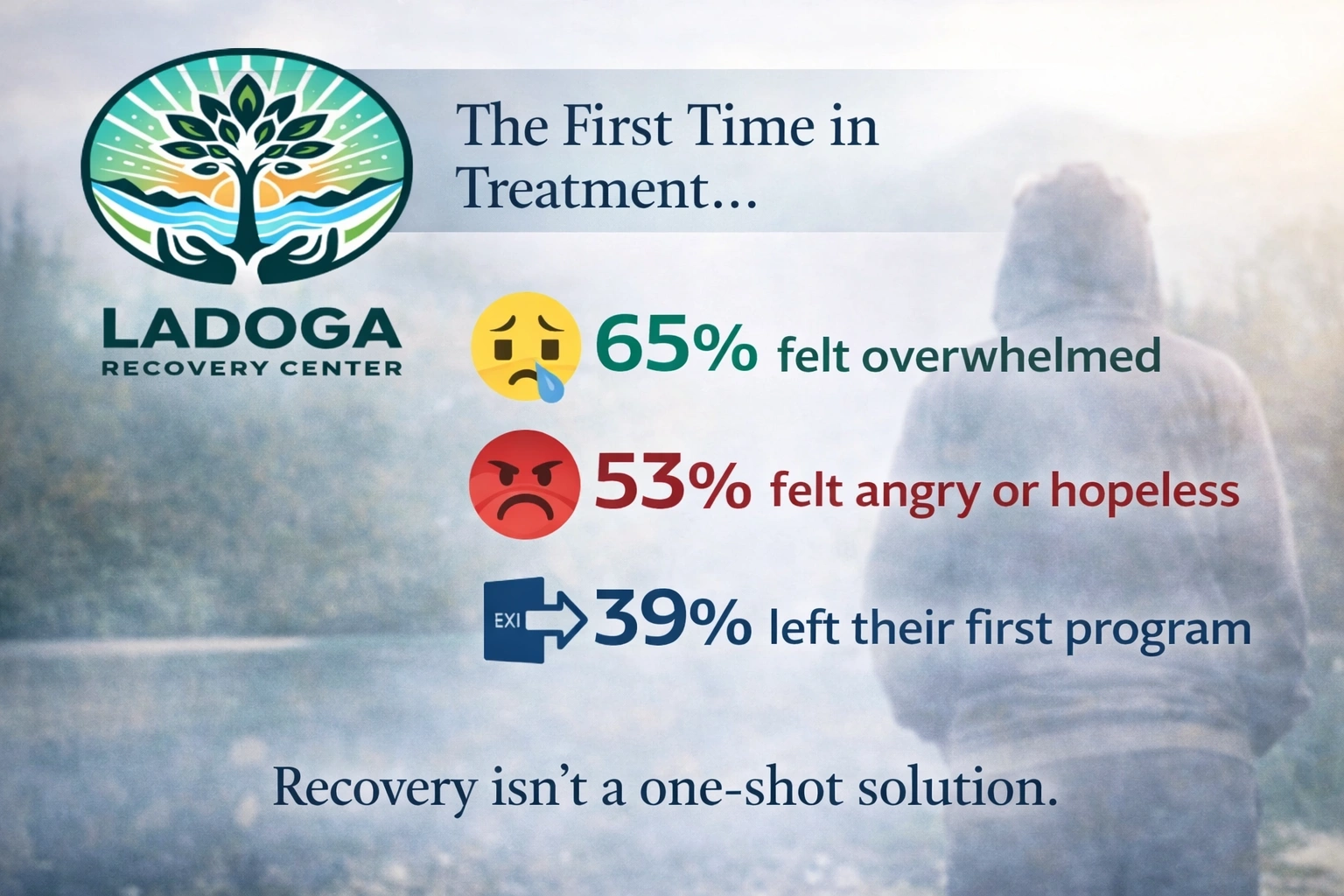
The First Time Didn’t “Work”—But It Wasn’t a Waste
I left my first program early.
I was angry, restless, and certain that treatment just wasn’t for me.
I told myself it was a scam. That the people were fake. That group was pointless.
But underneath all that anger, what I really felt was disappointed.
I had come in with this tiny flicker of hope—that someone could help me.
When that hope didn’t pay off in the way I expected, I shut it all down.
But here’s what I can say now: that first time planted a seed.
It didn’t bloom right away. But it cracked something open in me.
It showed me I wasn’t alone.
That maybe I wasn’t broken.
That recovery was a language I could learn—even if I wasn’t fluent yet.
I Was Allowed to Be Angry—and Still Belong
I came back to treatment later. Different center. Different mindset.
But still the same wounds.
And this time, I didn’t try to hide them.
I showed up pissed off.
Sarcastic. Skeptical.
Half in, half out.
And what surprised me most? They didn’t flinch.
I told one of the staff at intake, “I don’t know if this is going to work.”
She just nodded and said, “That’s okay. You’re still allowed to be here.”
No one told me that before.
No one told me I didn’t have to be hopeful, grateful, or ready to be welcomed.
But that kind of honesty—that kind of no-pressure permission—was what started to soften something in me.
Recovery Didn’t Start With Clarity—It Started With Exhaustion
I didn’t come back to treatment because I was inspired.
I came back because I was tired.
Not “rock bottom” tired. Just done being confused.
Done pretending I had it handled.
Done feeling like a ghost in my own life.
I didn’t know if I could stay clean.
But I wanted to know if I could stop running.
Programs like the ones at care in Indiana aren’t just about keeping you off heroin. They’re about giving you space to rest—mentally, emotionally, physically.
Sometimes the most radical thing you can do is stop pretending you’re not tired.
You Can Come Back Without Shame
I used to think the only people in treatment were either new or perfect.
But the truth is, a lot of people in recovery are somewhere in the middle.
They’ve been in and out.
They’ve relapsed.
They’ve left and returned.
They’ve doubted, ghosted, lied, tried again.
And they’re still here.
You don’t have to walk in with a perfect record.
You don’t have to apologize for needing another try.
You can just come back.
Programs like those offering help in Substance Abuse make room for returners.
No lectures. No guilt trips. Just, “Glad you made it.”
What Helped Me Stay (When I Finally Did)
When it finally stuck—when I finally stayed—it wasn’t because I found the “perfect” program.
It was because:
- I was treated like a person, not a case
- I had options—structured daytime care instead of full residential
- I wasn’t punished for being unsure
- The staff let me be real—even when it was messy
- I stopped trying to impress anyone
Recovery didn’t fix me. It helped me face me.
And from there, I started to rebuild something I actually wanted to live inside.
FAQs I Wish Someone Answered Honestly
What if I already tried and it didn’t help?
That’s okay. You’re not a failure. Sometimes it takes multiple attempts. Sometimes you need a different approach. It’s not about doing it “right”—it’s about finding what fits.
Do I have to believe in it for it to work?
No. You can come in skeptical. You can come in mad. Just come in. Openness can grow after you arrive—it doesn’t have to be the ticket in.
What if I’m not using every day? Do I still need help?
If you’re asking the question, something probably doesn’t feel right. You don’t have to hit some invisible line to deserve support.
What if I don’t want to stop forever?
Don’t worry about forever. Focus on today. The idea of permanent change can be overwhelming. You can start by just exploring what it feels like to be supported.
Can I talk to someone without making a decision yet?
Yes. You can call and just ask questions. No commitment, no pressure. Just information and human connection.
If You’re Still on the Fence, That’s Okay
You don’t have to jump. You can stand at the edge and just look.
You can be unsure.
You can be scared.
You can be tired and still not ready.
But if something in you is whispering, “Maybe one more try…”—listen to it.
Recovery isn’t just for people who believe in it.
It’s for people who need it—even if they’re not sure it will work.
You’re Not the Exception. You’re Not Alone.
You don’t have to keep pretending it didn’t affect you.
You don’t have to keep downplaying what you’ve survived.
You don’t have to do this alone—or perfectly.
Call 888-628-6202 or visit our heroin addiction treatment services in Indiana to learn more.
Ask questions. Talk it out.
Even if you’re not sure you’re ready.
We’ll meet you where you are—and walk with you wherever you need to go next.