


When your child is in crisis, everything feels urgent and confusing.
Maybe they’re using, maybe they’re isolating, maybe they’re just… not themselves. You’ve seen the changes. You’ve tried to talk. You’ve googled symptoms. And maybe now, for the first time, you’re asking a terrifying question: Do they need treatment?
We know that question hurts. And if you have Medicaid—or aren’t even sure what insurance they have—you might be wondering what help actually looks like. What’s covered? Where do you even start? Will someone actually pick up the phone?
At Ladoga Recovery Center, we work with families just like yours every day. This blog won’t overwhelm you with jargon. It’s a step-by-step explanation of how opioid addiction treatment works—especially for families navigating Indiana Medicaid.
Step 1: It Starts With a Call—Even If You’re Not Sure Yet
You don’t need a formal diagnosis. You don’t need your child’s permission yet. You don’t even need to know exactly what’s going on.
You just need to call. That’s it.
When you call Ladoga Recovery Center, a real person answers. Someone who knows how scary this moment is. Someone who will walk you through what we offer, what to expect, and how to get started.
We’ll ask a few questions, gently and respectfully:
- What have you noticed in your child’s behavior?
- Are opioids involved—or suspected?
- Do they currently have Medicaid (and which kind)?
- Are they willing to consider help right now?
No judgment. No pressure. Just a calm place to land.
Step 2: A Clinical Assessment to Understand What They Need
Before we can admit your child to treatment, we need to understand what’s happening medically, emotionally, and behaviorally. That’s where the clinical assessment comes in.
This usually includes:
- A private conversation with your child (virtual or in-person)
- Substance use screening: what, how often, how long
- Mental health history and current symptoms
- Risk evaluation (self-harm, suicidal thoughts, etc.)
- Family and social dynamics, if helpful to include
The goal isn’t to label them—it’s to see the whole picture, so we can match them with the right level of care.
Even if your child refuses to speak at first, we’ll meet them where they are. Our team is trained in crisis communication. We know how to connect without pushing.
Step 3: Insurance and Admission—Yes, Medicaid Covers This
Once we complete the assessment and determine that opioid addiction treatment is appropriate, we move quickly into admission and insurance coordination.
If your child has Medicaid, here’s what we do:
- Verify eligibility
- Request pre-authorization for services
- Coordinate transportation, if applicable
- Handle the paperwork so you don’t have to
If your child doesn’t currently have Medicaid, we’ll guide you through applying for emergency coverage or finding alternative options. You are not expected to figure this out alone.
Once approved, your child is assigned a bed as soon as one becomes available. Sometimes it’s immediate. If there’s a waitlist, we’ll tell you honestly—and help you plan what to do in the meantime.
Step 4: Detox or Stabilization, Depending on Their Condition
If your child is actively using opioids, we’ll determine if medical detox is necessary. This is typically the first stop if they’re at risk of dangerous withdrawal symptoms.
Here’s what detox looks like at Ladoga:
- 24/7 nursing and medical supervision
- Comfort meds and MAT if appropriate
- Emotional support throughout the process
If detox isn’t needed (for example, if they haven’t used in a few days or are using less frequently), they may start directly in stabilization—where we help them get physically and emotionally grounded before full treatment begins.
Either way, this is the phase where they start to feel safe again. Where the fog lifts just enough for them to start seeing a way forward.
Step 5: Residential Treatment—Structure, Support, and Daily Healing
Once detox or stabilization is complete, your child enters the structured treatment phase. This typically includes:
- Individual therapy to explore what’s behind the use
- Group therapy with peers working on similar goals
- Psychoeducation about addiction, relapse prevention, and coping skills
- Family therapy, if safe and appropriate
- MAT (Medication-Assisted Treatment) options if medically indicated
Every day has structure—but it’s not rigid. We don’t expect perfection. We expect progress, resistance, tears, and small victories.
Some days will feel like breakthroughs. Others will feel like nothing’s working. That’s normal. Our team is there every step—coaches, not critics.
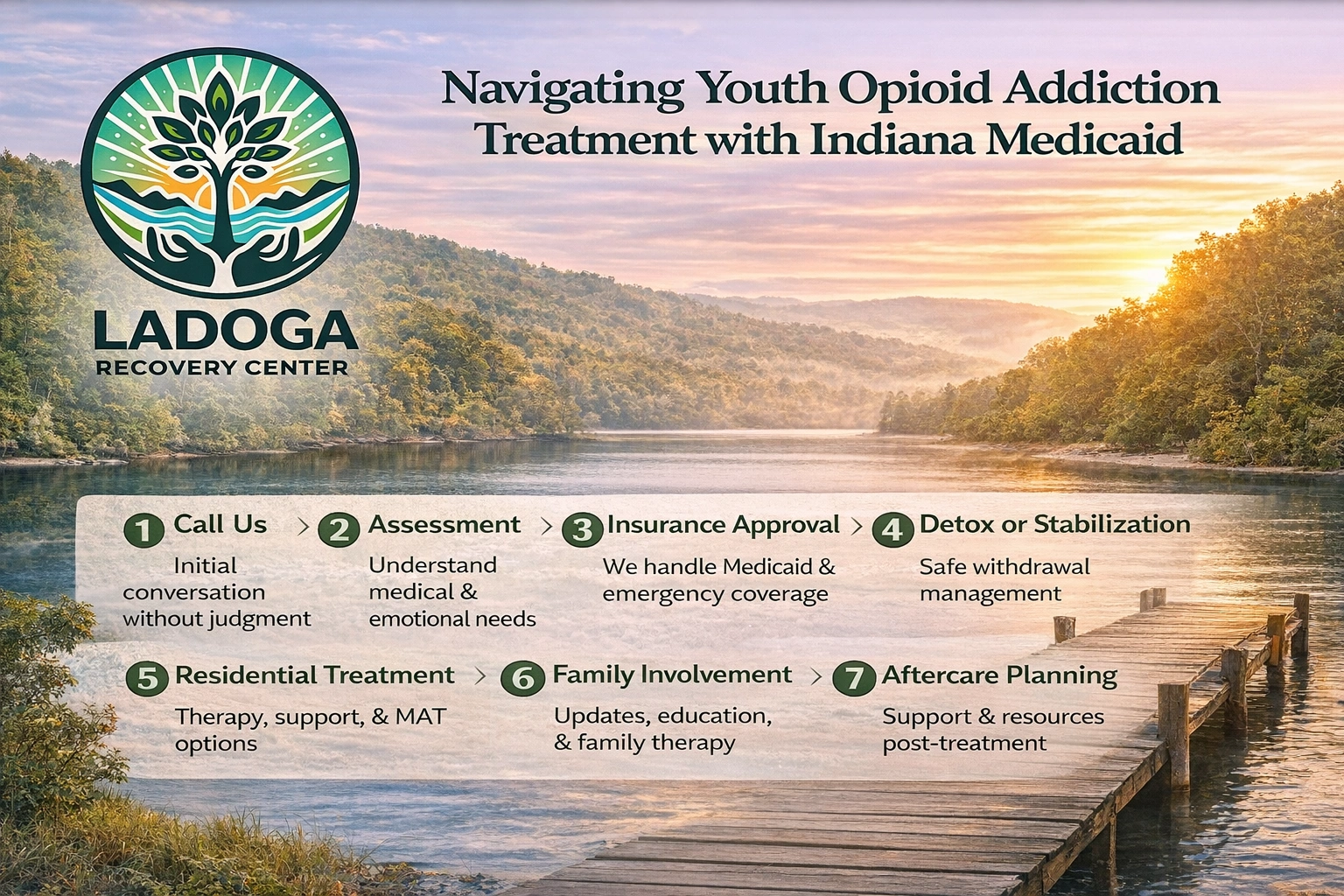
Step 6: Involving You—the Parent—Without Overloading You
We understand that parents are often shut out—or blamed—during treatment. That’s not how we work. At Ladoga, you’re seen as a vital part of the healing process.
You’ll be involved through:
- Regular updates from case managers
- Family therapy sessions (virtual or in-person)
- Education sessions to help you understand addiction and recovery
- Space to ask hard questions and express your own emotions
We’ll also help you with your own boundaries. Because loving someone in crisis shouldn’t mean losing yourself in the process.
Step 7: Aftercare—They Don’t Leave Without a Plan
Many parents fear the day their child finishes treatment. What happens next? Will they go back to old habits? Will there be anyone watching out for them?
We hear you—and we plan for that.
Discharge planning begins early. It includes:
- Outpatient therapy referrals near home
- Continued MAT or medication support
- Peer recovery coaching
- Help finding safe housing if needed
- Guidance for you as a parent: boundaries, signs of relapse, what to do in a crisis
We don’t just treat people. We help families build scaffolding for real recovery.
Frequently Asked Questions
Is opioid addiction treatment really covered by Medicaid?
Yes. Indiana Medicaid covers detox, residential treatment, outpatient programs, and many support services. We’ll verify your specific coverage before admission.
What if my child doesn’t want help?
That’s one of the hardest parts. We’ll talk with you about strategies to increase engagement—like family intervention, motivational techniques, or even crisis stabilization services if needed. You’re not powerless.
How long does treatment last?
It varies based on clinical need. Most residential stays are 21–45 days, followed by outpatient care. We’ll recommend a path based on your child’s situation.
Can I visit or talk to my child during treatment?
Yes—within clinical guidelines. Some programs have a short no-contact period early on to allow for stabilization, but we’ll let you know the plan and help facilitate communication safely.
What if I’m scared my child will relapse?
That fear is real. Relapse can happen—but it’s not failure. We’ll equip you with tools to recognize early signs and respond with clarity, not panic. And we’ll stay connected post-discharge to support both of you.
What if I feel overwhelmed and unsure I can handle this?
You’re not expected to do this alone. Our team isn’t just here for your child—we’re here for you too. Even one conversation can bring clarity. And that’s where healing begins.
If You’ve Been Holding Your Breath—You Can Exhale Now
We know you’ve probably been carrying this weight in silence. Afraid to overreact. Afraid to say the wrong thing. Afraid it’s already too late.
It’s not.
At Ladoga Recovery Center, we don’t just treat symptoms. We see scared parents, hurting kids, and broken systems—and we create space for hope to re-enter. One step at a time. One call at a time. One breath at a time.
You Don’t Have to Do This Alone
Call (888) 628-6202 to learn more about our opioid addiction treatment services in Ladoga, Indiana.
We’re not here to judge your parenting. We’re here to help your child—and hold you steady while we do.