


Your child is technically an adult now.
But when you see them struggling, that fact doesn’t make the fear any smaller.
Many parents reach a point where they’re asking painful questions. Is this just a phase? Did we miss something? What actually happens if they go to treatment?
If you’re here, you’re probably trying to understand what recovery really looks like for young adults. Many families begin exploring alcohol addiction treatment options in Indiana during moments like this—when concern grows stronger than uncertainty.
What most parents discover is that treatment is far less frightening, and far more hopeful, than they imagined.
The First Days Focus on Safety and Resetting the Body
When young adults first arrive for treatment, the focus is not confrontation or pressure.
The focus is stabilization.
Many arrive physically and emotionally exhausted. Sleep may be irregular. Nutrition may be poor. Anxiety or depression may be high.
The first stage of care often centers on helping the body settle.
Medical staff check health markers, help restore sleep schedules, and monitor withdrawal symptoms if alcohol dependence has developed. If needed, programs that provide medically supervised detox offer structured support in Indiana so young adults can begin recovery safely.
Parents are often relieved to learn that the earliest phase of treatment focuses on comfort, care, and stability—not punishment.
For many young adults, this is the first time in months or years their nervous system truly slows down.
Structure Helps Rebuild Stability
Addiction slowly disrupts routine.
Sleep patterns become unpredictable. Responsibilities get pushed aside. Days start blending together.
Inside treatment, structure returns.
Young adults wake up at consistent times. Meals are scheduled. Therapy sessions and recovery activities create a rhythm to the day.
This routine may sound simple, but it’s incredibly powerful.
The brain thrives on stability. When sleep improves and daily patterns return, the mind begins to clear. Many young people begin thinking more clearly within the first week simply because their body is finally functioning on a healthier schedule.
For parents who have watched chaos unfold at home, this structure often brings immediate reassurance.
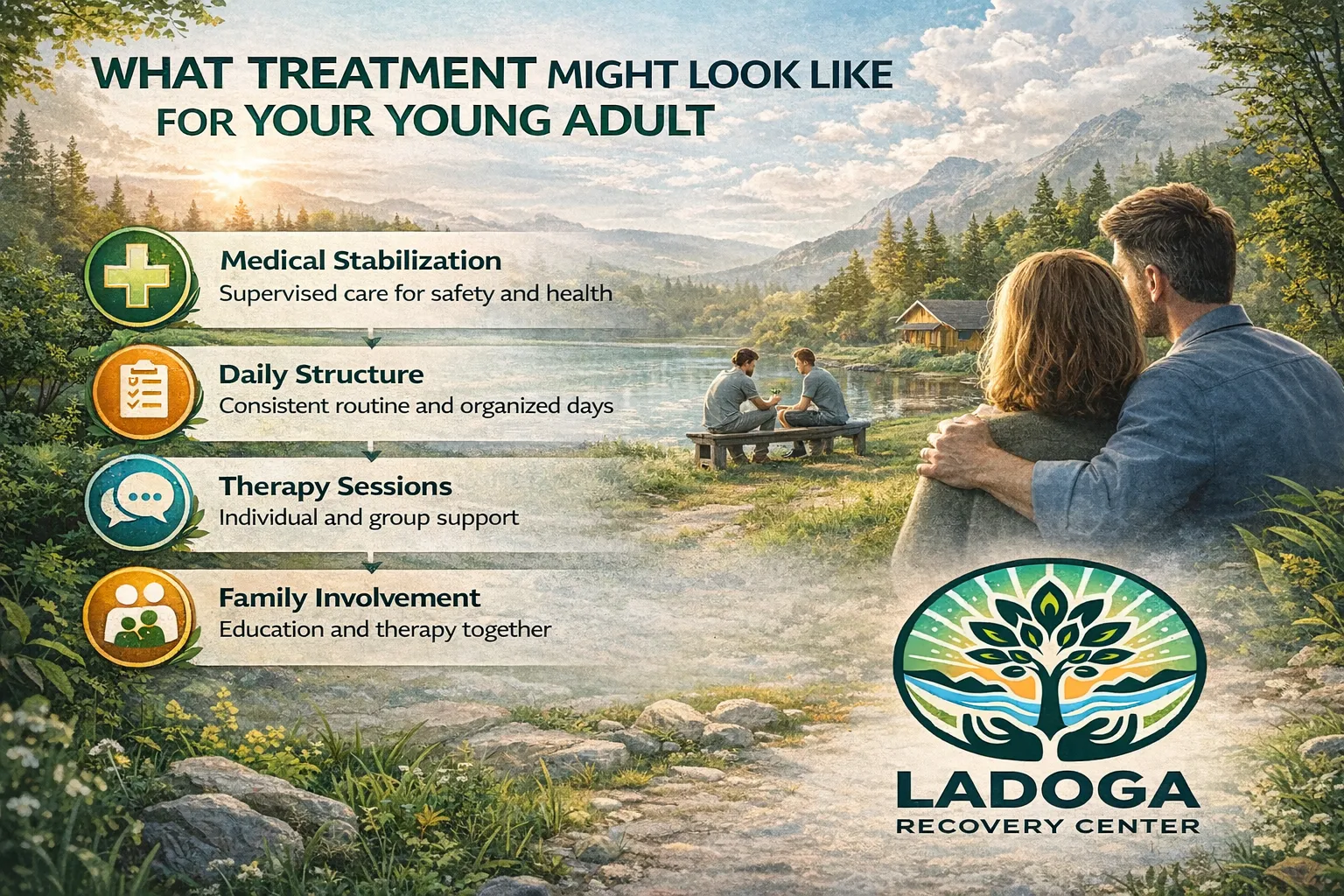
Therapy Helps Young Adults Understand What’s Beneath the Drinking
Parents frequently ask one painful question:
Why is my child drinking like this?
The answer is rarely simple.
Alcohol use in young adults is often connected to deeper struggles that may not be visible on the surface. Anxiety about the future. Depression. Social pressure. Trauma. Feelings of failure or confusion about identity.
Treatment creates a space where these topics can finally be explored honestly.
Individual therapy allows young adults to talk openly with clinicians about what they’re experiencing. Group therapy helps them connect with peers who understand what they’re going through.
For many young adults, group sessions become the moment something shifts.
They hear someone describe a struggle they thought only they experienced.
That moment can be powerful.
It replaces isolation with connection.
Something Important Happens When They Realize They Aren’t Alone
Young adults often enter treatment believing they are uniquely broken.
They assume other people have their lives figured out while they somehow failed.
Then they sit in a room with people their own age who are telling similar stories.
The pressure to hide begins to ease.
One young man once said during treatment:
“I thought everyone else had life figured out except me. Then I realized we were all just trying to survive in our own ways.”
That realization can soften the shame that often keeps addiction going.
And when shame begins to loosen its grip, real healing can begin.
Families Become Part of the Recovery Process
Parents sometimes fear that treatment will shut them out of their child’s life.
In reality, family involvement is often an important part of recovery.
Many programs include family education sessions or guided conversations that help rebuild trust and understanding. These discussions create opportunities for parents and young adults to speak honestly about what addiction has done to the relationship.
These moments are rarely easy.
But they can be transformative.
One parent described their first family session like this:
“For the first time in years, we weren’t arguing about alcohol. We were actually listening to each other.”
Healing family relationships often becomes one of the most meaningful parts of the recovery process.
Recovery Teaches Skills for Real Life
Stopping alcohol use is only one part of recovery.
The deeper goal is helping young adults learn how to handle life differently.
During treatment, they practice skills that many people were never taught growing up.
These include learning how to:
- Recognize emotional triggers before they escalate
- Manage anxiety and stress without substances
- Navigate social situations without relying on alcohol
- Set boundaries with peers who encourage unhealthy habits
- Create routines that support long-term mental health
These tools help young adults build confidence that they can navigate life without alcohol controlling their choices.
Recovery becomes less about avoiding something and more about building something new.
Many Parents Notice Small but Powerful Changes
Parents sometimes expect dramatic transformation during treatment.
Instead, they often notice subtle shifts.
Their child sounds calmer during phone calls.
They speak more openly about emotions.
They take responsibility for things they once avoided.
These moments may seem small, but they represent meaningful progress.
Recovery rarely happens overnight. It unfolds gradually, often through dozens of small realizations that slowly rebuild a person’s sense of self.
One young adult explained it this way:
“Treatment didn’t change who I am. It helped me remember who I was before everything got complicated.”
For many parents, hearing their child speak with that kind of clarity can feel like the first real glimpse of hope in a long time.
Recovery Continues After Treatment
Treatment is not the finish line.
It’s the starting point.
When young adults complete a treatment program, they usually continue their recovery with ongoing support. This may include therapy, recovery meetings, structured outpatient care, or alumni communities that help maintain connection.
The goal is not to send someone back into life without guidance.
The goal is to help them build a long-term path forward.
Many families living near Indianapolis are surprised to discover how many recovery resources exist once they begin exploring them. Communities often have far more support systems than people realize.
That network becomes an important safety net as young adults continue building healthy lives.
Hope Often Appears in Unexpected Ways
Parents frequently arrive at treatment centers carrying enormous guilt.
They wonder if they did something wrong. If they missed warning signs. If they somehow caused the problem.
But addiction rarely begins with a single cause.
It’s a complex mix of biology, environment, emotional struggles, and life circumstances.
Recovery is not about blaming parents.
It’s about helping young adults learn new ways to navigate life while giving families the tools to support them in healthier ways.
Many parents leave the process realizing something important:
They didn’t cause the addiction.
But they can absolutely be part of the healing.
In communities like Crawfordsville, Indiana, many families quietly walk this same path—worrying about their child while searching for guidance and hope.
No parent should have to navigate it alone.
Frequently Asked Questions Parents Often Ask
How long do young adults typically stay in treatment?
The length of care varies depending on individual needs. Some young adults benefit from extended structured care, while others transition more quickly into outpatient support programs.
Will my child be forced to participate in therapy?
Treatment programs encourage participation but aim to create safe environments where young adults feel comfortable opening up at their own pace.
What happens if my child relapses after treatment?
Relapse can be part of the recovery journey for some individuals. Continued support, therapy, and recovery communities help people return to stability if setbacks occur.
Can families stay involved during treatment?
Yes. Many programs include family therapy sessions, educational resources, and structured communication opportunities that strengthen family support systems.
What if my child doesn’t think they have a problem?
This is common. Some young adults enter treatment reluctantly but begin to recognize the impact of alcohol on their lives once they have space to reflect.
Can recovery really change a young adult’s future?
Yes. Many people who enter recovery rebuild careers, relationships, and personal goals that once felt impossible while struggling with addiction.
You Are Not the Only Parent Facing This
If you are reading this as a worried parent, you are carrying something heavy.
Fear for your child’s safety. Uncertainty about what to do next. The painful feeling that you are watching someone you love struggle.
Those emotions are deeply human.
And you are not the only parent walking through them.
Across the country—and across Indiana—families are having the same conversations, asking the same questions, and searching for the same hope.
Sometimes that hope begins with a simple conversation.
Call (888) 628-6202 or visit substance abuse treatment in indiana, alcohol addiction treatment in indiana to learn more.