


I had 94 days sober.
And then I didn’t.
I remember the number because I was proud of it. Because I told people about it. Because I celebrated my 90 days with a chip and a quiet kind of hope that maybe—just maybe—I was finally on steady ground.
Four days later, I drank.
Not a full spiral. Not a lost weekend. Just one night, a few drinks, and the old thoughts rushing back like they’d never left:
“You said you wouldn’t do this again.”
“Everyone’s going to be disappointed.”
“Now you’re back at zero.”
That shame almost kept me from reaching out. Not because I didn’t want help—but because I was embarrassed to need alcohol addiction treatment again. Especially after all that progress.
I Thought I Should Have “Known Better”
That was the loudest thought in my head.
You knew better. You should’ve stopped yourself.
But knowing something and being able to live it are two different things.
At 90 days, I wasn’t drinking—but I wasn’t doing great, either. I was checking the boxes. Making meetings. Saying the right things. But inside, I still felt off: restless, disconnected, anxious in my own skin.
I thought not drinking would fix all of that.
When it didn’t, I felt like a fraud. Like I was failing quietly even before I picked up the glass.
So when I did relapse, it felt like confirmation of a fear I’d been trying to ignore: that I hadn’t really changed.
I Tried to Handle It Alone
I didn’t tell anyone at first.
I thought, “I’ll just reset, get back to meetings, get back on track.” I told myself I didn’t need treatment again. That would be too dramatic. Too much.
But I wasn’t sleeping. I wasn’t eating right. I was drinking more often than I admitted—even to myself. And I started dodging the people who knew I was sober. I kept thinking, If I can just get a full week clean again, maybe I’ll feel normal.
Spoiler: I didn’t.
What finally broke me was the silence. Pretending I was okay when I wasn’t. Avoiding eye contact with myself in the mirror. Waking up with guilt instead of gratitude.
That’s when I called Ladoga Recovery Center again.
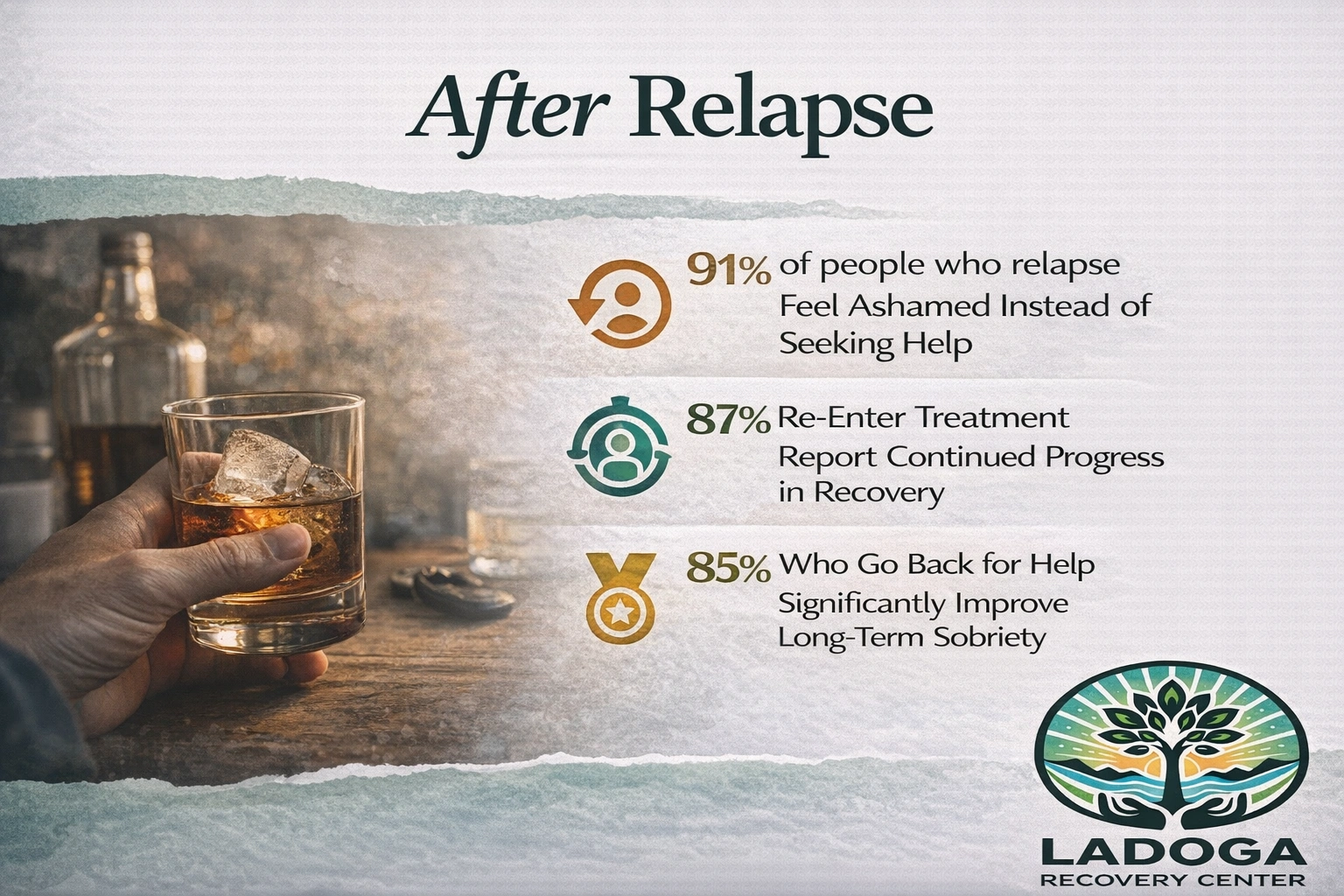
The Person Who Answered Didn’t Sound Surprised
I don’t know what I expected when I made that call. Maybe judgment. Maybe confusion. Maybe some version of, “Didn’t you already do this?”
What I got was something different:
“Thanks for calling. What’s going on?”
No lectures. No disappointment. Just a question—and space to answer it.
I told them everything. The relapse. The shame. The 94 days and the deep fear I’d wasted all of them.
They didn’t rush me. They didn’t sell me anything. They just helped me figure out what I needed next.
And what I needed, it turns out, wasn’t to “start over.” It was to keep going, honestly this time.
I Didn’t Go Back to Day One—I Moved Forward From Where I Was
That phrase—“back to Day One”—haunted me at first.
But here’s what no one tells you when you relapse after time sober: you’re not the same person you were on your first day.
This time, I had language for my fear.
This time, I knew my triggers.
This time, I could feel the difference between avoidance and growth.
The team at Ladoga didn’t treat me like a newbie. They treated me like someone who had made real progress and just needed help reconnecting with it.
They helped me understand what my relapse was trying to teach me. Not as a punishment—but as a signal that I needed more support than I was giving myself.
I Asked for What I Didn’t Know How to Ask for Last Time
The first time I went through treatment, I did what I was told. I went with the flow. I didn’t ask questions. I didn’t push back.
This time was different.
- I asked for one-on-one sessions when group therapy felt overwhelming.
- I asked for more time with a trauma specialist because I finally admitted that’s part of my story.
- I told the truth when I was angry, discouraged, or just tired.
And the care team didn’t take it personally. They took it seriously. And that made all the difference.
I wasn’t just participating in my recovery. I was owning it.
Relapse Doesn’t Erase Your Progress—It Reveals What’s Still Hurting
It took me a while to say this out loud, but I’ll say it here because someone needs to hear it:
Relapse isn’t failure. It’s information.
It’s your body, your brain, your spirit saying: Something still hurts.
Or: Something still feels unsafe.
Or: You’re still carrying more than you know what to do with.
That’s not weakness. That’s wisdom trying to speak up.
My relapse didn’t mean I was broken. It meant I had more to learn, more to heal, more to build.
And that’s not a step backward. That’s part of the work.
If You’ve Relapsed, You’re Not “Back at the Bottom”
That was my biggest fear. That I had erased everything. That I had to “earn” my place in recovery again.
But recovery isn’t a reward for perfection. It’s a space for people who keep showing up.
I was still sober for 94 days. That time mattered. I learned things. I changed. I grew. And I came back—not as a beginner—but as someone brave enough to return when I needed to.
Ladoga didn’t make me feel like I had to prove myself again. They welcomed me with quiet respect—and a plan that fit where I was now, not where I’d been.
There’s Still Support in Indiana That Respects the Work You’ve Already Done
Whether you’ve been sober 3 months, 3 years, or 3 minutes—your story matters.
And if you’ve had a setback, you’re not alone. You’re not weak. You’re not too late.
Ladoga offers support in Indiana for people who are still in the work—people who don’t need a reset, but a return.
You don’t have to wait until you lose everything. You don’t have to be in freefall. You’re allowed to seek support simply because you want to feel better than you do today.
FAQs About Returning to Alcohol Addiction Treatment After Relapse
1. Do I have to start over completely if I go back to treatment?
No. Treatment at Ladoga is designed to meet you where you are. Your progress, insights, and experience are not erased—they’re respected. Returning to care doesn’t mean starting from scratch. It means building on what’s already working and addressing what still needs healing.
2. Will people in my life judge me for relapsing?
Some might—but their reaction doesn’t define your worth. Many people will understand more than you expect, especially those who’ve walked a similar path. And the people who love you? They’ll care far more that you’re getting support than that you slipped. Most importantly, we won’t judge you. This is what we do—and we do it without shame.
3. What if I’m scared this will happen again?
Fear after relapse is normal. It doesn’t mean you’re doomed to repeat it. Treatment helps you strengthen your coping strategies, deepen your self-awareness, and build a real support system so you’re not walking the same road alone again.
4. How long should I stay in treatment this time?
It depends on your needs. Some returning clients benefit from shorter stays focused on stabilization and emotional support. Others choose a full re-engagement with residential or outpatient care. We’ll work with you to decide what feels helpful—not what feels like punishment.
5. Can I return to treatment even if my relapse wasn’t “that bad”?
Yes. You don’t have to hit a new bottom to get help again. You’re allowed to seek support simply because you don’t want to slide further. Whether you drank once or every day for a month, your discomfort is reason enough to come back.
Relapse isn’t the end—it’s a message. One you’re allowed to answer with care.
Call (888) 628-6202 to learn more about our Alcohol addiction treatment services in Indianapolis, Indiana.