


A lot of people tell themselves the same thing at first:
“It’s just one missed dose.”
Maybe you forgot to refill your prescription. Maybe you overslept. Maybe you were trying to see if you could go without it for a day.
Then something starts to feel off.
Your hands feel shaky. Your stomach feels unsettled. Anxiety begins rising for no obvious reason. You might feel dizzy, restless, or unusually sensitive to noise and stress. Suddenly, you’re searching online, trying to understand why missing a single dose seems to affect you so much.
If this sounds familiar, you’re not alone.
At Ladoga Recovery Center, we’ve spoken with many people who started asking questions after experiencing these kinds of reactions. What often surprises them is learning that their body may be responding exactly the way many bodies do after becoming accustomed to a medication like Xanax.
Understanding what’s happening can reduce some of the fear and confusion. More importantly, it can help you make informed decisions about your health and well-being.
Within the first steps of learning more, many people explore resources related to benzodiazepine addiction treatment in Indiana because they realize their experience may be more common than they thought.
Your Nervous System Gets Used to Consistency
One reason missing a dose can feel so uncomfortable is that the body naturally adapts to routines.
Xanax affects the central nervous system by increasing the activity of a neurotransmitter called GABA. This chemical helps slow brain activity and creates feelings of calmness and relaxation.
When Xanax is taken regularly, the brain begins adjusting to its presence.
Over time, the nervous system may become accustomed to receiving that support. When the medication suddenly isn’t there, the body can react.
Think of it like walking into a quiet room where a fan has been running for hours. You may not notice the sound while it’s there. But the moment someone switches it off, the change becomes obvious.
The nervous system often notices that kind of change too.
Why Shakiness and Nausea Can Happen So Quickly
Many people expect withdrawal-related experiences to happen days after stopping a substance.
With Xanax, that’s not always the case.
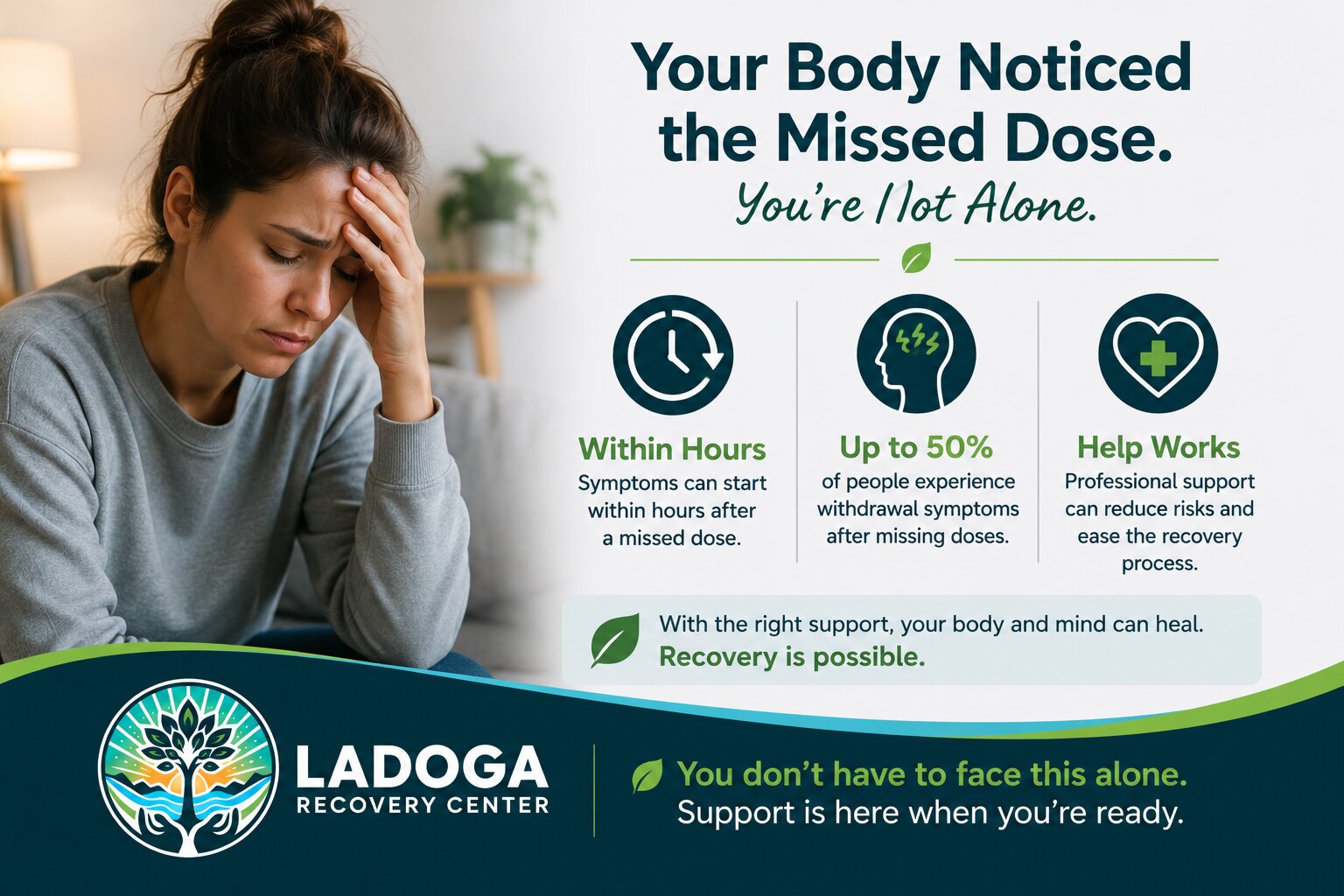
Because it is a shorter-acting benzodiazepine, some individuals begin noticing changes relatively quickly after missing a dose.
These changes can include:
- Trembling or shaking
- Increased sweating
- Nausea or stomach discomfort
- Headaches
- Restlessness
- Irritability
- Difficulty focusing
- Rapid heartbeat
- Heightened anxiety
- Sleep disturbances
For someone experiencing these symptoms for the first time, the sensations can be alarming.
Many people assume they’re getting sick.
Others worry they’re having a medical emergency.
Still others believe they’re simply becoming more anxious.
While every situation is unique, these reactions may occur because the nervous system is trying to adjust to the sudden absence of a medication it has grown used to receiving.
Anxiety Often Becomes Part of the Cycle
One of the most difficult aspects of this experience is that anxiety can amplify everything else.
You notice your hands shaking.
Then you wonder why they’re shaking.
That uncertainty creates more anxiety.
The anxiety makes the shaking feel worse.
The shaking creates more fear.
Before long, it can feel like you’re trapped in a cycle that’s feeding itself.
We’ve seen many individuals arrive feeling frightened by symptoms they didn’t understand. Once they learn what may be happening physiologically, some of that fear begins to loosen its grip.
Understanding doesn’t instantly make symptoms disappear.
But it often makes them feel less mysterious.
And sometimes mystery is what makes an experience feel most overwhelming.
Physical Dependence Can Develop Even When Medication Was Prescribed
One misconception we hear frequently is:
“I can’t have a problem because my doctor prescribed it.”
The reality is more complicated.
A medication can be medically appropriate and still lead to physical dependence over time.
Physical dependence simply means the body has adapted to the presence of a substance.
It does not automatically mean someone is misusing medication.
It does not mean someone has done anything wrong.
It does not mean someone lacks willpower.
It simply means the body has adjusted.
Many people feel relieved when they learn this distinction because they stop viewing their symptoms as a personal failure.
Instead, they begin seeing them as information their body is providing.
Why Trying to Push Through Can Sometimes Be Risky
When symptoms appear, people often respond in one of two ways.
Some immediately take another dose because they want relief.
Others decide to stop altogether because they don’t like feeling dependent on medication.
Neither decision should be made without proper medical guidance.
Benzodiazepine withdrawal can range from uncomfortable to potentially dangerous depending on factors such as:
- Length of use
- Dosage
- Frequency of use
- Overall health
- Use of other substances
- Individual medical history
This is one reason professional support matters.
Rather than attempting to navigate these challenges alone, many people benefit from medically supervised care that prioritizes safety and comfort throughout the process.
For those seeking additional support, specialized care in Indiana can help individuals understand their options and develop an appropriate plan.
The Emotional Side Is Often Harder Than People Expect
When people think about dependence, they usually focus on physical symptoms.
What often catches them off guard is the emotional impact.
Many experience feelings such as:
- Embarrassment
- Frustration
- Shame
- Fear
- Self-judgment
- Confusion
They wonder how they got here.
They question whether they should have seen it coming.
They worry about what other people might think.
Those feelings can become just as painful as the physical discomfort.
At Ladoga Recovery Center, we’ve learned that many people aren’t afraid of treatment itself.
They’re afraid of what needing treatment seems to say about them.
But needing support doesn’t define your character.
It simply means you’re dealing with something difficult.
And difficult situations deserve support.
You Don’t Have to Wait Until Things Get Worse
A common belief is that treatment is only for people whose lives are falling apart.
In reality, many individuals seek help long before reaching a crisis point.
They still have jobs.
They still care for their families.
They still meet responsibilities.
They’re simply noticing signs that something isn’t working the way it once did.
That awareness can be incredibly valuable.
Addressing concerns early often creates more options, more flexibility, and more opportunities for positive change.
It’s similar to noticing a warning light on your dashboard.
You don’t wait for the engine to fail completely before checking what’s wrong.
You pay attention to the signal.
Your body may be sending a signal too.
What Hope Can Look Like Right Now
If you’re reading this because you missed a dose and felt sick, shaky, or frightened, you may be carrying a lot of questions.
You may be wondering whether what you’re experiencing is normal.
You may be questioning whether you need help.
You may be trying to figure out what comes next.
The good news is that answers exist.
Support exists.
And recovery exists.
Many people who once felt trapped by uncertainty have gone on to regain stability, confidence, and peace of mind.
The first step isn’t having everything figured out.
The first step is being willing to ask questions.
Sometimes that question is as simple as:
“Why does my body feel this way?”
And sometimes that question becomes the beginning of meaningful change.
If you’ve been experiencing xanax withdrawal symptoms after missing doses, professional guidance can help you better understand what’s happening and what options may be available moving forward.
Frequently Asked Questions
Is it normal to feel shaky after missing a Xanax dose?
Many people experience shaking, trembling, anxiety, or other uncomfortable sensations after missing a dose. These reactions can occur when the body has adapted to the medication and is responding to its absence.
How long after a missed dose can symptoms begin?
The timing varies from person to person. Because Xanax is relatively short-acting, some individuals may notice changes within hours of missing a scheduled dose.
Does feeling sick after missing a dose mean I’m addicted?
Not necessarily. Physical dependence and addiction are not the same thing. Physical dependence means the body has adapted to a substance. A professional assessment can help determine what may be occurring in your specific situation.
Can I stop taking Xanax on my own?
Stopping suddenly can be risky for some individuals. It is important to speak with a medical professional before making significant changes to how you take benzodiazepines.
What are common xanax withdrawal symptoms?
People may experience anxiety, shaking, sweating, nausea, sleep problems, headaches, irritability, restlessness, and other physical or emotional symptoms. The severity varies based on individual circumstances.
When should I seek professional help?
If symptoms are becoming frequent, difficult to manage, or causing concern, reaching out for professional guidance can be an important step. Early support often helps individuals understand their options before challenges become more severe.
Take the Next Step
Feeling sick or shaky after missing a dose can be confusing and frightening, especially if it’s happening for the first time. But you don’t have to figure it out alone.
Call (888) 628-6202 or visit our substance abuse treatment in Indiana and benzo addiction treatment in Indiana services to learn more about our substance abuse treatment in Crawfordsville, Indiana, banzo addition treatment services in Indianapolis.